GM Pauses Next-Gen Electric Trucks, Silverado EV, Hummer EV, Escalade IQ
The Silverado EV, Hummer EV, and Escalade IQ won’t get their planned 2028 replacements. GM’s decision reveals a painful truth about electric truck demand, and why hybrids and gas-powered models are winning instead.
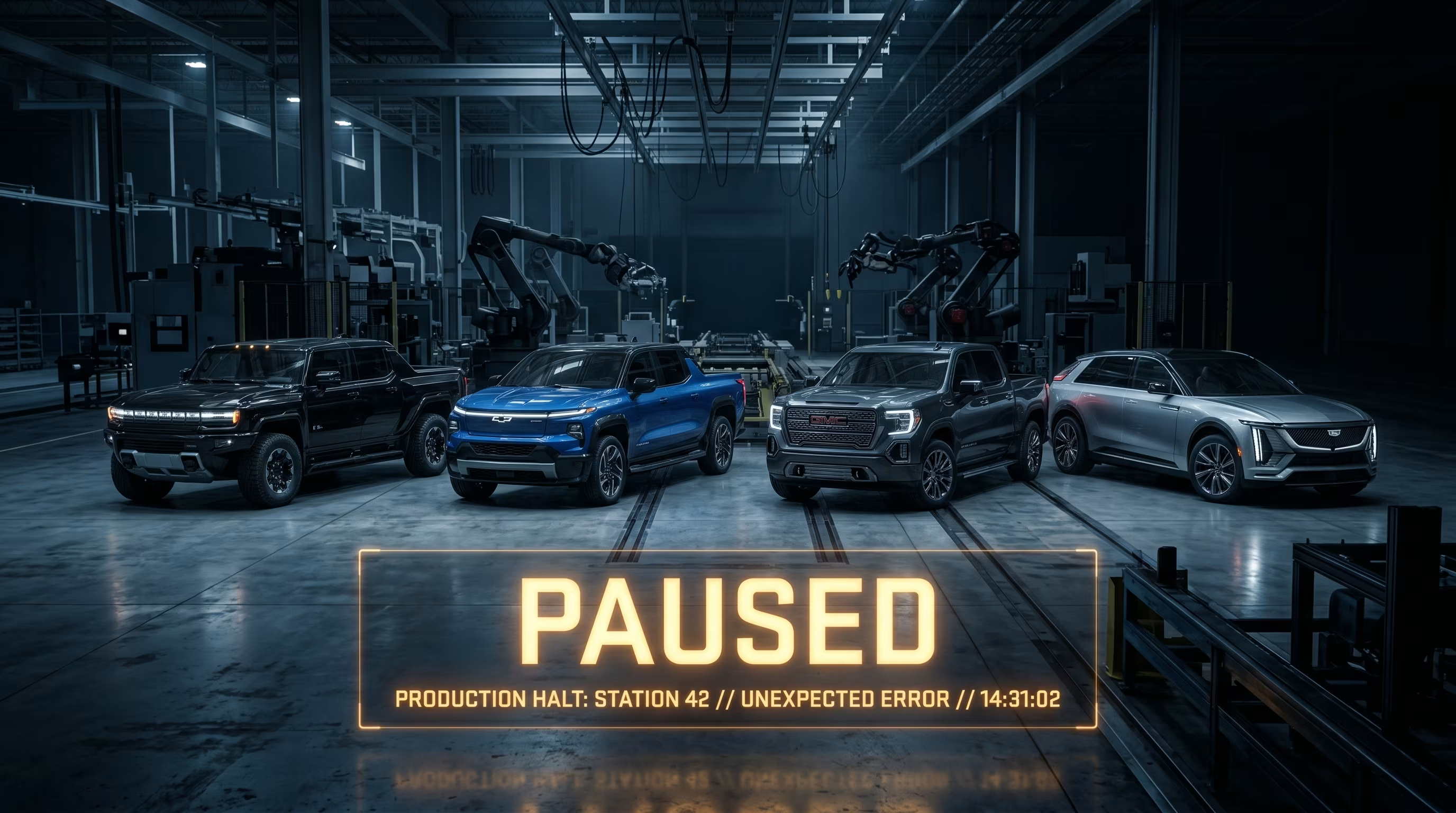
The electric truck revolution just lost its next chapter.
General Motors has told suppliers that the all-new generation of full-size electric trucks and SUVs the one that was supposed to slash costs, improve range, and finally make a compelling economic argument against the Ford F-150’s gas-powered grip has been shelved indefinitely. No replacement timeline. No quiet promise to restart after the next product cycle. Just a halt.
Crain’s Detroit Business broke the story on April 21, 2026. Within hours, Motor1, Car and Driver, and just about every beat reporter in the industry had confirmed the core detail: GM has suspended program development for the successors to the Silverado EV, Sierra EV, Hummer EV (both body styles), and Cadillac Escalade IQ. The vehicles themselves aren’t going anywhere. You can walk into a Chevy dealer today and drive a Silverado EV home. But the advanced, lower-cost platform that was supposed to arrive around 2028? Don’t expect it before 2030 and don’t be shocked if it never shows up at all.
We’ve been tracking EV pullbacks long enough to know that automakers rarely admit a full retreat. GM didn’t. It issued a statement emphasizing that current production continues, that “EVs remain the end game,” and that no product has been canceled. But when three anonymous supplier sources, off-the-record conversations with engineers, and the cold, hard math of Q1 sales all point in the same direction, it’s clear: The Detroit automaker that once vowed to sell only zero-emission vehicles by 2035 is slamming the brakes on its most important electric truck program.
Quick Facts: GM’s EV Pause at a Glance
- Vehicles affected: Next-gen Chevrolet Silverado EV, GMC Sierra EV, GMC Hummer EV (Pickup and SUV), Cadillac Escalade IQ
- Original production timeline: 2028
- Revised estimate: 2030 or later, no official date
- GM’s statement: “GM has not canceled any electric trucks. EVs remain the end game for GM.”
- Q1 2026 sales: Silverado EV –41%, Escalade IQ –26.8%, Hummer EV –52.2%
- Current production status: Unchanged at Factory Zero, Detroit-Hamtramck
- GM’s pivot: Accelerated development of the T1-2 internal combustion platform, plug-in hybrids in the works
- Industry context: U.S. EV sales fell 27% in Q1 2026; federal tax credit ended September 2025
Which GM Electric Trucks and SUVs Are Affected?
The supply base has been told that four full-size EV nameplates will not see the next-generation hardware they were tooling up for.
- Chevrolet Silverado EV. The fleet-friendly work truck that was supposed to be GM’s volume play.
- GMC Sierra EV. A premium-priced twin that only just started to find its footing.
- GMC Hummer EV Pickup and SUV. The resurrection of Hummer as an electric supertruck and the brand’s highest-profile halo.
- Cadillac Escalade IQ. The six-figure luxury barge that Cadillac bet could convert Escalade loyalists to electrons.
The Sales Numbers That Explain This Pause
The strategy pivot starts making sense once you look at the Q1 2026 sales numbers. Every volume electric truck GM offers except the low-base Sierra EV saw demand collapse.
| Model | Q1 2026 vs. Q1 2025 |
|---|---|
| Chevrolet Silverado EV | –41.0% |
| Cadillac Escalade IQ | –26.8% |
| GMC Hummer EV | –52.2% |
| GMC Sierra EV | +3.1% (tiny volume) |
The overall U.S. EV market contracted 27% in Q1 2026, according to Cox Automotive. The $7,500 federal tax credit evaporated in September 2025, and nothing has replaced it. Early adopters bought, but the pragmatic middle of the pickup market buyers who tow boats, work job sites, and track fuel costs obsessively still looks at a $70,000 electric truck and chooses a Silverado 1500 with a V8. There’s nothing mysterious about it. The math doesn’t work for them. And GM’s finance team certainly knows it.
What Is GM’s Official Statement?
Faced with a flood of “cancellation” headlines, GM did what every automaker does: it delivered a meticulously lawyer-proofed statement.
“GM has not canceled any electric trucks. EVs remain the end game for GM and we are firmly committed to our award-winning electric truck and SUV portfolio, along with our advanced technology roadmap. There is no impact to production and availability of the current battery electric trucks.”
> GM spokesperson, April 22, 2026
The statement is technically accurate. No product has been cancelled. But read it again and look at what’s missing: any mention of the 2028 program. Kevin Kelly, a GM communications representative, separately told Crain’s that the company “won’t engage in speculation” about future timing. When an automaker refuses to confirm a date it had previously allowed suppliers to tool up for, that date is dead.
What Analysts Are Saying No New Trucks Until 2030 or Later
Supplier sources and industry analysts we’ve spoken with believe GM’s next-gen electric trucks won’t hit showrooms until 2030 at the earliest. Some see 2032 or beyond. Here’s why that matters.
When an automaker pauses a program, it doesn’t just freeze a CAD file. It cancels orders for specialized tooling, stops testing, reassigns engineers, and signals to the supply base that capital investments will not be repaid on schedule. Tier-1 suppliers that had reserved capacity for battery trays, electric drive units, and new thermal systems are now left holding idle factories and idle balance sheets. Rebuilding that momentum later is expensive and slow.
A GM spokesperson told Car and Driver that the next-generation platform will happen “once EV sales rebound.” That’s a circular condition. Sales might not rebound without the more affordable next-gen product these trucks were supposed to deliver. GM is effectively waiting for a market signal that may never come without first putting better hardware on the table. That’s the kind of strategic trap that can hand a decade-long lead to competitors.
What Is GM Focusing On Instead (The T1-2 Gas Platform)
While the EV truck future sits in limbo, GM is writing very different checks. The T1-2 platform a ground-up rework of its full-size truck chassis has been greenlit for the 2027 Chevrolet Silverado 1500 and GMC Sierra 1500, along with the next-generation Tahoe, Suburban, Yukon, and Escalade. It will carry a new sixth-generation small-block V8 and, importantly, plug-in hybrid capability.
Suppliers have confirmed that GM is actively exploring extended-range electric vehicle (EREV) versions of its full-size trucks. Think a gasoline engine that acts purely as a generator for an otherwise electric drivetrain a formula Ram has already adopted with the Ramcharger. If the market decides hybrids are the sweet spot, GM will be ready. If it craves V8s, that’s covered too. But the pure EV commitment that was supposed to define the company? That’s been kicked down the road.
This Isn’t Just GM The Bigger Industry Shift
GM’s move isn’t happening in a vacuum. Ford killed the all-electric F-150 Lightning and its planned successor, a reversal that cost roughly $21 billion. Ram cancelled the 1500 REV outright and pinned its electrification hopes on the gas-assisted Ramcharger instead. Stellantis, Honda, and others have been quietly scaling back EV targets.
When you total it up, legacy automakers have absorbed nearly $70 billion in EV-related losses over the past half-decade. That’s not R&D inefficiency; that’s a reflection of a market that isn’t buying what they’re selling at the prices they need to charge. Charging infrastructure remains inconsistent, battery raw material costs haven’t come down as fast as forecast, and the pickup segment the most profitable slice of the business remains stubbornly loyal to hydrocarbons.
We’ve documented these tectonic shifts closely. In earlier coverage, we examined how Ford’s Lightning price cuts couldn’t stop the sales slide and how the discontinuation of legacy models like the Ford Escape reflects a broader reassessment of the entire line-up. Even the Koreans, who are charging ahead with dedicated EV platforms, are learning that three-row EV SUVs like the Kia EV9 and Hyundai Ioniq 9 require a different kind of buyer commitment than a compact crossover.
GM was the boldest of the Detroit Three. The 2035 zero-emission goal, the massive Ultium battery plants, the Hummer halo this was a company that wanted to lead. Today’s pause is a calculated retreat that prioritizes cash flow over visionary timelines. It might be the right short-term move. But it also sends a message to every competitor and every supplier that GM no longer knows when or if its EV truck business will scale.
What This Means for AutoTechSpot Readers
If you’re shopping for a Silverado EV or a Hummer today, don’t panic. The trucks are on dealer lots. Factory Zero is still running. GM has told suppliers to keep shipping parts. Dealer incentives could improve as the company works to cut inventory, so there may be deals to be had.
If you’re holding out for the next big leap in EV truck tech, you’re going to be waiting a lot longer than you thought. We’d estimate 2030 is now the realistic floor, not the ceiling.
If you’re a traditional truck buyer, the 2027 Silverado on the T1-2 platform will be a substantial upgrade, and the potential addition of a plug-in hybrid variant could give you most of the electric torque you want without the range anxiety you don’t. For many, that may be the ideal compromise.
And if you’re an investor or industry watcher, read this moment carefully. The electric pickup market hasn’t failed, but it has been priced and timed poorly for this decade’s reality. The automakers that survive the next five years will be the ones that can build profitable gas and hybrid trucks today while keeping enough EV engineering talent on standby for the tide to turn.
Disclaimer: Information based on reports as of April 2026. Automaker product plans are subject to change. Always confirm with official sources.
Sources & Citations
Primary public references used for U.S. vehicle research on AutoTechSpot: