Cybertruck Owners Warned of Serious Wheel Failure in Tesla’s 11th Recall
A serious brake rotor issue has triggered another Tesla Cybertruck recall, affecting 173 vehicles with potential wheel separation risks.
A Mechanical Flaw That Demands Attention
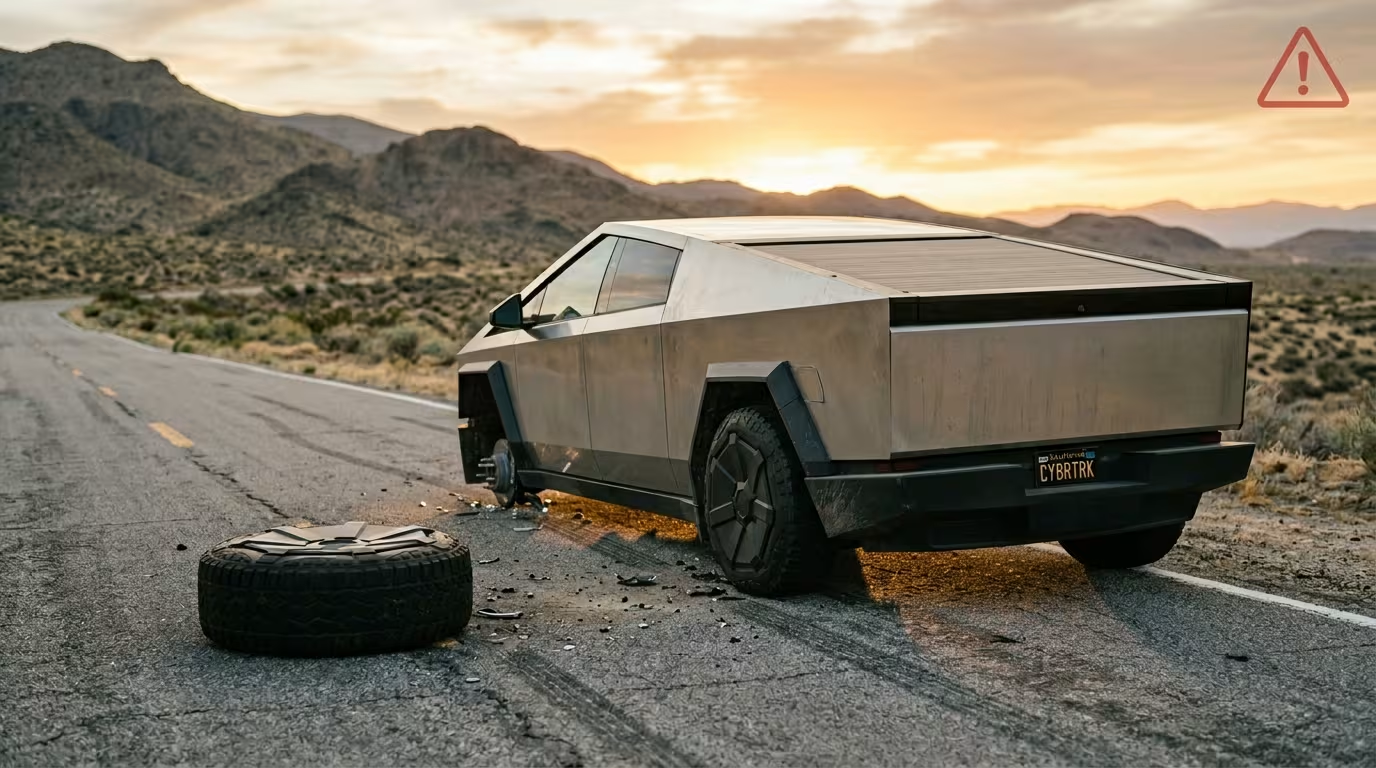
Few things unsettle a driver more than the possibility of a wheel separating from the vehicle at highway speed. For a small group of Cybertruck owners, that possibility is now the subject of an official safety recall. On April 14, 2026, Tesla filed its 11th recall for the Cybertruck with the National Highway Traffic Safety Administration, acknowledging that a brake rotor defect could allow the wheel stud to break away from the hub, potentially causing the wheel to detach while driving.
The recall, designated NHTSA campaign number 26V255 and Tesla service bulletin SB-26-33-003, covers 173 Cybertrucks built between March 21, 2024, and November 25, 2025. All are rear-wheel-drive Long Range models equipped with 18-inch steel wheels. While the number of affected vehicles is relatively small, the mechanical severity is not. The phrase "wheels could detach" appears in the official documentation, a sobering reality for a vehicle marketed around durability.
This is not an over-the-air software fix. It requires physical replacement of brake rotors, hubs, and lug nuts. And it arrives as the eleventh distinct safety campaign for the Cybertruck, a tally that warrants a deeper look at Tesla's quality-control trajectory.
Quick Facts Cybertruck Recall SB-26-33-003
| Detail | Information |
|---|---|
| Recall Number for Cybertruck | 11th recall |
| Vehicles Affected | 173 Cybertrucks (2024-2026 RWD Long Range) |
| Affected Wheel Type | 18-inch steel wheels only |
| Defect | Brake rotor stud hole cracking leading to wheel stud separation |
| Root Cause Contributors | High cornering stress, road impacts, incorrect lug nut grease |
| Recall Decision Date | April 14, 2026 |
| Owner Notification Started | April 24, 2026 |
| Remedy Availability | Full repair expected by June 20, 2026 |
What Exactly Is the Problem?
The defect resides in the brake rotor assembly, not the wheel itself. Each rotor has stud holes through which the wheel studs pass, securing the wheel to the hub. Under certain driving conditions, specifically higher-speed cornering and severe road impacts, these stud holes can develop cracks. As the cracks propagate, the affected wheel stud can separate from the hub. Once separated, the wheel loses its secure attachment and may come off the vehicle entirely.
Technical Investigation & Root Causes
Tesla’s investigation, triggered by a customer complaint of “braking pulsations,” uncovered two contributing factors. First, the rotor material and design experience elevated stress at the stud hole interface during aggressive suspension loading. Second, an assembly issue compounded the risk: incorrect grease applied to the lug nuts reduced clamping friction. That allowed the nuts to gradually loosen, generating vibrations that accelerated crack formation. The interplay between metallurgical stress and assembly error turned a rare failure mode into a real-world concern.
Affected Models & Safety Risks
Only rear-wheel-drive Cybertruck Long Range variants with 18-inch steel wheels are included. Models equipped with optional 20-inch wheels use a different rotor and hub assembly and are not affected. Nevertheless, for the 173 vehicles in the recall population, the consequences of an unrepaired defect are severe. A detached wheel abruptly erases vehicle stability, dramatically increases the likelihood of a crash, and puts occupants and surrounding traffic at risk.
The 11th Recall in Context: A Troubling Pattern for the Cybertruck
Eleven recalls over approximately two and a half years is an extraordinarily high number for any nameplate, let alone a flagship electric truck. While Tesla has previously demonstrated the ability to resolve many issues through over-the-air updates, the Cybertruck’s recall history is dominated by physical defects requiring service visits. The prior ten campaigns include:
- Accelerator pedal pad that could dislodge and trap the pedal, causing unintended acceleration.
- Front windshield wiper motor failure, rendering the wipers inoperative.
- Exterior trim pieces and a cant rail panel that could detach from the vehicle body while driving.
- Loss of drive power linked to a faulty electric inverter.
- Off-road light bar that could separate and pose a road hazard.
- Additional concerns involving seat belt anchors, child safety locks, and inverter-related propulsion loss in different build phases.
Production Quality & Testing Oversight
This string of mechanical issues raises legitimate questions about production consistency and supplier quality oversight. The wheel-stud defect, however, stands apart because it involves a core safety system with catastrophic failure potential. It is the kind of flaw that rigorous durability testing should flag long before vehicles reach customers.
Industry Scrutiny & Corporate Response
Tesla states it is not aware of any collisions, fatalities, or injuries connected to this rotor cracking condition. The company described the recall as being issued "out of an abundance of caution." Still, when combined with recent wheel-attachment recalls from other manufacturers such as a Subaru recall for wheel-related risks and ongoing litigation like the Hyundai lawsuit over engine fire defects, the episode fuels broader scrutiny of automotive quality management. A previous Tesla Model X review at AutoTechSpot noted persistent fit-and-finish challenges, and the Cybertruck appears to inherit a similar burden.
A Separate Camera Recall Affecting Over 200,000 Tesla Vehicles
Simultaneously, Tesla launched a much larger recall under service bulletin SB-26-00-016 for 218,868 vehicles spanning the Model Y, Model S, Model X, and Model 3 lineups. This unrelated action addresses a software glitch that can cause the rearview camera image to freeze or go blank. A non-functional backup camera reduces rear visibility and increases the risk of collision while reversing, a failure that regulators classify as a safety defect.
Software Update vs. Physical Hardware Repair
Unlike the Cybertruck’s mechanical repair, the camera issue will be remedied through an over-the-air software update, requiring no physical service visit for most owners. The contrasting nature of the two recalls highlights why the Cybertruck campaign is more alarming: 173 owners face a hardware failure that cannot be resolved remotely and must bring their trucks in for new rotors, hubs, and lug nuts. Tesla expects the full repair capability to be in place by June 20, 2026, with service centers alerted on April 24.
What Cybertruck Owners Should Do Now
If you own a Cybertruck with 18-inch steel wheels built during the March 2024 to November 2025 window, verify its recall status immediately. The fastest method is to visit NHTSA.gov/recalls and enter your 17-digit VIN. Tesla has identified all 173 affected units, and the database will confirm whether your vehicle is included.
Warning Signs & Driver Safety Guidelines
Until the permanent fix is performed, stay alert to warning signs. Unusual vibrations through the steering wheel or brake pedal, a rhythmic clunking noise from the wheel area, or any sensation of wobble should not be ignored. These symptoms may indicate a loosening or cracking wheel stud. If you experience them, stop driving when it is safe and contact Tesla roadside assistance to have the vehicle towed. Continuing to drive on a compromised assembly can lead to complete stud separation.
Recall Remedy & Service Timeline
The recall remedy involves replacing both the front and rear brake rotors, wheel hubs, and lug nuts with upgraded components. Tesla will mail official notification letters by June 20, 2026, but proactive owners can reach out to their local Tesla service center sooner to schedule an appointment.
Stay Informed and Drive Safely
Recalls are an unavoidable part of automotive manufacturing, but their nature and frequency tell a story. For the Cybertruck, the 11th recall adds a chapter that owners cannot afford to skip. Check your VIN at NHTSA.gov today, and subscribe to AutoTechSpot for ongoing coverage of Tesla’s recall developments, repair timelines, and in-depth reliability analysis.
Disclaimer: This article provides information based on official NHTSA filings and Tesla service bulletins as of May 2026. Always confirm recall details directly with the manufacturer or NHTSA. AutoTechSpot is not responsible for actions taken based on this content.Related Reading
Sources & Citations
Primary public references used for U.S. vehicle research on AutoTechSpot: