2026 Rivian R1S Review: Adventure SUV, Real Costs
Our 2026 Rivian R1S review explains range, towing, charging, trim costs, and ownership tradeoffs so families know if this adventure EV fits.
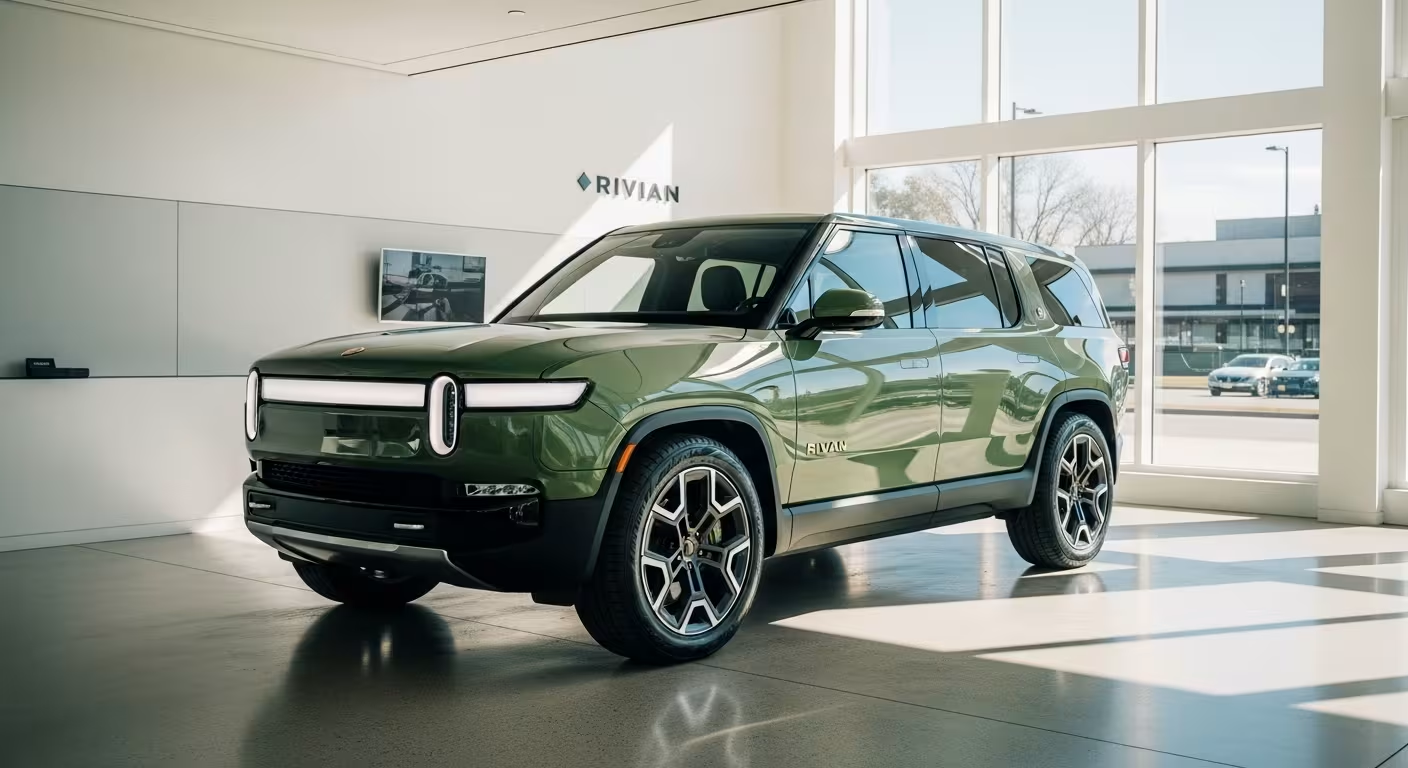
Picture this: a crisp fall morning in Colorado, trailer loaded with gear for a weekend in the San Juans, kids bundled in the third row, and the Rivian R1S gliding up a gravel access road with quiet electric torque. That is the use case Rivian is selling: family space, range, and adventure capability in one electric SUV.
Based on Rivian's published specifications, owner forums, and fresh test data, here's the straight talk: this is still one of the most capable 3-row electric SUVs you can buy in America right now. It starts around $76,990 for the Dual Standard trim and tops out well north of $120k in Quad form, but for families who actually use trails, tow occasionally, and want something that feels future-proof, it is hard to beat.
Confirmed vs Estimated
Confirmed details include Rivian's published trim, charging, pricing, range, and towing information available at publication. Estimated items include real-world ownership costs, service-access considerations, and long-term software or range expectations that can vary by owner, climate, and driving style.
What’s New for the 2026 Rivian R1S
The native NACS port is the biggest win, plug directly into Tesla Superchargers anywhere without adapters or excuses. On long hauls, that alone saves time and sanity.
Software update 2026.03 rolled out earlier this year with practical upgrades: Launch Mode now available on Dual-Motor versions, one-tap Kneel on Demand for easier loading (especially helpful with car seats), refined battery preconditioning that actually recovers range faster when charging in cold weather, and a new cold-weather indicator on the display showing exactly how much range is temporarily "unavailable" until the pack warms up. The Quad-Motor got sharper response tweaks, and the entry-level Dual Standard trim makes three-row Rivian ownership realistic for more buyers.
These OTA improvements keep arriving, it's one of the few vehicles that genuinely feels like it gets better over time.
2026 Rivian R1S Price & Trims (US Market)
Pricing reflects premium capability. Expect ~$1,800 destination.Trims & Starting MSRP
| Trim | Starting MSRP | Battery Focus | Ideal Owner Profile |
|---|---|---|---|
| Dual Standard | $76,990 | Standard (~270 mi) | Entry-level adventure families |
| Dual | $83,990 | Large/Max (up to 410 mi) | Everyday + weekend explorers |
| Tri-Motor | $106,990 | Max (~371 mi) | Power-hungry balanced buyers |
| Quad-Motor | $121,990 | Max (~374 mi) | Trail + performance addicts |
If you're leaning toward something cheaper with three rows, the Kia EV9 is a strong alternative, it undercuts the Rivian significantly on price but gives up serious ground in towing and off-road ability.
Powertrain, Performance & Towing Specs
All AWD with air suspension. Choose your flavor:
Powertrain Specs
| Trim | Motors | Horsepower | 0-60 mph | Max Towing |
|---|---|---|---|---|
| Dual Standard | Dual | 533 hp | 4.5 sec | 7,700 lbs |
| Dual | Dual | Up to 665 hp | 3.4 sec | 7,700 lbs |
| Tri-Motor | Tri | 850 hp | 2.9 sec | 7,700 lbs |
| Quad-Motor | Quad | 1,025 hp | 2.6 sec | 7,700 lbs |
2026 Rivian R1S Range, Battery & Charging
EPA says up to 410 miles on the Max pack with Dual-Motor. Real-world? Highway tests with family load and climate on typically land 330–380 miles.Range & Charging Breakdown
| Battery | EPA (Dual-Motor) | Real-World Highway (loaded) | 10-80% DC Fast Charge Time |
|---|---|---|---|
| Standard | ~270 mi | 230–250 mi | ~30 min |
| Large/Max | Up to 410 mi | 330–388 mi | 25–35 min (NACS) |
What is the range of the 2026 Rivian R1S? EPA up to 410 miles (Dual-Motor Max pack); real-world highway with load usually 330–380 miles.
How long does it take to charge the 2026 Rivian R1S from 10-80%? Typically 25–35 minutes on a high-power NACS DC fast charger, competitive, though rivals like the Kia EV9 or Lucid Gravity can occasionally edge it on peak speed in ideal conditions.Interior, 3-Row Seating & Family-Friendly Features
Seven seats that work for real adults in the back on shorter trips. Kneel mode drops the truck for effortless car-seat buckling. Frunk for wet gear, massive cargo when third row folds.
It's quiet, composed, and thoughtful, the kind of details that make spouses say "okay, this actually works."
Off-Road Capability & Adventure Modes
14.9 inches of clearance, Rock Crawl mode, and torque vectoring that lets you dance through technical trails. Most 3-row SUVs pretend at off-roading. The R1S actually lives there.
Technology, Software & Infotainment
The 16-inch screen is sharp and the OTA updates feel like getting a new truck every few months. No CarPlay or Android Auto is the one real compromise, but the native system is so good most owners stop missing it.
What It’s REALLY Like to Own the Rivian R1S
Daily driving is addictive, one-pedal in traffic, plush ride, instant response. Family road trips? Supercharger stops become coffee breaks. Owners rave about replacing a minivan + weekend toy with one vehicle.
But home charging is non-negotiable for happiness. Without it, daily life gets annoying fast.
Hidden Costs Nobody Talks About
- Charging: ~4¢/mile at home; 10–15¢/mile public, still beats gas.
- Insurance: Often $2,500–$4,000/year, performance + repair network push it up.
- Tires: Big wheels + off-road use = $1,200–$1,800 sets every 20–30k miles.
- Battery Degradation: Real-world data shows 2–5% after 30–40k miles or 2–3 years, well within Rivian's 8-year/120k–175k-mile warranty (70% capacity retention guarantee). Owners report minimal visible loss early on.
- Winter Range Drop: 20–40% loss common (mild cold 20–25%, deep winter 25–40%). 2026.03 update adds transparency with a cold-weather indicator showing temporary unavailable range until preconditioned.
Not sure which car is right for you? Take our free What Car Suits Me? Quiz and get personalized picks in one minute!
Pros & Cons of the 2026 Rivian R1S
Pros:
- Unmatched off-road + towing in a luxury 3-row EV
- Usable 330–380 mile real-world range
- OTA updates that actually improve the truck
- Family-first features like Kneel mode
- Tax credit potential
Cons:
- Price escalates quickly
- No CarPlay/Android Auto
- Early depreciation + insurance bite
- Service network still growing
- Winter range hit is real (though preconditioning helps)
2026 Rivian R1S vs Competitors
Quick Comparison
| Model | Starting Price | Max Range | Max Towing | Off-Road | Fast Charge 10-80% |
|---|---|---|---|---|---|
| 2026 Rivian R1S | $76,990 | 410 mi | 7,700 lbs | Top-tier | 25–35 min |
| 2026 Kia EV9 | ~$55,000 | ~305 mi | 5,000 lbs | Basic | ~20–30 min |
| 2026 Lucid Gravity | ~$80,000 | 450+ mi | 6,000 lbs | Minimal | Often <25 min |
Still on the fence about full electric? The Lexus TX Hybrid or Hyundai Palisade Hybrid deliver similar space and comfort without ever plugging in.
Reliability & Software Reality Check
Consumer Reports predicts below-average reliability for 2026 based on prior years, mostly electronics and minor build quirks (door alignment, rattles). Owner satisfaction remains sky-high (top in some surveys), but service waits and occasional software glitches persist.
Software bugs? Updates like 2025.26 and 2026.03 fixed tons (charging limits, connectivity, vents), but edge cases still pop up, inaccurate SoC estimates, rare wake-from-sleep drains. Rivian is aggressive with fixes, but it's not flawless.
How reliable is the 2026 Rivian R1S? Mixed, strong owner love, but below-average predicted reliability from electronics and service network growth pains. Battery/degradation looks solid so far.Who Should Buy This (And Who Should NOT)
Buy if:
- You need real off-road + towing in a 3-row
- Home charging is easy
- You love tech that evolves
- Adventure defines your family
Skip if:
- Budget is under $80k
- You live without home charging
- CarPlay is a must
- You want bulletproof reliability today
Is It Worth It in 2026?
For the right buyer, absolutely. The 2026 Rivian R1S nails the rare combo of serious capability, usable range, and family smarts. Winter range hurts, software isn't perfect, and costs add up, but nothing else does trails + towing + luxury this well in electric form. If that's your life, configure one now. It's special.
What is the starting price of the 2026 Rivian R1S? Around $76,990 for Dual Standard; many qualify for $7,500 tax credit.Real-world range is strong enough for most American road trips. Ownership costs are manageable if you charge at home. And the sheer joy of driving something this versatile is hard to beat. If adventure, capability, and modern tech are your priorities, stop scrolling and start configuring. This one’s special.
Note: This article was researched using official data, published specifications, and buyer-focused market analysis for U.S. shoppers. It does not claim personal vehicle testing by AutoTechSpot.
Sources & Citations
Primary public references used for U.S. vehicle research on AutoTechSpot: