Hybrid vs Gas SUV: Which One Really Saves More Money?
A practical hybrid vs gas SUV comparison covering fuel savings, upfront price, break-even time, maintenance, insurance, resale value, and when each option makes sense.
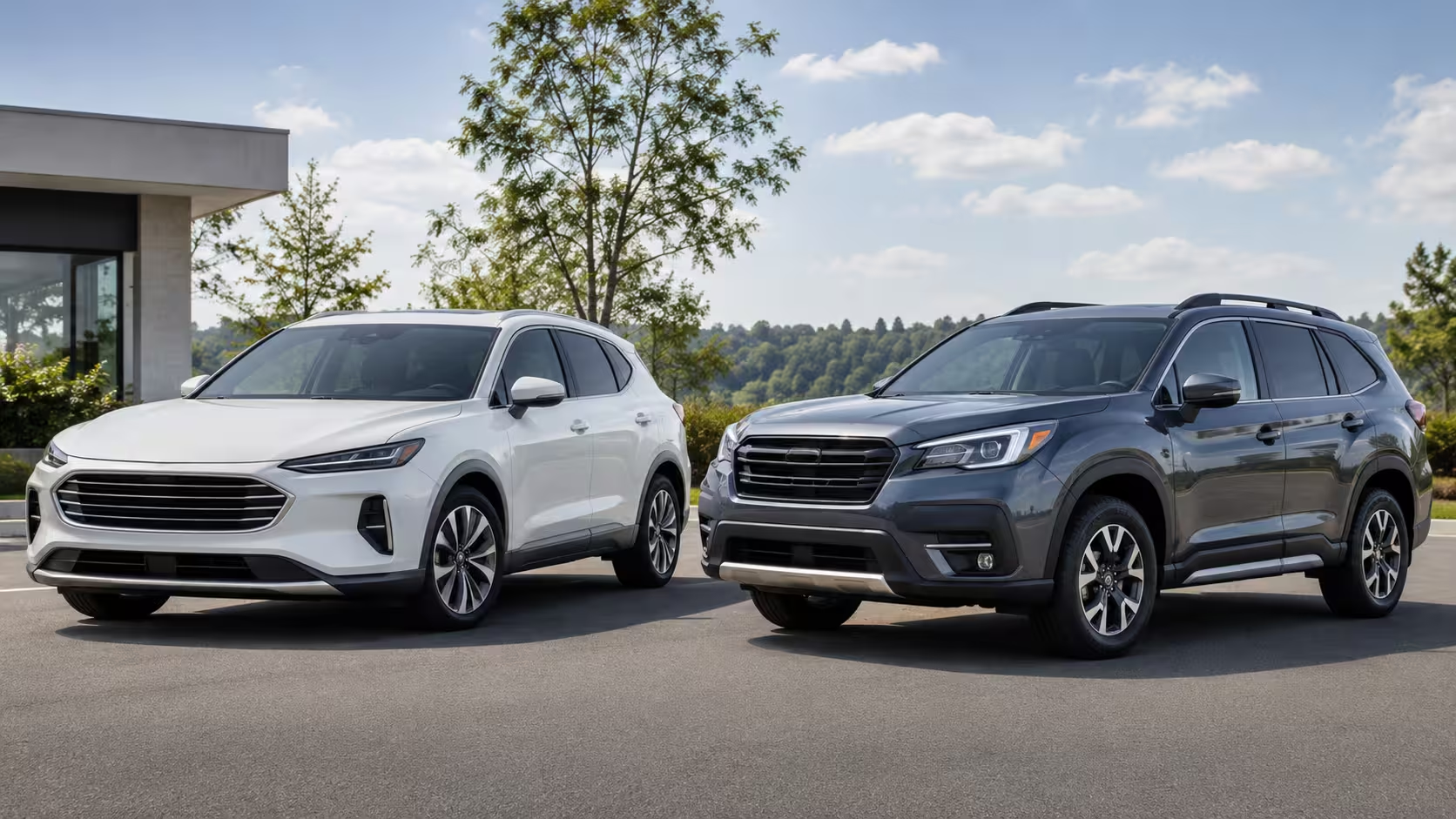
Choosing between a hybrid SUV and a gas SUV sounds like a simple fuel-economy decision, but the real answer is more detailed than that.
A hybrid SUV may save more money at the pump. A gas SUV may cost less to buy. But purchase price, financing, insurance, maintenance, resale value, annual mileage, local fuel prices, and how long you keep the vehicle all affect the real cost.
That is why the smartest way to compare a hybrid vs gas SUV is to look at total ownership cost, not just MPG.
A hybrid that saves $700 per year in fuel may be a smart buy for one driver and not worth it for another. It depends on how much more the hybrid costs, how many miles you drive, how much gas costs in your area, and whether you keep the SUV long enough to recover the higher price.
Before deciding, run your own numbers with the Fuel Cost Calculator. Then use the Car Loan Calculator to see how a higher hybrid price changes the monthly payment.
Hybrid vs Gas SUV: Quick Comparison
If you want the simple version, here is how hybrid and gas SUVs usually compare.
| Category | Hybrid SUV | Gas SUV |
|---|---|---|
| Upfront price | Usually higher | Usually lower |
| Fuel economy | Usually better, especially in city driving | Usually lower, but can be efficient on highways |
| Best driving type | City, suburbs, mixed driving, traffic | Highway driving, lower mileage, budget-focused buyers |
| Monthly payment | Can be higher if purchase price is higher | Often lower because starting price is lower |
| Maintenance | Can have lower brake wear, but more hybrid components | Simpler powertrain, but still normal engine maintenance |
| Resale value | Often strong when fuel prices are high | Depends heavily on model reputation and demand |
| Best for | High-mileage drivers and long-term owners | Low-mileage drivers and buyers getting a strong deal |
The Main Difference: Upfront Cost vs Fuel Savings
The biggest difference between a hybrid SUV and a gas SUV is usually this:
Gas SUVs usually cost less to buy, may be easier to find, and often have more trim choices. For buyers on a strict monthly budget, the lower starting price of a gas SUV can be important.
Hybrid SUVs usually make more sense when the fuel savings are large enough to recover the higher purchase price during your ownership period.
For example, if a hybrid SUV costs $3,000 more than the gas version but saves $750 per year in fuel, it may take about four years to recover the difference. If you plan to keep the SUV for seven or eight years, that could be a smart long-term decision. If you plan to sell in two years, the gas SUV may still be the better value.
The real question is not, “Are hybrids better?”
The better question is:
Will this hybrid save enough money for the way I actually drive?Fuel Economy: Where Hybrids Usually Win
Hybrid SUVs are usually strongest in stop-and-go driving.
City commuters, school-run families, delivery drivers, rideshare drivers, and people who sit in traffic often benefit the most. That is because hybrid systems can use electric assistance at lower speeds and during repeated acceleration.
Gas SUVs can still make sense for steady highway driving. If most of your miles are long highway trips at consistent speeds, the difference between hybrid and gas fuel economy may be smaller than expected.
Mileage matters a lot.
If you drive 6,000 miles per year, fuel savings may not be enough to justify a much higher hybrid price. If you drive 15,000 to 20,000 miles per year, the hybrid savings can become much more meaningful.
Use the Fuel Cost Calculator to compare both options with your actual mileage and local fuel price.
Example: How Much Could a Hybrid SUV Save?
Let’s say a gas SUV gets 25 mpg combined and a hybrid version gets 38 mpg combined.
If gas costs $3.75 per gallon and you drive 15,000 miles per year, the fuel cost difference could look like this:
| SUV Type | Combined MPG | Gallons Per Year | Estimated Fuel Cost |
|---|---|---|---|
| Gas SUV | 25 mpg | 600 gallons | $2,250 |
| Hybrid SUV | 38 mpg | 395 gallons | $1,481 |
Over five years, that is about $3,845 in fuel savings before considering financing, insurance, maintenance, and resale value.
That is why the purchase price gap matters so much.
If the hybrid costs $2,000 more, the math looks strong. If it costs $6,000 more, the fuel savings alone may not fully justify the hybrid unless resale value, incentives, or lower operating costs help close the gap.
How to Calculate the Hybrid Break-Even Point
The break-even point tells you how long it takes for fuel savings to recover the extra cost of buying the hybrid.
Use this simple formula:
Hybrid price premium ÷ Annual fuel savings = Break-even timeExample:
| Item | Amount |
|---|---|
| Hybrid price premium | $3,000 |
| Estimated annual fuel savings | $750 |
| Break-even time | 4 years |
If you plan to sell after two years, the gas SUV may still be the better value unless the hybrid has much stronger resale value.
If you plan to keep the SUV for eight years, the hybrid may save money for several years after the break-even point.
This is why two buyers can choose different SUVs and both be right.
Monthly Payment Still Matters
A hybrid SUV can save money long term but still cost more every month if the purchase price is higher.
That matters if you are working with a strict monthly budget.
Use the Car Loan Calculator to compare the gas and hybrid versions with the same:
- Down payment
- Trade-in value
- Loan term
- APR
- Vehicle price
- Taxes and fees
Sometimes the hybrid payment plus fuel cost is lower than the gas version. Other times, the gas version keeps the monthly budget more comfortable.
For many buyers, the best choice is not the vehicle that saves the most fuel. It is the vehicle that fits the monthly budget without creating stress.
Hybrid SUV vs Gas SUV by Buyer Type
Here is a practical way to think about the decision.
| Buyer Type | Better Starting Point | Why |
|---|---|---|
| City commuter | Hybrid SUV | Better fuel savings in stop-and-go driving |
| Low-mileage driver | Gas SUV | Lower upfront cost may matter more |
| Long highway driver | Depends | Hybrid savings may be smaller on steady highway trips |
| Family keeping SUV 7+ years | Hybrid SUV | More time to recover the higher purchase price |
| Buyer on strict monthly budget | Gas SUV | Lower purchase price may keep payments easier |
| High fuel-price area | Hybrid SUV | Fuel savings become more valuable |
| Buyer needing maximum towing | Gas SUV or non-hybrid option | Some gas models may offer stronger towing setups |
| Buyer who trades often | Depends | Resale value and incentives matter more |
| Mixed city and suburban driver | Hybrid SUV | Strong balance of fuel savings and practicality |
Maintenance and Reliability
Modern hybrid SUVs are not experimental. Many hybrid systems have proven reliable, and regenerative braking can reduce brake wear because the electric motor helps slow the vehicle.
That does not mean hybrids have no extra complexity.
Hybrid SUVs may include:
- Hybrid battery pack
- Electric motor
- Power electronics
- Cooling systems
- Regenerative braking hardware
- Hybrid-specific software and components
Gas SUVs are simpler in some ways, but they still have regular maintenance costs, including:
- Oil changes
- Filters
- Fluids
- Brakes
- Tires
- Transmission service
- Belts and hoses
- Repairs as mileage increases
Do not assume every hybrid is expensive to maintain. Also do not assume every gas SUV is cheap to own. Model reputation matters.
Insurance Costs Can Change the Math
Fuel savings are important, but insurance can change the final comparison.
A hybrid SUV may cost more to insure if it has a higher purchase price, more expensive repair parts, or advanced components. But that is not always the case. Insurance depends on the model, trim, safety features, repair costs, driver profile, and location.
Before buying, get insurance quotes for both the gas and hybrid versions.
If the hybrid saves $60 per month in fuel but costs $25 more per month to insure, your real monthly savings are lower.
If insurance costs are similar, the hybrid fuel savings become easier to judge.
Do Not Ignore Tires, Trims, and Options
SUV ownership cost is not only about fuel.
Tires can be expensive, especially on larger wheels. A higher trim with bigger wheels may cost more to replace tires than a base model with smaller wheels.
Also compare trim levels carefully. Sometimes the hybrid version is only available in higher trims, which makes the price gap larger. Other times, the hybrid is priced close to the gas version and becomes a much easier choice.
Before deciding, compare:
- Similar trim levels
- Similar features
- Tire sizes
- Warranty coverage
- Real dealer pricing
- Available discounts
- Financing offers
- Insurance quotes
Resale Value Can Change the Equation
Resale value can make a big difference, especially if you trade vehicles every three to five years.
Hybrid SUVs often hold value well when fuel prices are high or when buyers want better fuel economy. A popular hybrid SUV with limited inventory may retain value better than a less popular gas model.
But resale value is model-specific.
A gas SUV with a strong reputation can also hold value very well. A hybrid from a weaker model line may not automatically beat a trusted gas SUV.
If you plan to keep the SUV for ten years, resale value matters less than reliability and operating cost. If you plan to sell or trade in three to five years, resale value becomes much more important.
When a Hybrid SUV Makes More Sense
A hybrid SUV is usually the better fit if:
- You drive a lot every year
- You do frequent city or suburban driving
- You sit in traffic often
- Fuel prices are high in your area
- The hybrid price premium is reasonable
- You plan to keep the SUV long enough to recover the extra cost
- You want better fuel range between fill-ups
- You value quieter low-speed driving
- The hybrid version has strong warranty coverage
- Insurance costs are similar to the gas version
When a Gas SUV Makes More Sense
A gas SUV may be the better choice if:
- You drive fewer miles each year
- Most of your driving is steady highway cruising
- The hybrid version costs much more
- You need a trim or seating setup not offered as a hybrid
- You need a specific towing setup
- You plan to sell before fuel savings catch up
- Local hybrid inventory is limited or overpriced
- The gas version has a stronger discount or financing offer
- Insurance is much cheaper on the gas version
A lower purchase price, better discount, lower insurance quote, or lower financing cost can beat hybrid fuel savings in some situations.
Simple Decision Formula
Before buying, use this process:
1. Compare real transaction prices for the gas and hybrid SUV.
2. Check whether both vehicles have similar features and trims.
3. Estimate monthly payments with the same down payment and APR.
4. Calculate annual fuel cost using your mileage and local fuel prices.
5. Get insurance quotes for both versions.
6. Check maintenance expectations and warranty coverage.
7. Estimate the hybrid break-even point.
8. Think about how long you will keep the SUV.
9. Test drive both if possible.
If the hybrid saves enough fuel to offset the higher purchase price within your ownership period, it is likely the smarter financial choice.
If the hybrid takes too long to break even, the gas SUV may be the better value.
Final Verdict: Hybrid or Gas SUV?
A hybrid SUV is usually the smarter long-term choice if you drive a lot, spend time in city traffic, face high fuel prices, and plan to keep the vehicle long enough to recover the higher purchase price.
A gas SUV can still be the better value if you drive fewer miles, mostly use highways, get a much better discount, or need a specific trim, seating layout, or towing setup that the hybrid does not offer.
The best choice is not simply hybrid or gas.
The best choice is the SUV with the lower total cost for your real driving habits.
Run the math before the test drive emotion takes over. Start with the Fuel Cost Calculator, compare payment scenarios with the Car Loan Calculator, and read specific SUV reviews before deciding.
A hybrid SUV can save real money, but only when the fuel savings, purchase price, insurance, financing, and ownership period work in your favor.
Compare the real purchase price, monthly payment, estimated fuel cost, insurance quote, maintenance expectations, resale value, and how long you plan to keep the vehicle. The SUV with the lower total cost for your situation is the better choice.
Sources & Citations
Primary public references used for U.S. vehicle research on AutoTechSpot: