Ford EcoBoost Recall: 10,001 Vehicles Face Engine Failure From Cracked Pistons
A supplier machining fault cracked piston domes inside Ford
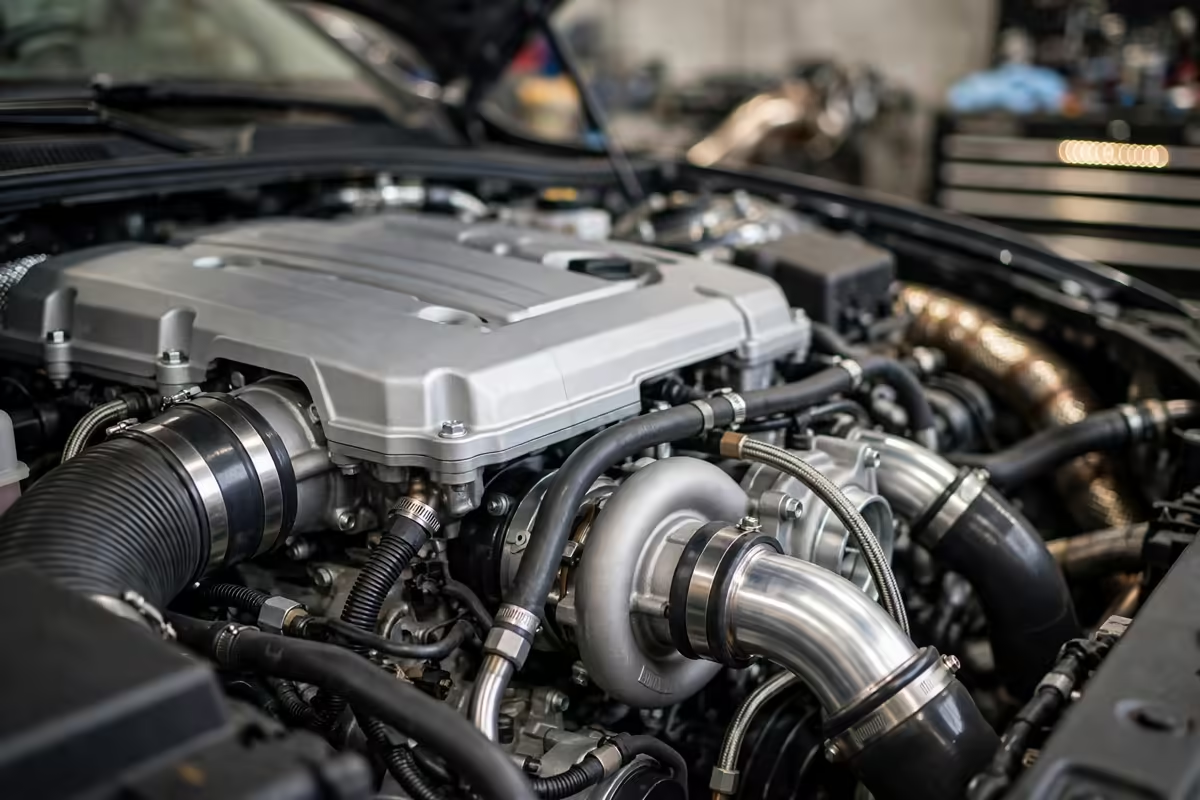
Most recalls are about a sensor, a software flash, or a trim piece. This one is about the heart of the engine. Ford is recalling 10,001 vehicles from the 2026 model year because the domes of their pistons were manufactured incorrectly and can crack in service. When a piston dome fails, the engine can lose drive power suddenly, at speed, with little more warning than a check engine light, a strange noise, or a misfire.
Ford discovered the problem in the most alarming way possible: engines started failing on its own production lines. By the time the recall was filed with the National Highway Traffic Safety Administration (NHTSA), 38 engines had failed during end-of-line factory testing and 13 more had failed in customers' hands. If you own a 2026 Ford with a 1.5-liter or 2.3-liter EcoBoost engine, this article gives you the affected models, the warning signs, how the defect happened, and what Ford will do about it, free of charge.
Quick Facts: Ford EcoBoost Piston Recall
| Detail | Information |
|---|---|
| Ford recall number | 26S61 |
| NHTSA campaign | 26V-548 |
| Affected vehicles | 10,001 vehicles, 2026 model year |
| Models | Ford Explorer, Mustang, Ranger, Bronco, Bronco Sport |
| Engines | 1.5L and 2.3L EcoBoost |
| Defect | Piston domes manufactured incorrectly; can crack and fail |
| Known failures | 38 during factory testing, 13 in the field |
| Warning signs | Check engine light, engine noise, misfire |
| The fix | Free dealer inspection; free engine long block replacement if pistons are defective |
| Timeline | VINs searchable since Aug 28, 2026; repair letters expected December 2026 |
Which Ford Models Are Affected?
The recall covers five of Ford's core 2026 nameplates equipped with the 1.5L or 2.3L EcoBoost four-cylinder engines:
- 2026 Ford Explorer
- 2026 Ford Mustang
- 2026 Ford Ranger
- 2026 Ford Bronco
- 2026 Ford Bronco Sport
How a Loose Nut Cracked Ford's Pistons
The root cause, as Ford documented it for NHTSA, is a manufacturing story with two failures stacked on top of each other. The pistons came from a supplier plant in Mexico. A lock nut on a machining tool at that plant worked loose, and the tool intermittently struck the piston's nickel-resistant ring insert, fracturing the bond between that insert and the aluminum piston. The result was a crack at exactly the point where the piston dome takes combustion pressure.
The second failure is why the bad pistons shipped. An ultrasonic tester meant to catch these cracks had its sensor replaced without its parameters being updated, so for a stretch of production in early 2026 it passed pistons it should have rejected. Ford began investigating in March 2026 after an Explorer and five Bronco Sport vehicles failed during end-of-line testing, and teardown analysis traced the failures back to the piston domes.
This is the same species of quality escape behind several recent Ford campaigns, and it is why owner diligence matters more than brand loyalty. Our coverage of the Hyundai ICCU lawsuit shows the other end of the pattern, where owners say recall repairs did not fix the underlying defect at all.
Warning Signs Your EcoBoost May Be Affected
Ford's filing lists three symptoms that can precede a piston failure:
- Check engine light on the instrument cluster
- Unusual engine noise, including knocking
- Engine misfire, felt as roughness, hesitation, or a loss of smoothness under load
The Fix: Inspection First, a New Engine If Needed
Dealers will inspect the engine's pistons using Ford's procedure. If cracked or defective pistons are found, Ford will replace the entire engine long block, free of charge. A long block replacement is about as major as warranty work gets: it is the core engine assembly, and on a nearly new vehicle it restores you to a defect-free engine rather than patching the damaged one.
The timeline matters. Interim letters notifying owners of the safety risk were mailed in early September 2026. The second round of letters, telling owners to schedule the repair once inspection tools and replacement engines are fully available, is expected in December 2026. Until then, run the VIN check below, watch for the symptoms above, and keep every scrap of paperwork if your engine so much as hiccups.
A paperwork habit worth starting now: whenever recall work is done, keep the dealer invoice that shows the recall number (26S61) and the repair performed. It is your proof of completion for resale, and it is the first thing a future buyer or an extended-warranty administrator will ask for.
How to Check If Your Ford Is Recalled
1. Find your VIN: the 17-character code on the driver-side dashboard, visible through the windshield, or on your registration and insurance documents.
2. Run it at NHTSA.gov/recalls: enter the VIN (or license plate and state). Vehicles in this campaign have been searchable since August 28, 2026.
3. Or call Ford at 1-866-436-7332 and quote recall 26S61, or ask your dealer's service department to run the VIN.
While you check, note that Ford issued a separate, smaller engine-failure campaign (recall 26S35) for certain 2025–2026 Explorer, Ranger, and Bronco vehicles, with its own remedy timeline. A VIN check returns every open campaign on your vehicle, so one search covers both.
Buying a 2026 Ford Right Now? Check Before You Sign
Because every affected vehicle is a current model year car, some are still sitting on dealer lots or in transit. If you are negotiating on a 2026 Explorer, Mustang, Ranger, Bronco, or Bronco Sport with a 1.5L or 2.3L EcoBoost, run the VIN from the listing before you sign. If the vehicle is in the recall population, ask the dealer, in writing, what its inspection and repair status is and when the remedy will be completed. The repair is free either way, but buying with the paperwork settled beats discovering an open engine recall at your first service visit.
Cross-shopping the Ranger against other trucks? Our Best Pickup Trucks for 2026 guide compares it with the Tacoma, Maverick, F-150, and Silverado on verified prices and towing figures, and the What Car Suits Me? quiz can sanity-check the whole shortlist against your budget and mileage.
The Bottom Line
Ten thousand 2026 Fords left the factory with pistons that can crack because a supplier's machining tool came loose and the inspection that should have caught it was miscalibrated. Ford found out when engines began failing on its own lines. The fix is free and substantial, a full engine long block when pistons are defective, but the scheduling letters do not land until December 2026. Until yours arrives: check your VIN today, learn the three warning signs, and treat a new check engine light plus engine noise as an immediate dealer visit.
Recall details checked October 2026 against NHTSA campaign 26V-548 documentation and Ford recall 26S61 reporting. Individual vehicle status can change; the NHTSA VIN lookup is the final word for your Ford.Sources & Citations
Primary public references used for U.S. vehicle research on AutoTechSpot: