Best Cars for Delivery Drivers: Save Fuel, Time and Money
Delivery miles can eat your profit fast. Before buying a car for DoorDash, Uber Eats, Instacart, or courier work, compare MPG, cargo access, insurance, repairs, and costs.
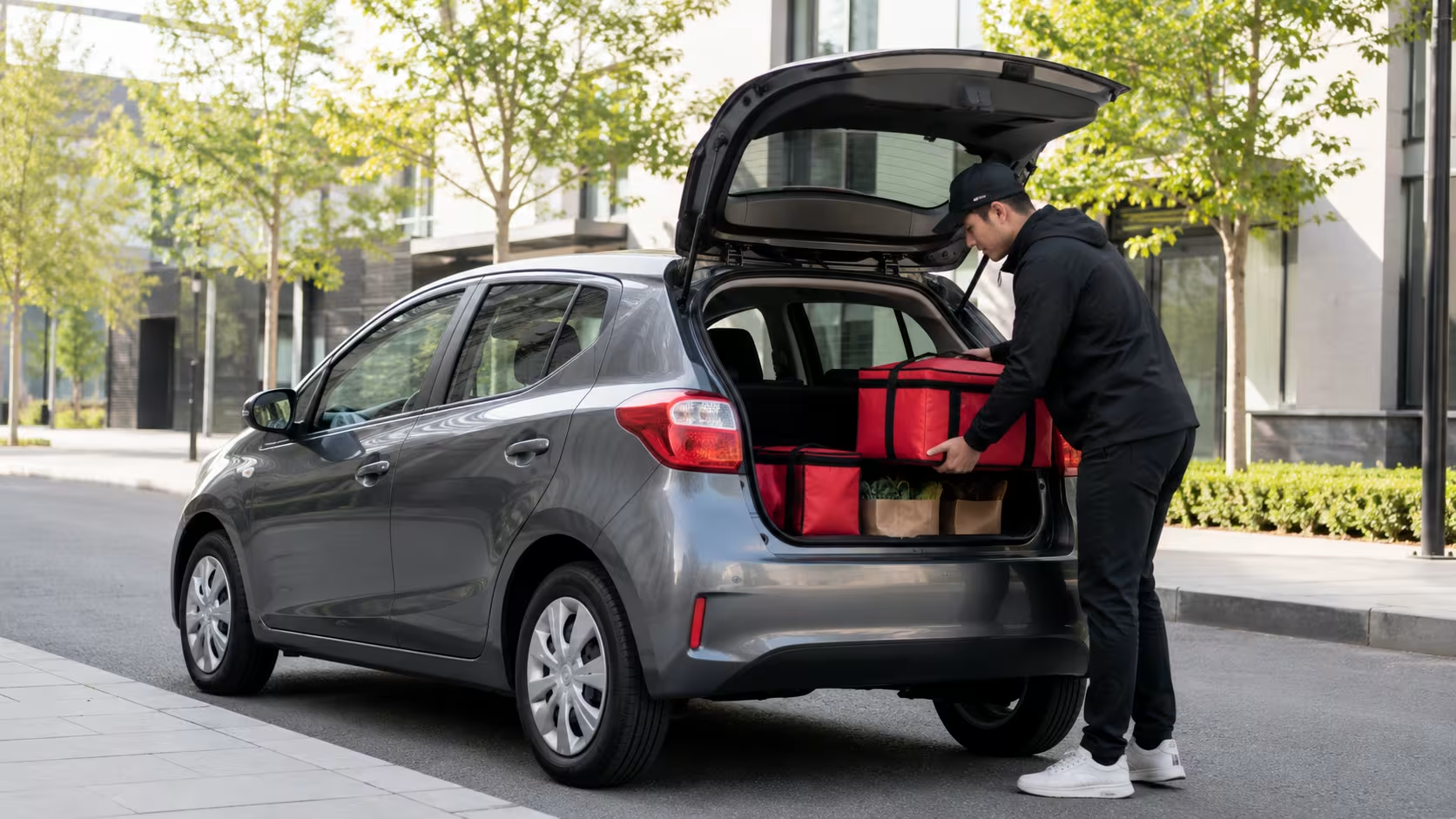
Delivery work changes the way a car should be judged. The best cars for delivery drivers in 2026 are not simply the cheapest cars on the lot. A low purchase price helps, but a delivery car also has to survive city driving, frequent stops, long hours, high yearly mileage, curbside parking, cargo loading, and unpredictable fuel prices.
For DoorDash, Uber Eats, Instacart, Amazon Flex, courier routes, pharmacy delivery, and local package work, the smarter choice is usually an efficient, reliable compact car, hatchback, hybrid, or small SUV with affordable tires and insurance.
A car that saves a little on payment but costs more in fuel, repairs, tires, or depreciation can become expensive quickly. Delivery drivers should shop around total cost of ownership, not just monthly payment.
If you are still deciding what type of car fits your work and personal life, start with the What Car Suits Me? quiz. Then use this guide to build a shortlist around fuel cost, reliability, cargo access, insurance, and real ownership costs.
Best Delivery Cars for 2026
| Delivery Driver Need | Best Starting Point | Why It Makes Sense |
|---|---|---|
| Best overall delivery car | Toyota Camry Hybrid | Strong fuel economy, comfort, resale appeal, and long-term ownership logic |
| Best hybrid for delivery drivers | Kia Niro Hybrid | Efficient hybrid setup with hatchback cargo access and city-friendly size |
| Best budget delivery car | Honda Civic | Efficient, easy to park, affordable to own, and practical for food delivery |
| Best small SUV for delivery work | Toyota Corolla Cross Hybrid | Easier cargo access than a sedan without moving into a large SUV |
| Best for DoorDash and Uber Eats | Honda Civic or Kia Niro Hybrid | Low fuel use, simple cabins, and enough room for insulated bags |
| Best for Instacart | Kia Niro Hybrid or Corolla Cross Hybrid | Better hatch/cargo access for groceries |
| Best for high-mileage drivers | Toyota Camry Hybrid | Comfortable for long shifts and sensible for drivers piling on miles |
| Best family-plus-delivery car | Honda CR-V Hybrid | Works when one vehicle must handle both home and delivery duty |
How We Chose the Best Delivery Cars
We prioritized cars that make sense for real delivery work, not just cars that look good in a normal buyer guide.
The most important factors were:
- Fuel economy in city and mixed driving
- Reliability reputation
- Affordable maintenance
- Reasonable tire costs
- Insurance practicality
- Easy parking
- Comfortable seats for long shifts
- Useful cargo access
- Strong resale value after high mileage
- Practicality outside delivery work
What Makes a Good Delivery Car?
A good delivery car has to make money easier to keep. Every buying decision should be filtered through fuel economy, reliability, maintenance, insurance, cargo space, parking, comfort, safety tech, and resale value.
Fuel economy matters more than horsepower
Delivery drivers spend a lot of time in low-speed city driving, idle-heavy pickups, apartment complexes, drive-throughs, and short hops across town.
That is where inefficient vehicles punish your profit. A car that is only a little thirstier can cost noticeably more over a year if you drive many delivery miles.
Reliability beats fancy features
A delivery car is a work tool. A flashy interior, luxury badge, big wheels, or complicated performance package does not help if repair costs are high.
Prioritize models with a strong reliability reputation, easy service access, broad parts availability, and a simple ownership experience.
Low maintenance is part of income
Oil changes, brakes, filters, tires, alignments, wipers, fluids, and unexpected repairs all matter. A low-maintenance delivery car is one that does not turn every busy week into a service appointment.
Cargo access matters more than advertised volume
Food delivery needs flat space for insulated bags. Grocery delivery needs a trunk or hatch that is easy to load. Package routes need a rear opening that does not fight you all day.
The best delivery cars have usable cargo space, not just a large number on paper.
Comfort keeps you sharper
A cheap car with a painful seat is not a bargain if you spend six to ten hours in it. Look for supportive seats, good visibility, easy climate controls, simple infotainment, and driver-assistance features that help in traffic without becoming distracting.
Delivery Driver Insurance: Do Not Skip This Step
Before buying any car for delivery work, ask your insurance company whether your policy covers DoorDash, Uber Eats, Instacart, Amazon Flex, courier work, or business delivery use.
This matters because some personal auto policies may not fully cover delivery work unless you add a rideshare, delivery, or business-use endorsement.
Do not assume the delivery app automatically solves everything. App coverage can be limited, may apply only during certain parts of a delivery, and may not protect your own vehicle the way you expect.
Before buying, ask your insurer:
- Does my policy allow delivery work?
- Do I need a rideshare or delivery endorsement?
- Am I covered while waiting for orders?
- Am I covered after accepting an order?
- Is my own car covered if I am at fault?
- Will delivery work increase my premium?
- Does coverage change by platform?
Recommended Cars for Delivery Drivers
These picks are based on practical ownership logic and existing AutoTechSpot coverage. Always confirm current pricing, fuel economy, incentives, warranty terms, insurance quotes, and local inventory before buying.
Toyota Camry Hybrid: Best Overall Delivery Car
The Toyota Camry Hybrid is a smart starting point for high-mileage delivery drivers because it combines sedan efficiency with a cabin that is comfortable enough for long shifts.
It works especially well for drivers who split time between delivery work and normal commuting. It is not the smallest car, but it feels like a strong long-term choice for drivers who care about comfort, fuel economy, and resale value.
Read our 2026 Toyota Camry Hybrid review if you want a deeper look at where it fits among efficient midsize sedans.
Best for: full-time delivery drivers, high-mileage commuters, ride-and-delivery overlap, and drivers who want a car that still feels useful outside work. Skip it if: you regularly carry bulky packages, need tall cargo space, or park in very tight urban streets where a smaller car would be easier. Ownership note: the Camry Hybrid may cost more than an older compact car up front, but strong fuel economy, comfort, and resale appeal can make it a better work vehicle for drivers who put on serious mileage.Kia Niro Hybrid: Best Hybrid for Delivery Drivers
The Kia Niro Hybrid makes sense because it gives delivery drivers a useful hatchback shape without moving into a large SUV.
The low floor, easy cargo access, efficient hybrid setup, and city-friendly size are exactly the kind of traits gig drivers should care about.
For more model-specific context, read the 2026 Kia Niro Hybrid review.
Best for: DoorDash, Uber Eats, Instacart, pharmacy delivery, city delivery, and drivers who want hybrid fuel savings with flexible cargo space. Skip it if: you need three-row seating, heavy-duty cargo ability, frequent rough-road capability, or all-wheel drive. Ownership note: the Niro is especially appealing when your work includes city driving, traffic, and short trips where hybrids often feel more efficient than traditional gas vehicles.Honda Civic: Best Budget Delivery Car
The Honda Civic is one of the safest default answers for drivers who want a simple, efficient, easy-to-park car that can handle daily use without feeling cheap.
It is not a cargo van and it is not an SUV, but for food delivery and light courier work, that may be a benefit.
Read our 2026 Honda Civic review for a broader look at the current Civic lineup.
Best for: part-time gig drivers, students, commuters who deliver evenings or weekends, and buyers who want a car that is easy to live with. Skip it if: you often deliver large grocery orders, need a hatch or SUV cargo opening, or want higher seating. Ownership note: a Civic can keep fuel, tires, insurance, and repair exposure more manageable than many larger vehicles. Used Civics can also be appealing, but condition and maintenance history matter more than mileage alone.Toyota Corolla Cross Hybrid: Best Small SUV for Delivery Work
The Toyota Corolla Cross Hybrid is a sensible delivery choice for drivers who need easier cargo access than a sedan provides but do not want the cost penalty of a larger SUV.
It can fit grocery orders, delivery bags, and small packages more easily than many compact sedans while still staying efficient enough to make sense for daily work.
Read our 2026 Toyota Corolla Cross Hybrid review if you are comparing small hybrid SUVs.
Best for: Instacart, Amazon Flex light routes, grocery delivery, small-family buyers who also do gig work, and drivers who want SUV practicality without going too big. Skip it if: you rarely carry cargo and would rather maximize fuel savings with a sedan or hatchback. Ownership note: small SUVs often cost more than compact cars. Compare the payment, insurance, tires, and fuel before assuming the extra cargo height is worth it.Nissan Kicks: Best City-Friendly Small SUV Alternative
The Nissan Kicks is worth considering for delivery drivers who want a small crossover footprint, easy parking, and useful cargo access without moving into a larger SUV.
It can be a practical fit for city drivers who care more about maneuverability than power.
Read our 2026 Nissan Kicks review for more context on its role as an affordable subcompact SUV.
Best for: urban delivery, tight parking, budget-minded buyers, and drivers who prefer a higher seating position. Skip it if: your routes are mostly high-speed highway miles, you carry heavy cargo, or you want a more powerful highway vehicle. Ownership note: small tire sizes and modest running costs can help, but compare insurance and real dealer pricing before signing.Honda CR-V Hybrid: Best If You Need More Cargo Space
The Honda CR-V Hybrid is not the lowest-cost delivery car, but it can make sense for drivers who combine family use with delivery work and need more passenger and cargo space than a compact car provides.
Read our 2026 Honda CR-V Hybrid overview if you are considering a compact hybrid SUV.
Best for: family buyers who deliver part-time, grocery delivery, larger orders, and drivers who need one vehicle for work and home. Skip it if: delivery income is the main reason for buying and you do not truly need the extra space. Ownership note: larger SUVs usually bring higher tires, insurance, and purchase price. Make sure the cargo benefit earns its keep.Other Delivery Cars Worth Considering
Not every good delivery car needs its own full section. Depending on local pricing, insurance, and availability, these options can also make sense:
| Vehicle Type | Why It Can Work |
|---|---|
| Toyota Prius | Excellent fuel economy and hatchback practicality |
| Toyota Corolla Hybrid | Efficient, simple, and usually affordable to operate |
| Hyundai Elantra Hybrid | Strong fuel economy and sedan value |
| Used Toyota Corolla | Lower purchase price if condition and maintenance history are good |
| Used Honda Fit | Small, easy to park, and surprisingly useful cargo space |
| Used Prius | Great delivery option if the battery, condition, and price check out |
Why MPG Matters More for Delivery Drivers
Fuel cost hits delivery drivers harder than normal commuters because delivery miles are often inefficient miles.
Short trips, idling, traffic, stop signs, parking lots, apartment complexes, and repeated acceleration can make a vehicle feel thirstier than it looks on a window sticker.
| If Your Car Uses... | What Happens Over High Delivery Mileage |
|---|---|
| Less fuel in city driving | More of each delivery payout stays with you |
| More fuel in stop-and-go routes | Small MPG differences become expensive over time |
| Premium fuel | Your operating cost rises before maintenance is even counted |
| Big tires and heavy wheels | Fuel economy and replacement costs can both suffer |
Why Fuel Economy Matters for Delivery Drivers
If one delivery car averages 30 mpg and another averages 45 mpg, the difference becomes serious when you drive 20,000 miles per year.
| Vehicle MPG | Gallons Used at 20,000 Miles | Fuel Cost at $3.75/Gallon |
|---|---|---|
| 30 mpg | 667 gallons | $2,501 |
| 45 mpg | 444 gallons | $1,665 |
Over five years, that could be more than $4,000 in fuel savings if your mileage and gas prices stay similar.
That does not mean the highest-MPG car always wins. Cargo access, insurance, comfort, reliability, and purchase price still matter. But for delivery drivers, fuel economy is not a small detail. It directly affects profit.
Monthly Payment and Affordability
Delivery drivers should be especially careful about overbuying. A car payment does not care whether an app is slow, tips are down, fuel is expensive, or a repair arrives the same week as insurance renewal.
When comparing cars, look beyond the monthly payment:
- Loan payment
- Insurance premium
- Fuel cost
- Maintenance and tires
- Registration and taxes
- Emergency repair fund
- Depreciation from high yearly mileage
Then use the How Much Car Can I Afford? calculator to set a ceiling before you visit a dealer.
A delivery car should not require perfect earnings every month to make sense. If you need the busiest weeks to afford it, the car is probably too expensive.
Hybrid vs Gas for Delivery Drivers
A hybrid is often the stronger choice for delivery work when your routes include city driving, stop-and-go traffic, and high mileage.
Hybrids can reduce fuel use where delivery drivers spend much of their time, and many mainstream hybrids have become normal, practical cars rather than niche options.
A gas car can still make sense when the purchase price is much lower, your mileage is modest, insurance is cheaper, or you mostly drive highway routes where the hybrid advantage may be smaller.
The key is not to assume hybrid always wins or gas always saves money. Run the payment and fuel numbers together.
| Choose a Hybrid If... | Choose a Gas Car If... |
|---|---|
| You drive many city miles | You deliver part-time and mileage is low |
| Fuel prices are high in your area | The gas car is much cheaper to buy |
| You plan to keep the car several years | You mostly drive steady highway routes |
| You want fewer fuel stops during shifts | Insurance or financing makes the hybrid too costly |
| You do lots of stop-and-go delivery | You found a reliable used gas car at a strong price |
Sedan vs Small SUV for Delivery Work
A sedan is usually cheaper to buy, more efficient, easier on tires, and better for drivers who mostly carry food bags or small items.
A small SUV or hatchback is better when cargo access matters, especially for grocery delivery, packages, or mixed family use.
Read our Sedan vs SUV comparison if you are still deciding between body styles.
| Body Style | Delivery Advantage | Delivery Drawback |
|---|---|---|
| Compact sedan | Efficient, easy to park, lower ownership cost | Trunk access can be limiting for bulky orders |
| Hatchback | Efficient with better cargo access | Fewer choices than sedans or SUVs |
| Small SUV | Easier loading, higher seating, more cargo flexibility | Higher price, fuel, tires, and insurance in many cases |
| Midsize SUV | More room for family and cargo | Often too costly for pure delivery work |
Delivery Driver Buyer Checklist
Before buying a car for delivery work, go through this checklist:
- Get an insurance quote that specifically addresses delivery work
- Estimate yearly mileage honestly, including deadhead miles between orders
- Compare fuel cost with conservative MPG assumptions
- Check tire sizes and replacement cost
- Look for simple, durable interiors that clean easily
- Test cargo access with delivery bags or boxes if possible
- Confirm phone mounting, charging, cupholder, and storage practicality
- Avoid huge wheels and low-profile tires if roads are rough
- Budget for brakes, tires, oil changes, filters, and alignments
- Keep a repair fund separate from the car payment
- Compare resale value expectations if you will add heavy mileage
- Do not buy a vehicle that only works if every week is busy
Common Mistakes Delivery Drivers Make
The biggest mistake is buying too much SUV. Extra space feels useful, but a larger SUV can raise the purchase price, fuel bill, tire cost, insurance, and depreciation.
Another mistake is ignoring insurance quotes. Delivery work can change how coverage works, and discovering that after an accident is the wrong time.
Many buyers focus only on monthly payment. A longer loan can make a car look affordable while hiding higher total interest and more risk if mileage pushes the car’s value down quickly.
Drivers also underestimate tire costs. Large wheels and performance tires can erase part of the fuel savings from an otherwise efficient vehicle.
Cargo access is another overlooked detail. A trunk that looks large may be awkward for grocery bags, boxes, or insulated food carriers.
Finally, be careful with unreliable luxury vehicles. A used premium SUV or sedan may look affordable, but high-mileage delivery work can expose expensive repairs, premium fuel needs, insurance costs, and tire bills.
Which Delivery Car Should You Choose?
| Buyer Type | Best Direction |
|---|---|
| Full-time city delivery driver | Hybrid hatchback or hybrid sedan |
| DoorDash or Uber Eats driver | Honda Civic, Kia Niro Hybrid, or similar compact car |
| Instacart grocery driver | Kia Niro Hybrid or Corolla Cross Hybrid |
| Amazon Flex light-route driver | Small SUV or hatchback with easy cargo access |
| High-mileage driver | Toyota Camry Hybrid or another efficient, comfortable hybrid |
| Part-time gig driver | Affordable compact car with low insurance |
| Family buyer who delivers | CR-V Hybrid, Corolla Cross Hybrid, or another efficient small SUV |
| Tight city parking driver | Honda Civic, Kia Niro Hybrid, Nissan Kicks, or similar small car |
| Used-car shopper | Corolla, Civic, Prius, or Fit with strong maintenance history |
Then compare the payment, fuel, insurance, maintenance, and cargo math.
Final Recommendation
For most delivery drivers in 2026, the best answer is an efficient mainstream car with low operating costs, not the biggest vehicle you can finance.
Choose the Toyota Camry Hybrid if you drive long hours and want comfort with strong fuel economy. Choose the Kia Niro Hybrid if you want the best blend of city efficiency and cargo access. Choose the Honda Civic if you need a lower-cost, easy-to-own delivery car. Choose the Toyota Corolla Cross Hybrid if grocery orders, small packages, or family use make a small SUV worth the extra money. Choose the Honda CR-V Hybrid only if you truly need the extra space for both work and home.
Before you buy, price the car, quote the insurance, estimate fuel, check tire costs, and leave room for repairs. A good delivery car should help you keep more of what you earn.