2026 Honda Civic Review: 49 MPG, 200 HP, and Still the Compact Car to Beat
The 2026 Honda Civic Hybrid blends 49 MPG efficiency with 200 hp performance, making it one of the most complete compact cars for commuters, first-time buyers, and small families.
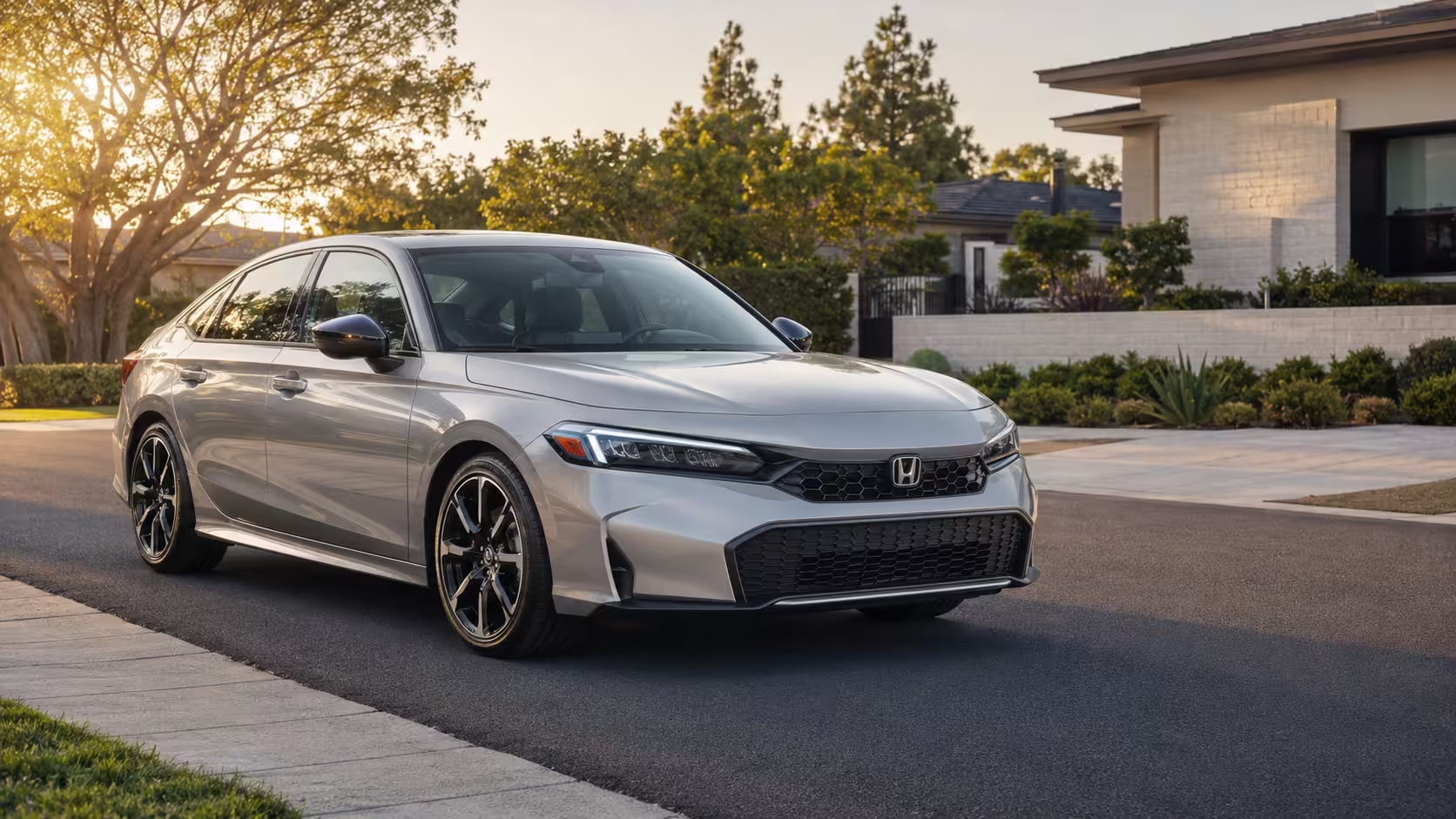
Quick Facts
The 2026 Honda Civic is not trying to reinvent the compact car. It is doing something more useful: making the compact car feel relevant again.
| Category | 2026 Honda Civic Details |
|---|---|
| Body styles | Sedan and hatchback |
| Seating | 5 passengers |
| Base engine | 2.0-liter 4-cylinder, 150 hp |
| Hybrid powertrain | 2.0-liter two-motor hybrid, 200 hp, 232 lb-ft |
| Best fuel economy | Up to 49 MPG combined |
| Sedan cargo space | 14.8 cu ft |
| Hatchback cargo space | 24.5 cu ft behind the rear seats |
| Safety | IIHS Top Safety Pick |
| 2025 U.S. sales | Over 200,000 units |
| Headline price context | $26,650 is close to the Sport trim price range, but final MSRP depends on destination fees and local dealer pricing |
The Compact Car That Does It All
The compact sedan market is smaller than it used to be, but the Honda Civic still matters because it solves real buyer problems. It is affordable compared with most new vehicles, efficient enough for long commutes, practical enough for small families, and polished enough that it does not feel like a penalty box.
That combination is harder to find than it sounds. Many compact cars are cheap but dull, efficient but slow, or stylish but compromised. The Civic has always worked because it blends the basics with just enough driver involvement to make daily use feel less anonymous.
For 2026, the Civic’s strongest argument is the hybrid. With 200 hp, 232 lb-ft from the electric motor, and up to 49 MPG combined, the Civic Hybrid gives commuters the two things they usually have to choose between: strong fuel economy and responsive acceleration.
Based on published specifications and established Civic Hybrid road-test coverage, the Civic still presents itself like a Honda in the best sense. The steering is widely praised as accurate, the chassis is composed, and the car responds cleanly without pretending to be a sports sedan. In stop-and-go traffic, the hybrid's electric torque should make the Civic feel smoother and more relaxed than the standard gas model.
This 2026 Honda Civic review is written for buyers who are trying to make a smart long-term decision. We will cover Civic price, trims, Civic Hybrid mpg, performance, safety, cargo space, technology, and how it compares with the Toyota Corolla Hybrid, Hyundai Elantra Hybrid, and Mazda3.
2026 Honda Civic Pricing and Trims
The Civic lineup looks simple at first, but the right trim depends on how you drive. If you mostly want a lower monthly payment, the gas Civic Sport makes sense. If you want the best Civic for commuting, fuel savings, and performance, the Sport Hybrid is the one to study closely.
| Trim | Body Style | Powertrain | Starting MSRP Context |
|---|---|---|---|
| LX | Sedan | 2.0L gas, 150 hp | Around $24,700 before destination |
| Sport | Sedan | 2.0L gas, 150 hp | Around $26,650 to $26,700 before destination |
| Sport Hybrid | Sedan | 2.0L hybrid, 200 hp | Around $29,400 before destination |
| Sport Touring Hybrid | Sedan | 2.0L hybrid, 200 hp | Around $32,400 before destination |
| Sport | Hatchback | 2.0L gas, 150 hp | Around $27,900 before destination |
| Sport Hybrid | Hatchback | 2.0L hybrid, 200 hp | Around $30,600 before destination |
| Sport Touring Hybrid | Hatchback | 2.0L hybrid, 200 hp | Around $33,600 before destination |
That matters for budget shoppers. If the lowest purchase price is your top priority, the Corolla Hybrid has a strong case. If you want a hybrid compact that feels quicker, steers better, and has a more premium cabin feel, the Civic Hybrid justifies its higher price more convincingly.
The best-value trim is the Civic Sport Hybrid Sedan. It gives you the full 200 hp hybrid system, excellent mpg, a more responsive driving experience, and enough equipment for most daily drivers without pushing into near-entry-luxury pricing.
The Sport Touring Hybrid is appealing if you care about extra technology, comfort, and a more upscale cabin experience. For most buyers, though, the Sport Hybrid is the smart money trim.
Before choosing between the gas Sport and Sport Hybrid, use Car Loan Calculator to compare monthly payments. The hybrid costs more up front, but fuel savings and stronger resale appeal may help close the gap over time.
Powertrain and Performance
The Civic’s biggest mechanical story is not just that it has a hybrid. It is that the hybrid is the best-driving mainstream Civic in the lineup.
The standard 2.0-liter 4-cylinder engine makes 150 hp and 133 lb-ft of torque. It is smooth, predictable, and fine for basic commuting, but it does not make the Civic feel energetic. On the highway, passing power is adequate rather than confident, especially with passengers or cargo onboard.
The hybrid changes that. Honda’s 2.0-liter two-motor hybrid system produces 200 hp, and the electric motor delivers 232 lb-ft of torque. That torque matters more in real life than the horsepower number alone because it arrives quickly when you pull away from a stoplight or merge into traffic.
In stop-and-go traffic, the Civic Hybrid feels calmer and more flexible than the standard car. You do not have to press deep into the accelerator to get useful movement, and the transition between gas and electric power feels polished.
On the highway, the hybrid’s extra power gives the Civic a more mature personality. It is easier to join fast-moving traffic, easier to pass slower vehicles, and less strained during uphill acceleration. That makes the hybrid feel less like an economy car and more like a well-rounded daily driver.
Performance testing from major outlets places the Civic Hybrid in the low 6-second range from 0 to 60 mph. The often-quoted 6.0 seconds figure captures the point well: this is a genuinely quick compact hybrid by mainstream standards.
The Civic’s chassis remains one of its strongest advantages. Compared with rivals, the steering feels more natural, the body motions are better controlled, and the car has a sense of balance that makes it enjoyable on a back road without becoming stiff or uncomfortable during the commute.
This is where the Civic separates itself from the Toyota Corolla Hybrid and Hyundai Elantra Hybrid. Those cars are efficient and sensible, but the Civic Hybrid feels more interested in the driver.
Fuel Economy: The Civic’s Biggest Win
Fuel economy is the reason many buyers will click on a 2026 Honda Civic review, and the Civic Hybrid gives them a strong answer. It delivers excellent mpg without asking the driver to accept sluggish performance.
The Civic Hybrid Sedan is rated at up to 49 MPG combined, with 50 mpg city and 47 mpg highway. That is the sweet spot for commuters because city driving is where hybrid systems usually deliver their biggest advantage.
| 2026 Civic Model | City MPG | Highway MPG | Combined MPG |
|---|---|---|---|
| Civic Sedan LX | 32 | 41 | 36 |
| Civic Sedan Sport | 31 | 39 | 34 |
| Civic Sedan Sport Hybrid | 50 | 47 | 49 |
| Civic Sedan Sport Touring Hybrid | 50 | 47 | 49 |
| Civic Hatchback Sport Hybrid | 50 | 45 | 48 |
The Civic Hybrid is not officially a 600 miles per tank car based on current verified tank size and combined fuel economy. A more realistic estimate is roughly 500-plus miles in mixed driving, depending on speed, weather, terrain, tire condition, and driving style.
That correction matters because shoppers deserve accurate expectations. The Civic Hybrid is extremely efficient, but range claims should be based on the official hybrid fuel tank and EPA combined rating, not on gas-model tank capacity.
Against the Toyota Corolla Hybrid and Hyundai Elantra Hybrid, the Civic Hybrid is not always the mpg champion. The Corolla Hybrid can reach around 50 mpg combined, and the Elantra Hybrid Blue can go even higher. But the Civic gives you stronger acceleration and better steering feel, which makes it a more complete car for buyers who care about both efficiency and driving quality.
If you drive long distances every week, use Fuel Cost & Savings Calculator before deciding. Comparing Civic Hybrid mpg with your current car’s fuel economy can show how much money you might save over one, three, or five years.
Strong Safety Ratings at an Affordable Price
The 2026 Civic gives buyers strong safety credentials without forcing them into a larger, more expensive vehicle. For first-time new car buyers and young families, that is one of its biggest strengths.
The 2026 Civic has been recognized by IIHS as a Top Safety Pick. That is not the same as Top Safety Pick+, so the distinction should be clear in any serious review.
Honda Sensing is central to the Civic’s safety story. Available and standard safety technologies include forward collision warning, collision mitigation braking, road departure mitigation, lane keeping assist, adaptive cruise control, traffic sign recognition, and automatic high beams.
Depending on trim, buyers can also get blind-spot monitoring and rear cross-traffic alert. Those features are especially useful in dense city traffic, apartment parking lots, school pickup lanes, and highway lane changes.
The Civic’s safety value is not just about crash-test ratings. It is about how the car reduces driver workload during normal use. On the highway, adaptive cruise control and lane support can make long commutes less tiring. In urban traffic, automatic emergency braking can add a layer of protection when distractions happen.
Buyers should still check the exact window sticker before purchase. Honda’s safety and driver-assistance features can vary by trim, and dealer listings sometimes group features in ways that are easy to misunderstand.
Interior, Cargo and Technology
The Civic’s interior is one of the reasons it feels more expensive than a typical compact car. It is not flashy, but it is clean, ergonomic, and designed around daily use.
The dashboard layout is low and wide, which helps forward visibility. Controls are easy to reach, and Honda wisely avoids burying every basic function inside the touchscreen. That matters when you are adjusting climate settings or audio volume while driving.
Material quality is strong for the class. The Civic does not feel like a budget car pretending to be premium. Instead, it feels like a well-engineered compact that uses its money in the right places.
The sedan offers 14.8 cubic feet of trunk space. That is enough for grocery runs, airport luggage, backpacks, and daily family errands. The hybrid battery does not erase the sedan’s trunk space, which is an important advantage over some older hybrid designs.
The hatchback is the practical pick. With 24.5 cu ft behind the rear seats, it gives the Civic more flexibility for bulky items, weekend trips, small furniture, pet gear, or college move-in duty.
Rear-seat space is good for the segment, but this is still a compact car. Taller adults may want more legroom and headroom on longer trips, especially if the front seats are set far back. For occasional family use, the Civic works well. For frequent rear-seat passengers, test the back seat carefully. Up front the Civic is one of the stronger compact cars for long-legged drivers, and our guide to the best cars for tall drivers explains where it fits.
Technology depends on trim. Lower trims use a simpler infotainment setup, while higher trims offer larger displays, wireless smartphone integration, upgraded audio, and a 10.2-inch digital instrument cluster. The Sport Touring Hybrid feels the most premium, but the Sport Hybrid gives most buyers the better value.
If your family needs more rear-seat room, easier child-seat access, and SUV cargo flexibility, read 2026 Honda CR-V Hybrid Review. The Civic is efficient and practical, but the CR-V is the more comfortable family tool.
What’s New for 2026
The 2026 Civic is not a clean-sheet redesign. It is better described as the continuation of a recently refreshed lineup that gained a much more compelling hybrid option.
That may sound less exciting than a full redesign, but it is good news for buyers. Honda already had a strong Civic platform, so the hybrid powertrain improved the car without disrupting what worked.
The key update is the hybrid’s role in the lineup. Instead of being a niche fuel-saver, it is now the version that many buyers should consider first. It is quicker, smoother in traffic, and dramatically more efficient than the standard engine.
There is also ongoing interest in a rugged Civic TrailSport idea, but Honda has not officially confirmed a Civic TrailSport for 2026. As of this writing, shoppers should focus on the verified sedan and hatchback trims.
That is important for trust. A serious automotive review should not turn rumors into buying advice. If Honda adds a Civic TrailSport later, it would deserve its own separate review because all-terrain tires, ride height changes, and suspension tuning would affect fuel economy, ride comfort, and handling.
Honda Civic vs. The Competition
The Civic’s strongest competitors are not weak. The Toyota Corolla Hybrid, Hyundai Elantra Hybrid, and Mazda3 each make a clear argument, which is why the Civic has to win on balance rather than one isolated number.
| Model | Hybrid Available | Max Combined MPG Context | Horsepower Context | Best For |
|---|---|---|---|---|
| 2026 Honda Civic Hybrid | Yes | Up to 49 MPG | 200 hp | Best balance of mpg, refinement, and driving feel |
| 2026 Toyota Corolla Hybrid | Yes | Around 50 mpg | Around 138 hp | Lowest-cost hybrid shoppers and Toyota loyalists |
| 2026 Hyundai Elantra Hybrid | Yes | Up to 54 mpg in Blue trim | Around 139 hp | Maximum mpg per dollar |
| 2026 Mazda3 | No traditional hybrid | Gas-only efficiency varies | Stronger turbo available | Premium feel and style over mpg |
But the Civic Hybrid feels more substantial from the driver’s seat. It has more power, sharper responses, and a cabin that feels more upscale. For buyers who spend an hour or more in the car every day, those differences matter.
The Hyundai Elantra Hybrid is the fuel-economy specialist. Its Blue trim posts excellent mpg numbers, and Hyundai’s warranty coverage is a major selling point. If your buying decision is mostly about fuel cost and warranty value, the Elantra deserves a serious look.
The Civic counters with better driving feel and a more mature interior presentation. Compared with the Elantra, the Civic feels less like a car built around a spreadsheet and more like a car designed for people who still care how a vehicle responds.
The Mazda3 is different. It does not offer a direct hybrid rival, but it has one of the nicest interiors in the class and a more premium personality. Buyers who care more about design, quietness, and available performance than fuel economy may prefer the Mazda.
Still, the Civic is the best all-around compact car for many shoppers because it has fewer major compromises. It may not be the cheapest, the absolute most efficient, or the most luxurious, but it blends those priorities better than most.
Expert-Verified Pros and Cons
The Civic’s biggest strength is balance. It gives buyers enough efficiency, comfort, performance, safety, and practicality to feel like a long-term smart decision.
Pros
- Excellent 49 MPG combined rating in Civic Hybrid Sedan form
- Strong 200 hp hybrid powertrain
- Electric motor provides 232 lb-ft for responsive low-speed driving
- Quick hybrid acceleration, with 0 to 60 mph performance near 6.0 seconds
- More fun to drive than most compact hybrid rivals
- Clean, upscale interior design
- Sedan and hatchback body styles
- Hatchback offers 24.5 cu ft of cargo space
- Strong safety technology and IIHS Top Safety Pick status
- Good reputation for long-term reliability and resale value
- Sport Hybrid trim offers the best mix of value, mpg, and performance
Cons
- Base 150-hp engine feels modest compared with the hybrid
- Civic Hybrid costs more than Corolla Hybrid and Elantra Hybrid entry trims
- Some desirable tech features require higher trims
- Rear seat can feel tight for taller adults
- No all-wheel-drive option
- No verified Civic TrailSport trim for 2026
- Buyers needing more family space may be better served by a compact SUV
- Sport Touring Hybrid can get expensive for a compact car
If you need sliding doors, three-row practicality, or serious family-hauling space, the Civic is not the right tool. Read 2026 Honda Odyssey Review if your next vehicle needs to handle kids, road trips, school gear, and family cargo without compromise.
Should You Buy the 2026 Honda Civic?
Yes, you should buy the 2026 Honda Civic if you want a compact car that feels efficient, reliable, refined, and genuinely pleasant to drive. The Civic Hybrid is the version we would recommend to most shoppers.
Who Should Buy the 2026 Honda Civic?
The base Civic still makes sense for buyers trying to keep the purchase price low. It is simple, efficient, and dependable. Compared with the hybrid's stronger specifications, the standard engine is the compromise.
The Sport Hybrid is the best trim because it gives you the core benefits of the lineup: 200 hp, 49 MPG, responsive electric torque, and everyday comfort without the full cost of the Sport Touring Hybrid.
Choose the Sport Touring Hybrid if you want the nicest Civic interior and more technology. Choose the hatchback if cargo flexibility matters more than sedan styling. Choose the gas Sport if upfront price matters more than fuel savings and acceleration.
Who Should Skip the 2026 Honda Civic?
Skip the Civic if you need all-wheel drive, a higher seating position, or easier child-seat loading. In that case, the 2026 Honda CR-V Hybrid Review is the more practical Honda choice.
If you want to move away from gasoline completely, check Honda Prologue Price Cut Update for Honda’s EV option. The Prologue is a different kind of vehicle, but it may make more sense for shoppers with home charging and a preference for electric driving.
For most compact-car buyers, the Civic remains one of the strongest choices in 2026. It is efficient without feeling joyless, practical without feeling cheap, and refined without losing the simple charm that made the Civic popular in the first place.
If you are still deciding between a sedan, hatchback, hybrid, SUV, or EV, use What Car Suits Me? Quiz to narrow your options before visiting a dealer.
Ready to test drive the 2026 Honda Civic? Use our Car Loan Calculator to estimate payments, then check local Honda dealer inventory. And if you’re still deciding between a sedan and an SUV, our What Car Suits Me? Quiz can help point you in the right direction.
Disclaimer: Information based on data available as of June 2026. Specifications and pricing subject to change. Always verify with your local dealer before purchase.Further reading before you buy
The Civic is one of the strongest picks in our best cars for first-time buyers guide, and it also earns a spot in our best cars for college students shortlist and our best cars for delivery drivers roundup. If you're weighing sedan alternatives, our head-to-head Honda Civic Hybrid vs Toyota Camry Hybrid comparison and our Kia Niro Hybrid vs Toyota Corolla Cross Hybrid breakdown cover the direct rivals. Sanity-check your monthly numbers with the Car Loan Calculator before you sign anything.
Sources & Citations
Primary public references used for U.S. vehicle research on AutoTechSpot: