Best Cars for First-Time Buyers 2026: Safe, Affordable Picks for New Drivers
A practical 2026 first-car buying guide with smart picks for new drivers, students, commuters, and parents helping a first-time buyer choose wisely.
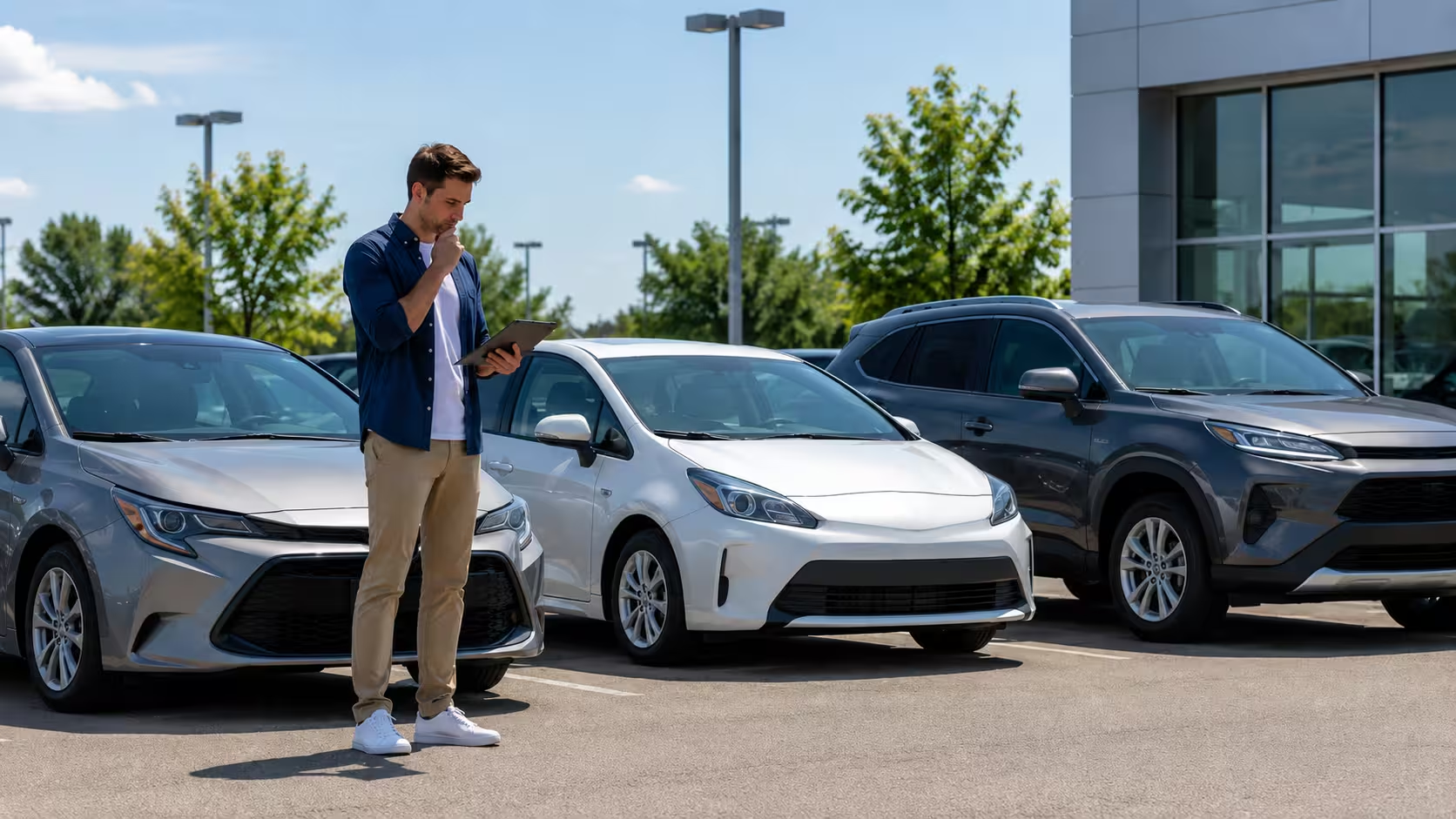
Buying your first car should feel exciting, but it should not feel like a gamble.
The best first cars for 2026 are not the flashiest, fastest, or most expensive choices. They are the cars that make daily driving easier. A good first car should be affordable to buy, simple to park, reasonable to insure, efficient on fuel, reliable enough for everyday use, and equipped with safety features that help a newer driver build confidence.
For a student, young professional, new driver, or parent helping a first-time buyer, the smartest choice is usually the car that stays affordable after the purchase. A low monthly payment can still become a bad deal if insurance, fuel, tires, registration, and maintenance leave no room in the budget.
Quick Answer: Best First Cars for 2026
| Buyer Need | Best Starting Point | Why It Works |
|---|---|---|
| Best overall first car | 2026 Honda Civic | Easy size, strong efficiency, useful space, and good resale appeal |
| Best budget first car | Recent used compact sedan or hatchback | Lower purchase price and easier insurance shopping |
| Best hybrid first car | 2026 Kia Niro Hybrid | Excellent fuel economy with hatchback practicality |
| Best long-commute first car | 2026 Toyota Camry Hybrid | Comfortable, efficient, and better suited to high-mileage driving |
| Best small SUV for first-time buyers | 2026 Toyota Corolla Cross Hybrid | Small SUV shape, useful cargo room, and hybrid efficiency |
| Best first SUV for more space | 2026 Hyundai Tucson Hybrid | More passenger and cargo room without moving into a huge SUV |
| Best only if you need family space | 2026 Kia Sorento Hybrid | Useful for families, but more expensive than most first cars |
How We Chose These First-Car Picks
A first car has a different job than a dream car. It needs to be easy to live with, not just exciting to look at.
For this guide, we focused on vehicles that make sense for new drivers and first-time buyers based on:
- Manageable size
- Strong fuel economy
- Practical interior space
- Reasonable ownership costs
- Safety features that help newer drivers
- Good everyday visibility
- Easy parking and low-stress driving
- Strong reliability reputation or buyer confidence
- Useful value compared with the alternatives
- Fit for students, commuters, young professionals, and small families
What Makes a Good First Car?
A good first car should reduce stress.
It should be predictable in traffic, easy to see out of, simple to park, and affordable enough that normal upkeep does not become a crisis.
Before comparing colors, screens, wheels, or sporty trims, look for these basics:- Affordable out-the-door price, not just a low advertised payment
- Clear outward visibility
- Manageable vehicle size
- Automatic emergency braking when available
- Blind-spot monitoring when available
- Good fuel economy for school, work, errands, and commuting
- Simple maintenance with widely available parts
- Reasonable insurance quotes for a new driver
- Strong resale appeal
- Comfortable driving position
- Controls that are easy to understand
2026 Honda Civic: Best Overall First Car
The 2026 Honda Civic is the safest starting point for many first-time buyers because it does the important things well.
It is compact enough for new drivers, efficient enough for commuting, roomy enough for friends or a small family, and familiar enough that maintenance and insurance shopping should be straightforward.
The Civic is not exciting in the same way as a sporty coupe or luxury SUV, but that is exactly why it works as a first car. It is easy to judge in traffic, easy to park, and practical enough that the buyer will not outgrow it after a few months.
Why it makes sense
The Civic balances size, efficiency, comfort, resale appeal, and daily usability better than most first-car options.
Who it fits
Students, commuters, young professionals, and buyers who want one sensible car for school, work, errands, and weekend trips.
Who should skip it
Buyers who need all-wheel drive, higher ground clearance, or frequent cargo flexibility should compare small crossovers.
Ownership note
Insurance can still be expensive for first-time buyers, so get quotes before signing. Strong resale value also means used Civic prices may stay higher than expected.
Recent Used Compact Sedan or Hatchback: Best Budget First Car
Not every first-time buyer needs a brand-new 2026 model.
For many buyers, the smartest first car is a clean recent used compact sedan or hatchback. A used Civic, Corolla, Mazda3, Elantra, Forte, Impreza, or similar compact car can lower the purchase price while still offering modern safety features and reasonable fuel economy.
A used compact car can make more sense than stretching for a new SUV, especially for students or buyers trying to keep insurance and monthly payments under control.
Why it makes sense
Lower purchase price, easier budgeting, and more flexibility if the buyer is paying cash or using a small loan.
Who it fits
Students, first-job commuters, cash buyers, and parents helping a new driver buy a practical first vehicle.
Who should skip it
Buyers who want full warranty coverage, the latest tech, or a completely clean ownership history may prefer new or certified pre-owned.
Ownership note
Always check service records, tire condition, accident history, open recalls, and get a pre-purchase inspection if possible.
2026 Toyota Camry Hybrid: Best for Long Commutes
The 2026 Toyota Camry Hybrid is more car than some new drivers need, but it makes sense for a buyer with a long commute or a household that wants one comfortable, efficient sedan.
For buyers driving a lot each week, fuel economy becomes more important. A hybrid sedan can reduce fuel stops and make commuting feel less expensive over time.
The Camry Hybrid is especially appealing for buyers who want efficiency without dealing with home charging, public charging, or EV range planning.
Why it makes sense
It blends midsize comfort with hybrid fuel economy and does not require charging.
Who it fits
Highway commuters, small families, and first-time buyers planning to keep the car for many years.
Who should skip it
Shoppers with tight city parking, a small budget, or no need for midsize space may be better served by a compact car.
Ownership note
Compare the higher payment with fuel savings using the Car Loan Calculator and Fuel Cost Calculator.
2026 Kia Niro Hybrid: Best Hybrid First Car for City Drivers
The 2026 Kia Niro Hybrid is a strong pick for buyers who want hybrid efficiency and hatchback practicality without moving into a larger SUV.
It is small enough for city driving, but the hatchback shape makes it more flexible than a traditional sedan trunk. For a student or city commuter who carries bags, sports gear, groceries, or work items, that extra flexibility matters.
The Niro Hybrid also makes sense for buyers who want low fuel use but are not ready for an EV charging routine.
Why it makes sense
It gives city drivers strong fuel economy, easy parking, and practical cargo access.
Who it fits
Urban commuters, students with gear to carry, and buyers who want low fuel use without an EV charging plan.
Who should skip it
Drivers who need all-wheel drive should compare the Corolla Cross Hybrid or another small AWD crossover.
Ownership note
Watch trim pricing. A loaded Niro can move close to larger hybrids, which may weaken the value case.
2026 Toyota Corolla Cross Hybrid: Best Small SUV for First-Time Buyers
The 2026 Toyota Corolla Cross Hybrid works for buyers who want SUV visibility and cargo access without jumping into a large vehicle.
It is a sensible middle ground between a compact car and a family crossover. You get a higher seating position, easier cargo loading, and a small-SUV shape, but the footprint remains manageable for newer drivers.
This is the kind of SUV that can work for a first-time buyer without feeling too big.
Why it makes sense
It offers a manageable size, useful cargo opening, hybrid efficiency, and a practical SUV shape.
Who it fits
New drivers in snowy areas, buyers carrying pets or sports gear, and shoppers who want a small SUV that still feels easy to drive.
Who should skip it
Solo commuters in dense cities may find a Civic or Niro easier to park and cheaper to insure.
Ownership note
All-wheel drive, SUV tires, and insurance can cost more than they would on a small sedan.
2026 Hyundai Tucson Hybrid: Best First SUV for More Space
The 2026 Hyundai Tucson Hybrid is worth considering if the first car also needs to serve a household.
It is larger than the Corolla Cross Hybrid, so it brings more passenger room, cargo space, and road-trip comfort. That extra size can be useful for families, but it also makes the budget conversation more serious.
For a new solo driver, the Tucson Hybrid may be more vehicle than necessary. For a first-time buyer with kids, regular passengers, or shared family use, it can make more sense.
Why it makes sense:
It offers family-friendly space, hybrid efficiency, and better road-trip comfort than most tiny crossovers.
Who it fits
First-time buyers with kids, shared family use, frequent passengers, or a commute that includes bad weather.
Who should skip it
Students, city parkers, and buyers with tight budgets may find it more vehicle than they need.
Ownership note
Larger tires, higher purchase price, and potentially higher insurance can offset some fuel savings. Use the How Much Car Can I Afford? calculator before deciding.
2026 Mazda CX-50 Hybrid: Best for Active Drivers
The 2026 Mazda CX-50 Hybrid fits a buyer who wants SUV practicality but does not want the car to feel anonymous.
It is a better fit for someone who enjoys driving, takes weekend trips, or wants a more active-looking compact SUV. It can work as a first car, but only if the buyer actually needs the space and can afford the higher costs compared with a compact sedan.
Why it makes sense
It combines compact-SUV usability, available all-wheel drive confidence, hybrid efficiency, and a more engaging personality.
Who it fits
Weekend travelers, outdoorsy buyers, and first-time shoppers who need useful cargo room.
Who should skip it
Drivers focused only on the lowest payment, lowest insurance, or easiest city parking should start smaller.
Ownership note
Compare trims carefully. A well-equipped compact SUV can cost enough that a simpler compact car becomes the smarter first buy.
2026 Kia Sorento Hybrid: Best Only If You Truly Need Family Space
The 2026 Kia Sorento Hybrid can work as a first purchase for someone buying a family vehicle, but it is not the default choice for a new solo driver.
It gives families more room than compact SUVs while keeping fuel costs more controlled than many gas-only three-row options. But bigger vehicles bring bigger bills, and newer drivers may find larger SUVs harder to park and maneuver.
This should be a needs-based choice, not an emotional upgrade.
Why it makes sense
It gives families more passenger space while keeping fuel use more reasonable than many larger gas SUVs.
Who it fits
Young families, shared household vehicles, and buyers who regularly carry passengers.
Who should skip it
Students, single commuters, and new drivers still learning to park and judge vehicle size.
Ownership note
Tires, insurance, registration, fuel, and repairs can all cost more than they would on a compact car.
Budget Guidance for First-Time Buyers
The monthly payment is only one line in the budget.
First-time buyers often get into trouble because they ask, “Can I afford the payment?” instead of “Can I afford the car?”
| Cost Item | Why It Matters | Smart First-Buyer Move |
|---|---|---|
| Monthly payment | Long loans can make expensive cars look affordable | Compare 48, 60, and 72 months |
| Insurance | New drivers may pay much more | Get quotes before visiting the dealer |
| Fuel | Commute length changes the real cost | Estimate annual cost before choosing gas or hybrid |
| Maintenance | Tires, brakes, fluids, and repairs are unavoidable | Keep a monthly reserve |
| Emergency fund | A flat tire or deductible can derail a tight budget | Keep cash outside the down payment |
| Taxes and fees | These change the out-the-door price | Include them before comparing deals |
For many first-time buyers, the right car leaves breathing room after the payment, insurance, fuel, and normal expenses. Buying at the absolute top of your budget can make even a reliable car feel stressful.
New vs Used First Car
New cars bring warranty coverage, the latest safety tech, and a clean history. Used cars can lower the purchase price. Certified pre-owned cars sit in the middle with inspection standards and some warranty support.
| Option | Best For | Watch Out For |
|---|---|---|
| New car | Buyers keeping the car long term | Higher price and early depreciation |
| Used car | Buyers needing the lowest price | Condition and maintenance history matter |
| Certified pre-owned | Buyers wanting lower cost with extra confidence | Pricing can sit close to new-car deals |
| Older budget car | Cash buyers avoiding loans | Repair risk and fewer safety features |
- Tire condition
- Service records
- Accident history
- Open recalls
- Brake feel
- Warning lights
- Fluid leaks
- Whether all keys are included
- Whether the title is clean
- Whether the seller has maintenance proof
Safety Checklist for First-Time Buyers
Safety features matter more for a first car than luxury features.
Look for:- Automatic emergency braking
- Blind-spot monitoring
- Rear cross-traffic alert
- Lane-keeping assistance
- Adaptive cruise control for highway commuters
- Good headlights
- Clear rear visibility
- Useful backup camera
- Tires with even tread
- Smooth, predictable brakes
- Simple controls
- Comfortable seating position
Common First-Time Buyer Mistakes
The biggest mistake is shopping emotionally before setting the budget.
A dealer can make a car feel affordable by stretching the loan term, but a long loan can leave a buyer owing more than the car is worth.
Other mistakes include:- Not checking insurance before choosing the vehicle
- Ignoring fuel cost because the payment looks manageable
- Choosing wheels or screens over safety and reliability
- Buying more SUV than the driver needs
- Skipping a pre-purchase inspection on a used car
- Forgetting tires, brakes, registration, and emergency savings
- Focusing on MSRP instead of the out-the-door price
- Choosing a vehicle before test-driving it properly
- Buying a trim because it looks better, not because it fits the budget
Which First Car Should You Choose?
| If Your Priority Is... | Start With... | Why |
|---|---|---|
| Lowest stress | Honda Civic or similar compact | Easy size and strong resale appeal |
| Lowest fuel cost | Kia Niro Hybrid or Camry Hybrid | Hybrid savings show up every week |
| Snow and cargo flexibility | Corolla Cross Hybrid | Small SUV shape with hybrid efficiency |
| Family use | Tucson Hybrid or Sorento Hybrid | More room for passengers and luggage |
| City parking | Civic, Niro, or a small hatchback | Easier to maneuver and insure |
| Long highway commute | Camry Hybrid | Comfort and efficiency matter over distance |
| Lowest purchase price | Recent used compact sedan | Easier to keep total cost under control |
| Outdoor weekends | Mazda CX-50 Hybrid | More cargo flexibility and SUV confidence |
Final Recommendation
For most first-time buyers in 2026, start with a compact car or compact hybrid before moving up to an SUV.
The Honda Civic is the best overall first-car starting point because it balances size, efficiency, daily usability, resale appeal, and ease of ownership. It is practical without feeling too big, too expensive, or too complicated.
Choose the Toyota Camry Hybrid if your commute is long. Choose the Kia Niro Hybrid if you want excellent fuel economy with hatchback practicality. Choose the Toyota Corolla Cross Hybrid if you need a small SUV with easier cargo access and available all-wheel drive.
Move up to Tucson Hybrid, CX-50 Hybrid, or Sorento Hybrid only if your space needs justify the higher cost.
The best first car is the one that still feels affordable, safe, and useful two years from now.
Sources & Citations
Primary public references used for U.S. vehicle research on AutoTechSpot: