2026 Toyota Camry Hybrid Review Why America Keeps Buying This 50 MPG Sedan
The Accord has more legroom. The Sonata costs a little less. But the 2026 Camry Hybrid matches the best MPG, adds AWD, and still undercuts them on price.
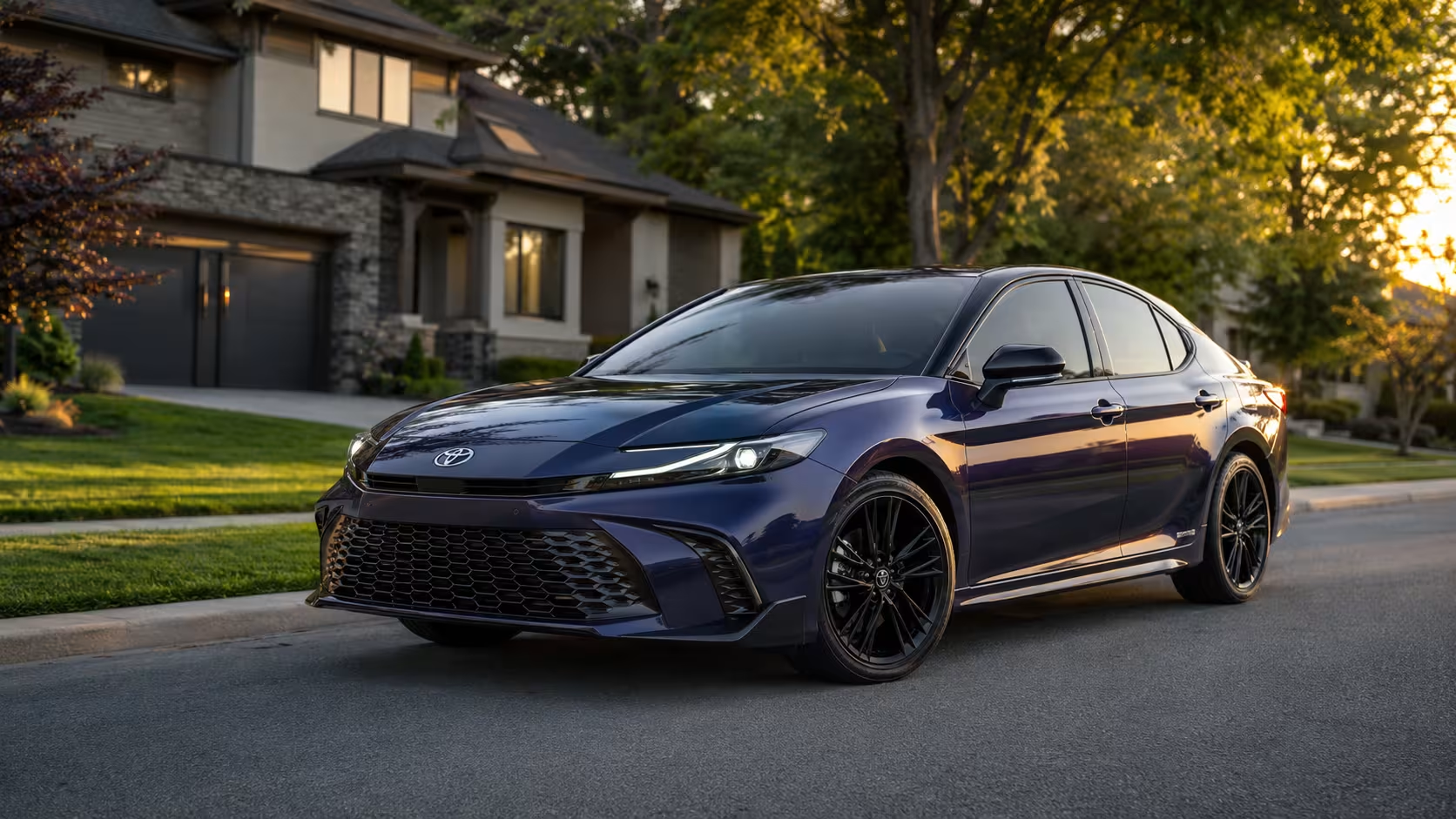
Quick Facts
| Starting MSRP (incl. destination) | $30,495 (LE FWD) |
|---|---|
| Powertrain | 2.5L 4‑cylinder hybrid, eCVT, 225 hp (FWD), 232 hp (AWD) |
| Fuel Economy (EPA) | Up to 52 city / 51 combined mpg (LE FWD) |
| Drivetrain | Front‑wheel drive standard, all‑wheel drive available on all trims (+$1,525) |
| Cargo Space | 15.1 cubic feet |
| Seating | 5 passengers |
| Safety Ratings | IIHS Top Safety Pick+, NHTSA 5‑Star |
| Sales (2025) | Over 316,000 units – America’s best‑selling sedan |
| Note | The 2026 Camry is hybrid‑only; there is no gas‑only version |
The Sedan That Just Won’t Quit
The midsize sedan segment keeps shrinking, yet the Toyota Camry keeps finding ways to dominate it. For 2026, Toyota did something most automakers would consider unthinkable: it killed every non‑hybrid powertrain. The Camry now arrives exclusively as a hybrid, a move that transformed it from a sensible transportation appliance into the most fuel‑efficient mainstream sedan in America. And the market’s response? Not panic, but a collective shrug of approval followed by increased showroom traffic.
Camry's Record-Breaking Sales
The numbers back it up. Toyota moved 316,611 units in 2025, making the Camry the best‑selling passenger car in the country for yet another year. It outsold the Prius and Prius Plug‑in Hybrid combined by a factor of nearly six. Through the first quarter of 2026, Camry sales grew 11.3% year‑over‑year to 78,255 units, even as tariff‑driven pull‑forward effects distorted the overall market. Buyers didn’t just tolerate the hybrid‑only gamble; they rewarded it.
So what makes this car so compelling? In this review, AutoTechSpot examines the Camry Hybrid’s real‑world efficiency, driving dynamics, safety credentials, and day‑to‑day livability. We’ll also put it head‑to‑head against the Honda Accord Hybrid and Hyundai Sonata Hybrid to help you decide if it belongs in your driveway.
2026 Camry Hybrid Pricing and Trims
Toyota keeps the trim walk refreshingly simple: LE, SE, Nightshade Edition, XLE, and XSE. Every model is a hybrid. Front‑wheel drive comes standard, and all‑wheel drive adds exactly $1,525 regardless of trim.
| Trim | FWD MSRP (incl. destination) | AWD Premium | AWD MSRP (est.) | KBB Fair Purchase Price (FWD) |
|---|---|---|---|---|
| LE | $30,495 | +$1,525 | $32,020 | $29,800 – $30,200 |
| SE | $32,410 | +$1,525 | $33,935 | $31,600 – $32,100 |
| Nightshade Ed. | $33,850 | +$1,525 | $35,375 | $33,000 – $33,600 |
| XLE | $35,270 | +$1,525 | $36,795 | $34,200 – $34,900 |
| XSE | $37,595 | +$1,525 | $39,120 | $36,400 – $37,100 |
From a buyer’s perspective, the SE trim is the one most shoppers should gravitate toward. For a $1,915 premium over the LE, you get a sport‑tuned suspension, 18‑inch black wheels, a leather‑wrapped steering wheel, and far more visual presence. It still returns 46 mpg combined in FWD form, so you sacrifice little in efficiency. The new Nightshade Edition adds dark styling flourishes atop the SE’s bones, and XLE and XSE open the door to larger screens, leather, and JBL audio. But for sheer value, the SE is the sweet spot.
Use our Car Loan Calculator to estimate your monthly payment before you visit the dealership.
Powertrain and Performance
Under the hood sits Toyota’s fifth‑generation hybrid system, centered on a 2.5‑liter 4‑cylinder gasoline engine. Total output is 225 horsepower for front‑drive models and 232 horsepower for those equipped with the optional AWD system, which adds a separate electric motor on the rear axle. Torque from the gasoline engine alone is 163 lb‑ft, though the electric motors fill in the low‑end response so effectively that the number doesn’t tell the full story.
Zero to 60 with the Hybrid Leader
Independent testing clocks the FWD Camry from zero to 60 mph in roughly 7.2 seconds. That’s quick enough to lead the hybrid midsize pack, and in daily driving the electric torque makes the car feel even livelier from a stop. Merging onto a busy freeway is a stress‑free exercise; the powertrain builds speed with a linear, unobtrusive hum rather than a strained roar.
Ride Quality and Daily Livability
What owners consistently praise and what our analysis of road‑test data confirms is the Camry’s uncanny refinement. At 70 mph, the cabin remains quiet enough for normal‑volume conversation. The suspension softens broken pavement without introducing float, and the brake pedal delivers a natural, progressive feel. The eCVT can still drone under full throttle, a trait shared by most Toyota hybrids, but it’s less intrusive here than in the previous generation. The car’s mission is comfort, not corner‑carving, and it executes that mission with polish. For families who view their vehicle as a calm, dependable cocoon, the Camry nails it.
Fuel Economy is the Camry’s Biggest Win
Efficiency is where the all‑hybrid strategy pays off most tangibly. The LE FWD leads the lineup with an EPA rating of 52 mpg city / 49 mpg highway / 51 mpg combined. With a 13‑gallon tank, highway range stretches close to 600 miles fewer gas station stops, more time spent actually driving.
Wider tires and more equipment modestly ding the numbers on other trims:
| Trim (FWD) | City | Highway | Combined |
|---|---|---|---|
| LE | 52 | 49 | 51 |
| SE / Nightshade / XLE | 47 | 45 | 46 |
| XSE | 47 | 45 | 46 |
| Trim (AWD) | City | Highway | Combined |
|---|---|---|---|
| LE | 50 | 49 | 50 |
| SE / Nightshade / XLE | 46 | 46 | 46 |
| XSE | 43 | 43 | 43 |
Against the Honda Accord Hybrid (48 mpg combined) and Hyundai Sonata Hybrid (51 mpg combined), the Camry LE matches the Sonata’s top number while providing a 33‑horsepower advantage and, uniquely, an available all‑wheel drive. The tradeoff, if there is one, is that the Accord holds slightly more value over time iSeeCars data shows a five‑year retained value of 54.5% for the Accord compared to 45.5% for the Camry.
Try our Fuel Cost & Savings Calculator to see exactly how much you’d save on gas each year compared to a non‑hybrid.
Top Safety Pick+ at an Affordable Price
The Camry’s safety resume is best in class. The IIHS gives it Top Safety Pick+ honors with “Good” ratings in every crashworthiness test, including the tricky small overlap front evaluation. NHTSA awards an overall 5‑Star rating.
Toyota Safety Sense 3.0 is standard equipment on every Camry, from the base LE upward. That means every buyer gets:
- Pre‑collision system with pedestrian detection
- Proactive driving assist
- Lane tracing assist
- Blind‑spot monitoring with rear cross‑traffic alert
- Full‑speed adaptive cruise control
- Road sign assist
Interior, Cargo, and Technology
Step inside and the Camry’s design philosophy becomes clear: everything is where you expect it to be. The standard 8‑inch touchscreen sits high on the dash, wireless Apple CarPlay and Android Auto are included, and physical knobs for climate and volume remain thankfully intact. Higher trims offer a 12.3‑inch touchscreen and a 12.3‑inch digital instrument cluster, plus available upgrades like a 9‑speaker JBL audio system, head‑up display, ventilated seats, Digital Key, and a panoramic sunroof.
Practical Interior Quality and Cargo Layout
Material quality is pleasant but not flashy. Soft‑touch surfaces appear where elbows rest; hard plastics are relegated to lower areas. The trunk offers 15.1 cubic feet of space, which is generous and well‑shaped, though the rear seats don’t fold completely flat because of the hybrid battery packaging.
Rear Seat Legroom and Comfort Tradeoffs
Where the Camry falls short of the segment leader, the Accord, is rear legroom. The Camry provides 38.0 inches, which is adequate for most families. The Accord stretches that to 40.8 inches, a difference tall passengers will notice on longer trips. If you routinely haul adults in the back seat, test both before committing. Front headroom is the Camry's tighter dimension, which matters if you are over six feet; see our best cars for tall drivers guide for the published figures.
What’s New for 2026
New for 2026 is the Nightshade Edition, an appearance package based on the SE. It layers on gloss‑black mirror caps, window trim, badging, and a dark grille surround, all riding on 19‑inch black‑painted wheels. The car keeps the SE’s sport‑tuned suspension, so the look matches a slightly more responsive chassis.
Toyota also introduced a new Dark Cosmos exterior hue a deep blue‑black metallic available on SE, XLE, and XSE trims. It’s a subtle color that shifts personality in different light, lending the Camry an upscale feel without screaming for attention.
Camry Hybrid vs. The Competition
Here’s how the 2026 Camry Hybrid compares to its two most direct rivals:
| Model | Base Hybrid MSRP (incl. dest.) | Horsepower | Combined MPG | Standout Feature |
|---|---|---|---|---|
| 2026 Toyota Camry LE Hybrid | $30,495 | 225 hp | 51 | Available AWD, Top Safety Pick+ |
| 2026 Honda Accord Sport Hybrid | $33,990 | 204 hp | 48 | Sharper handling, most rear legroom |
| 2026 Hyundai Sonata SEL Hybrid | $31,950 | 192 hp | 51 | Lower entry price (SEL), unique design |
If you’re considering a hybrid SUV instead, read our full 2026 Honda CR‑V Hybrid review or our 2026 Hyundai Tucson Hybrid review for a different take on family efficiency.
Expert-Verified Pros and Cons
Pros
- Exceptional fuel economy (up to 52 mpg city) without the usual tradeoff in power
- Standard hybrid powertrain across the entire lineup
- Available all‑wheel drive, a rarity among hybrid sedans
- IIHS Top Safety Pick+ and NHTSA 5‑Star safety ratings
- Superb predicted reliability and a composed, quiet ride
- Lower starting price than key rivals
Cons
- Driving experience prioritizes comfort over engagement; not a sport sedan
- Rear legroom lags the Honda Accord by nearly three inches
- eCVT can drone under hard acceleration, though it’s less pronounced than before
- Styling is conservative inside and out, which may deter some buyers
Who Should Buy the 2026 Camry Hybrid?
The 2026 Camry Hybrid is the rational champion of the family sedan class, and it wears that title without apology. Buy it if you want outstanding fuel economy, rock‑solid reliability, top‑tier safety, and a genuinely serene cabin experience. Buy it if you need all‑wheel drive in a hybrid sedan, because no competitor offers that combination at this price. And buy it if you plan to keep the car for a decade; the Camry’s durability and widespread dealer support make it one of the lowest‑stress ownership propositions on the market.
Choose the Honda Accord Hybrid instead
If you value a more engaging steering feel, sharper handling, or need every inch of rear legroom. Its higher retained value after five years also makes it a stronger financial play for those who trade in sooner.
Look at the Hyundai Sonata Hybrid
If you prefer a more distinctive exterior and interior design, or if you want a slightly lower entry price and are willing to trade horsepower and AWD availability for it.
Who Should Skip the 2026 Camry Hybrid?
if you demand genuine driving excitement or if you find its conservative design uninspiring. But for everyone else commuters, families, first‑time buyers, empty nesters the Camry Hybrid remains the default answer.
Ready to test drive a 2026 Camry Hybrid? Use our Car Loan Calculator to plan your budget, then check local Toyota dealer inventory. And if you are still deciding between a sedan and an SUV, our What Car Suits Me? Quiz can help point you in the right direction.
Information based on data available as of June 2026. Specifications and pricing subject to change. Always verify with your local dealer before purchase.Further reading
The Camry Hybrid consistently appears in our best cars for long commutes guide, and it also fits the profile in our best cars for delivery drivers roundup for high-mileage sedan buyers. Compare it head to head against Honda in our Civic Hybrid vs Camry Hybrid comparison, or cross-shop hybrid crossovers with our Kia Niro Hybrid vs Toyota Corolla Cross Hybrid breakdown. Use the Fuel Cost Calculator with your real commute distance to see the yearly savings.
Sources & Citations
Primary public references used for U.S. vehicle research on AutoTechSpot: