Kia Niro vs Toyota Corolla Cross Hybrid: Which Small Hybrid SUV Is Better?
A buyer-first comparison of the Kia Niro Hybrid and Toyota Corolla Cross Hybrid for shoppers choosing between low fuel cost and small-SUV practicality.
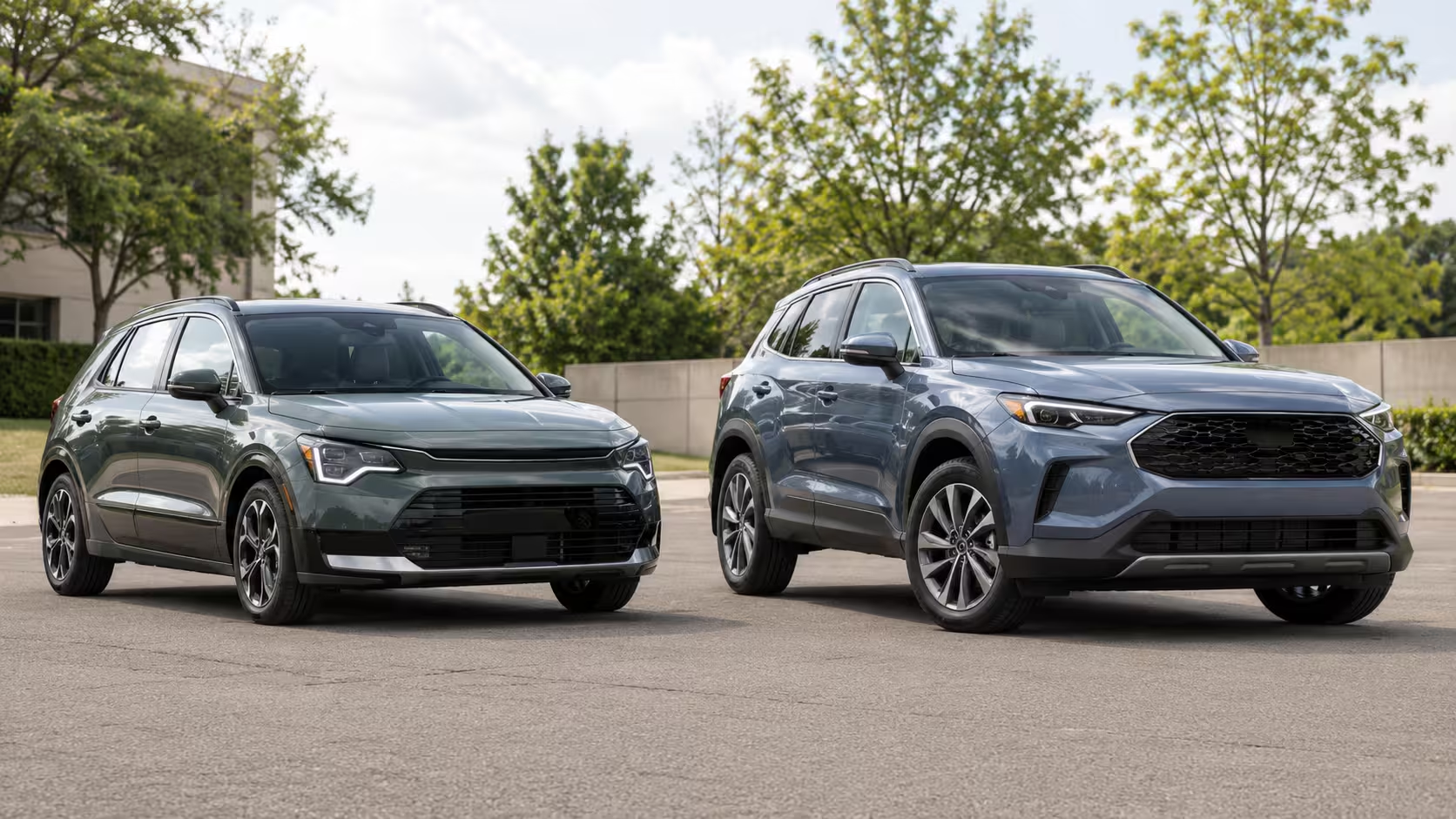
The Kia Niro Hybrid vs Toyota Corolla Cross Hybrid decision is really a choice between two different versions of practical hybrid ownership.
The Kia Niro Hybrid is the better fit if your main goal is low fuel cost, easy city driving, simple parking, and hatchback-style practicality. It is more commuter-focused than SUV-focused.
The Toyota Corolla Cross Hybrid is the stronger fit if you want a more traditional small-SUV shape, standard all-wheel-drive confidence, higher seating, cargo flexibility, and Toyota resale appeal.
Neither one is the right answer for every buyer. The better choice depends on your commute, parking situation, weather, cargo needs, family use, local pricing, insurance quotes, and how long you plan to keep the vehicle.
If you are still unsure which body style fits your daily routine, start with the What Car Suits Me? quiz. Then compare monthly payment, fuel cost, insurance, and real cargo needs before visiting dealers.
Quick Verdict
Choose the Kia Niro Hybrid if you want the more fuel-focused, city-friendly, lower-stress commuter.
Choose the Toyota Corolla Cross Hybrid if you want the more SUV-like hybrid with all-weather confidence, easier cargo loading, and stronger family practicality.
| Buyer Priority | Better Starting Point | Why |
|---|---|---|
| Lowest fuel cost | Kia Niro Hybrid | It is built around efficiency and easy commuting |
| City driving | Kia Niro Hybrid | Smaller, easier to park, and less SUV-like |
| AWD/weather confidence | Toyota Corolla Cross Hybrid | Hybrid trims are AWD-focused |
| Family errands | Toyota Corolla Cross Hybrid | More SUV-like shape and easier loading |
| Higher seating position | Toyota Corolla Cross Hybrid | Feels more like a traditional crossover |
| Warranty confidence | Kia Niro Hybrid | Kia’s long warranty is a value advantage |
| Resale confidence | Toyota Corolla Cross Hybrid | Toyota’s reputation helps resale-minded buyers |
| Best overall commuter | Kia Niro Hybrid | Better if fuel cost and daily ease matter most |
| Best small hybrid SUV | Toyota Corolla Cross Hybrid | Better if SUV practicality matters most |
Key Specs: Kia Niro Hybrid vs Toyota Corolla Cross Hybrid
| Spec | Kia Niro Hybrid | Toyota Corolla Cross Hybrid | Buyer Takeaway |
|---|---|---|---|
| Body style | Hybrid hatchback / small crossover | Small hybrid SUV | Niro feels more like an efficient hatchback; Corolla Cross feels more SUV-like |
| Drivetrain | Front-wheel drive | All-wheel drive | Corolla Cross has the weather-confidence edge |
| Combined output | About 139 hp | About 196 hp | Corolla Cross has more power |
| Fuel economy | Up to about 49–53 mpg combined depending on trim/source | About 42 mpg combined | Niro has the fuel-cost advantage |
| Seating | 5 passengers | 5 passengers | Both work for small households |
| Cargo personality | Hatchback-style practicality | More traditional SUV cargo access | Corolla Cross is easier for bulky items |
| Best use case | City commuting and fuel savings | Small-family use, AWD, and SUV utility | Use case decides the winner |
| Main tradeoff | No AWD and less SUV stance | Higher price and lower MPG than Niro | Choose based on what you will actually use |
Kia Niro Hybrid Overview
The 2026 Kia Niro Hybrid is the more efficiency-focused choice.
It is not trying to be a rugged SUV. It is a small hybrid with a practical hatchback body, easy city manners, and a strong value story for commuters.
The Niro makes sense if you spend a lot of time in traffic, park in tight lots, drive mostly alone or with one passenger, and want fuel economy to be one of the main reasons you bought the car.
Its biggest advantage is the ownership-cost mindset. Lower fuel use, manageable size, and Kia’s warranty coverage make it attractive for buyers who want a rational daily driver instead of a larger crossover they may not need.
The Niro is also a good fit for small households that want flexible cargo space without stepping up to a bulkier SUV.
Who should buy the Niro Hybrid
- City and suburban commuters
- High-mileage drivers focused on fuel cost
- Apartment dwellers with tight parking
- Buyers who do not need all-wheel drive
- Small households with normal cargo needs
- Shoppers who value warranty coverage
Who should skip the Niro Hybrid
- Drivers who need AWD
- Buyers who want a taller traditional SUV stance
- Families that regularly carry bulky cargo
- Shoppers who want more ground clearance
- Buyers who prioritize Toyota resale confidence over Kia warranty value
Toyota Corolla Cross Hybrid Overview
The 2026 Toyota Corolla Cross Hybrid is the more SUV-like option.
It is still small enough for daily commuting, but it gives buyers a higher seating position, easier cargo loading, all-wheel-drive confidence, and a crossover personality that the Niro does not fully chase.
For many shoppers, the Corolla Cross Hybrid’s appeal is confidence. Toyota’s reliability and resale reputation matter to buyers who plan to keep the vehicle for a long time or want a simpler resale story later.
It may also appeal more to snow-belt shoppers or buyers who regularly drive in rain, rough weather, steep driveways, or rural areas.
The Corolla Cross Hybrid is not the lowest-fuel-cost answer in this comparison. Its strength is that it combines hybrid efficiency with a more traditional small-SUV package.
Who should buy the Corolla Cross Hybrid
- Small families
- Buyers who want standard AWD confidence
- Drivers in snowy or rainy areas
- Shoppers who prefer a higher seating position
- Pet owners or buyers carrying bulky cargo
- Long-term Toyota resale-minded buyers
Who should skip the Corolla Cross Hybrid
- Dense-city drivers who want the easiest parking
- Buyers focused only on maximum MPG
- Shoppers who do not need AWD
- Drivers who dislike paying extra for SUV packaging
- Commuters who would be just as happy in a smaller hatchback
Price and Value
Price is where buyers need to slow down.
Search results may show Kia Niro Hybrid price or Toyota Corolla Cross Hybrid price, but the real decision happens at the out-the-door number.
That includes:
- Selling price
- Destination charge
- Dealer add-ons
- Taxes and fees
- APR
- Loan term
- Trade-in value
- Insurance quote
- Local inventory
- Trim availability
The Corolla Cross Hybrid can justify its higher cost if you use the extra practicality, prefer Toyota’s resale reputation, or need all-weather confidence.
| Cost Question | Why It Matters | Better Starting Point |
|---|---|---|
| Lowest monthly payment | Trim and APR can matter more than brand | Compare real dealer quotes |
| Lowest fuel cost | High-mileage drivers feel MPG differences faster | Kia Niro Hybrid |
| Best resale confidence | Brand perception affects long-term value | Toyota Corolla Cross Hybrid |
| Warranty value | Longer warranty coverage can reduce buyer anxiety | Kia Niro Hybrid |
| Family practicality per dollar | Space you use can justify a higher payment | Toyota Corolla Cross Hybrid |
| Best city value | Easy parking and low fuel use matter daily | Kia Niro Hybrid |
| Best all-weather value | AWD confidence can matter more than MPG | Toyota Corolla Cross Hybrid |
Fuel Economy and Real-World Cost
Fuel economy is one of the Niro Hybrid’s biggest advantages.
The Niro is the stronger fuel-cost candidate because its whole personality is built around efficiency and easy commuting. The Corolla Cross Hybrid is still efficient for a small SUV, but its advantage is broader practicality rather than chasing the lowest possible fuel bill.
That difference matters more if you drive a lot.
A shopper with a short commute may not save enough fuel to outweigh a higher price or a less suitable vehicle. A high-mileage driver can feel fuel savings every week.
Use the Fuel Cost Calculator with your actual commute distance, local gas price, and expected annual mileage. Do not rely only on advertised MPG. Your route, speed, weather, tires, and driving style can all change the real number.
Example: Fuel Cost Difference
Here is a simple example.
Imagine the Kia Niro Hybrid averages 49 mpg combined and the Toyota Corolla Cross Hybrid averages 42 mpg combined. If gas costs $3.75 per gallon and you drive 15,000 miles per year:
| Vehicle | Combined MPG | Gallons Per Year | Estimated Annual Fuel Cost |
|---|---|---|---|
| Kia Niro Hybrid | 49 mpg | 306 gallons | $1,148 |
| Toyota Corolla Cross Hybrid | 42 mpg | 357 gallons | $1,339 |
That is helpful, but it may not be enough by itself to decide the whole comparison. If the Corolla Cross Hybrid gives you AWD, better cargo access, and family practicality you use every week, the extra fuel cost may be acceptable.
If you mostly commute alone and do not need the SUV advantages, the Niro’s lower fuel use and smaller footprint may make more sense.
Cargo, Space, and Family Use
For singles, couples, and light-duty family use, the Niro can be enough.
The hatchback opening is useful for groceries, bags, small gear, and day-to-day errands. It is easy to live with if your cargo needs are normal and you value a smaller footprint.
The Corolla Cross Hybrid is the better fit if your daily life includes child seats, pets, strollers, sports gear, home-improvement errands, or frequent passengers. Its more traditional crossover shape makes loading and unloading feel easier, and the higher seating position may be more comfortable for some buyers.
| Scenario | Better Choice | Reason |
|---|---|---|
| Solo commuting | Kia Niro Hybrid | Smaller, efficient, and easy to park |
| Two-person household | Kia Niro Hybrid | Practical without paying for extra SUV you may not use |
| Child seats and family errands | Toyota Corolla Cross Hybrid | More SUV-like access and flexibility |
| Pets or bulky gear | Toyota Corolla Cross Hybrid | Cargo height and loading shape help |
| Apartment or city parking | Kia Niro Hybrid | Smaller footprint is easier daily |
| Weekend family trips | Toyota Corolla Cross Hybrid | Better fit when space matters more than minimum fuel cost |
| Grocery runs and normal errands | Either | Both can handle everyday use |
| Outdoor gear or rougher roads | Toyota Corolla Cross Hybrid | More SUV-like packaging helps |
City Driving vs Highway Driving
In the city, the Niro has the edge.
It is easier to place in traffic, easier to park, and better aligned with buyers who want a low-stress commuter. If most of your life is short trips, tight parking, and fuel-conscious errands, the Niro feels more natural.
On the highway, the answer depends more on seat comfort, road noise, and how each vehicle feels to you.
The Corolla Cross Hybrid may feel more substantial to buyers who prefer a crossover seating position. The Niro may feel more efficient, lighter, and less bulky.
For a long commute, do not decide from a five-minute neighborhood loop. Test both at highway speed, check cabin noise, and make sure adaptive cruise control and lane keeping assist behave the way you expect.
AWD and Weather
This is one of the clearest reasons to choose the Corolla Cross Hybrid.
If you live with snow, frequent rain, steep driveways, gravel roads, or rural routes, the Toyota’s AWD-oriented small-SUV positioning may matter more than the Niro’s fuel advantage.
That does not make the Corolla Cross Hybrid an off-road SUV. It is still a small crossover, and tires matter enormously in winter. But for buyers who want a hybrid with more all-weather confidence, it belongs higher on the list.
If you live in a warm climate, park on paved roads, and rarely face poor traction, do not pay for capability you will barely use. In that case, the Niro’s simpler commuter mission may be the smarter buy.
Warranty, Resale, and Ownership Confidence
Ownership cost is not just fuel.
It includes:
- Maintenance
- Tires
- Insurance
- Warranty coverage
- Resale value
- Loan interest
- Depreciation
- How long you keep the vehicle
The Corolla Cross Hybrid’s case is strongest when you care about Toyota’s long-term reputation, resale perception, and the practical value of a small SUV body.
| Ownership Factor | Kia Niro Hybrid | Toyota Corolla Cross Hybrid |
|---|---|---|
| Fuel cost | Strongest argument | Still efficient, but broader tradeoff |
| Maintenance | Budget like any hybrid commuter | Budget like any hybrid crossover |
| Tires | Smaller commuter-focused setup may help, depending on trim | SUV tires can cost more, depending on size |
| Insurance | Get quotes before deciding | Get quotes before deciding |
| Warranty | Kia coverage is a buyer-confidence advantage | Toyota counters with reputation and resale |
| Resale value | Warranty and efficiency help | Toyota brand perception is a major advantage |
| Long-term confidence | Strong if warranty matters most | Strong if resale/reliability perception matters most |
Which One Wins by Category?
| Category | Winner | Why |
|---|---|---|
| Fuel economy | Kia Niro Hybrid | Better MPG and lower fuel-cost focus |
| City driving | Kia Niro Hybrid | Smaller and easier to park |
| Highway comfort | Depends | Test both for seat comfort and noise |
| AWD/weather confidence | Toyota Corolla Cross Hybrid | AWD-focused hybrid setup gives it the advantage |
| Cargo flexibility | Toyota Corolla Cross Hybrid | More SUV-like loading and utility |
| Family use | Toyota Corolla Cross Hybrid | Better for child seats, pets, and bulky errands |
| Warranty confidence | Kia Niro Hybrid | Kia’s long warranty is a value advantage |
| Resale confidence | Toyota Corolla Cross Hybrid | Toyota brand perception helps resale-minded buyers |
| Best low-cost commuter | Kia Niro Hybrid | Better if fuel cost matters most |
| Best small hybrid SUV | Toyota Corolla Cross Hybrid | Better if SUV practicality matters most |
Buyer Scenarios
| Buyer Type | Better Pick | Why |
|---|---|---|
| City commuter | Kia Niro Hybrid | Easier to park and focused on low fuel use |
| Suburban commuter | Kia Niro Hybrid | Efficient and practical for daily errands |
| Small family | Toyota Corolla Cross Hybrid | More SUV-like access and family flexibility |
| Long commute | Kia Niro Hybrid if fuel cost dominates; Corolla Cross if comfort and AWD matter | Commute type decides the winner |
| Snowy climate | Toyota Corolla Cross Hybrid | Better fit when AWD confidence is important |
| Lowest fuel cost | Kia Niro Hybrid | Efficiency is its core advantage |
| Resale-focused buyer | Toyota Corolla Cross Hybrid | Toyota reputation may help long-term value |
| Warranty-focused buyer | Kia Niro Hybrid | Kia warranty coverage is a major value point |
| Budget-focused buyer | Kia Niro Hybrid, if local pricing supports it | Lower operating cost can matter more than SUV image |
| Pet owner or cargo-heavy buyer | Toyota Corolla Cross Hybrid | SUV shape is easier to live with |
Which One Should You Buy?
Choose the Kia Niro Hybrid if your life is mostly commuting, errands, city driving, and fuel-conscious daily use.
It is the smarter pick for buyers who want a practical hybrid without paying for a more SUV-like package they do not need.
The Niro is the better choice if you care more about:
- Fuel economy
- Easy parking
- City driving
- Warranty value
- Lower daily operating cost
- Hatchback-style practicality
- A smaller footprint
It is the better choice if you care more about:
- AWD confidence
- Higher seating
- SUV-like cargo access
- Toyota resale perception
- Small-family practicality
- Pets, strollers, or bulky errands
- A more traditional crossover feel
Then use the Fuel Cost Calculator, Car Loan Calculator, and How Much Car Can I Afford? calculator before negotiating.
Final Recommendation
There is no honest single winner for every buyer.
The Kia Niro Hybrid is the better commuter and fuel-cost choice. It fits drivers who want a small, efficient, city-friendly hybrid that keeps ownership stress low.
The Toyota Corolla Cross Hybrid is the better small hybrid SUV choice. It fits buyers who want more crossover practicality, all-weather confidence, family usability, and Toyota resale appeal.
If your daily life is mostly one-person commuting, start with the Niro.
If your vehicle has to handle weather, cargo, child seats, pets, and resale-minded ownership, start with the Corolla Cross Hybrid.
The simplest way to decide is this:
Buy the Kia Niro Hybrid for fuel savings and city-friendly commuting. Buy the Toyota Corolla Cross Hybrid for AWD, cargo flexibility, and small-SUV practicality.
Related editorial reading
Buyers using either of these hybrids for gig work should read our best cars for delivery drivers guide, and students weighing the same price bracket will get more context from our best cars for college students roundup and our best cars for first-time buyers list. If you're actually cross-shopping a larger compact hybrid SUV, jump to our Kia Sportage Hybrid vs Hyundai Tucson Hybrid comparison, and sedan-curious shoppers should read the Honda Civic Hybrid vs Toyota Camry Hybrid breakdown.
Sources & Citations
Primary public references used for U.S. vehicle research on AutoTechSpot: