Kia Sportage Hybrid vs Hyundai Tucson Hybrid: One Is Clearly Better for Most Buyers
Don
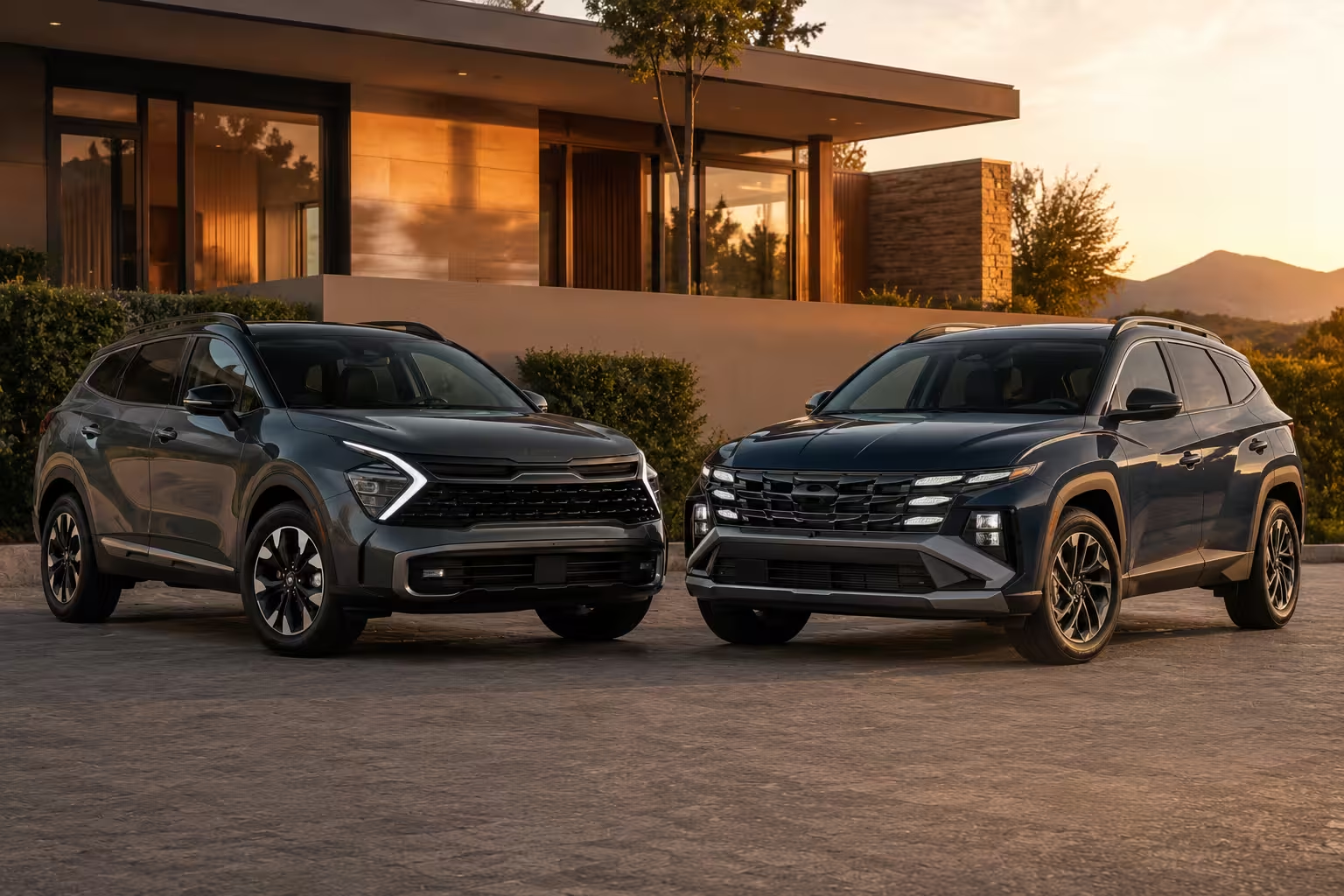
The Kia Sportage Hybrid and Hyundai Tucson Hybrid share a lot under the skin. They come from the same corporate family, use closely related hybrid systems, and target the same compact SUV shopper. On paper, that can make the decision look like a coin flip.
In practice, the two vehicles feel different once you spend time in them. The Sportage Hybrid leans sportier, sharper, and more design-forward. The Tucson Hybrid leans quieter, softer, and more comfort-oriented. Both are strong picks in the 2026 compact hybrid SUV market, and both are worth a real test drive before signing anything.
This guide compares the two on the things that actually shape ownership: fuel economy, price, warranty, cargo space, family use, safety technology, reliability reputation, and long-term cost.
Quick Verdict
Choose the Kia Sportage Hybrid if you want a sportier, more expressive compact hybrid SUV with sharper styling and a slightly more engaging feel behind the wheel.
Choose the Hyundai Tucson Hybrid if you want a calmer, quieter, more comfort-focused hybrid SUV that emphasizes ride quality and daily ease.
| Buyer Priority | Better Starting Point | Why |
|---|---|---|
| Styling and personality | Kia Sportage Hybrid | Bolder exterior and more aggressive stance |
| Quiet, comfortable ride | Hyundai Tucson Hybrid | Softer tuning and calmer cabin |
| Family SUV feel | Hyundai Tucson Hybrid | Roomy rear seat and easy loading |
| Fuel economy | Roughly even | Both use the same 1.6L turbo hybrid system |
| Warranty confidence | Kia Sportage Hybrid | Kia is known for long powertrain coverage |
| Resale reputation | Roughly even | Both brands have improved sharply in recent years |
| Tech and screens | Depends on trim | Higher trims from both offer large dual displays |
| First-time SUV buyer | Hyundai Tucson Hybrid | Easier to live with day to day |
| Enthusiast-leaning buyer | Kia Sportage Hybrid | Firmer feel and sportier character |
Key Specs at a Glance
Based on manufacturer specifications for recent model years, the two hybrids share most core numbers.
| Spec | Kia Sportage Hybrid | Hyundai Tucson Hybrid | Buyer Takeaway |
|---|---|---|---|
| Powertrain | 1.6L turbo hybrid | 1.6L turbo hybrid | Nearly identical mechanical base |
| Combined output | About 227 hp | About 226 hp | Effectively equal |
| Transmission | 6-speed automatic | 6-speed automatic | Same setup |
| Drivetrain | FWD or AWD | FWD or AWD | Both offer AWD |
| Fuel economy | Around 38 mpg combined (FWD) | Around 38 mpg combined (FWD) | Real-world MPG will feel similar |
| Seating | 5 passengers | 5 passengers | Both work for small families |
| Cargo behind rear seat | Roughly 34 cu ft | Roughly 38 cu ft | Tucson has a slight cargo edge |
| Max cargo | Roughly 65 cu ft | Roughly 74 cu ft | Tucson holds more with seats folded |
| Warranty | 10-yr/100k powertrain | 10-yr/100k powertrain | Both offer strong coverage |
Exterior Design and Curb Appeal
This is where the two split most clearly.
The Kia Sportage Hybrid has an aggressive, angular look. The lighting signature is dramatic, the body creases are sharper, and the overall stance feels sporty for a compact SUV. Buyers who want their SUV to stand out in a parking lot usually gravitate toward the Sportage.
The Hyundai Tucson Hybrid is also modern, but the design is calmer and more architectural. The hidden daytime running lights, clean surfaces, and softer proportions read as premium rather than aggressive. It ages well and blends easily into a family driveway.
Neither is objectively better. The Sportage rewards buyers who want personality. The Tucson rewards buyers who want a design they will still like in five years.
Interior Quality and Comfort
Inside, both SUVs feel more upscale than their price suggests, especially on higher trims. Both offer dual widescreen displays on upper trims, soft-touch materials, and thoughtful storage.
The Tucson Hybrid feels slightly quieter and more relaxed. Seat cushioning leans soft, sound insulation is strong for the segment, and the overall vibe is comfort first.
The Sportage Hybrid feels more driver-focused. The controls sit a bit closer, the seats are shaped a little more aggressively, and the cabin has a sportier character.
For long commutes and highway trips, many drivers will prefer the Tucson. For daily driving with a bit more engagement, the Sportage is the pick.
Rear-Seat Comfort and Family Practicality
Rear-seat space is a strength for both. Both offer generous legroom for the class, easy child seat access, and reclining rear seatbacks on many trims.
The Tucson tends to feel a bit airier in back thanks to slightly larger side glass and a more open dashboard design. The Sportage feels a little more enclosed but still comfortable for average-height adults.
For families with car seats, either works. If you regularly haul three across in the second row, sit in both with your actual seats installed before deciding.
If you are shopping for a family vehicle in a broader sense, our guide to the best cars for families with 3 kids in 2026 covers three-row alternatives that may fit better than a compact hybrid SUV.
Cargo Space
Cargo is one of the few areas where the numbers meaningfully separate the two.
Based on published specs, the Tucson Hybrid offers slightly more cargo space behind the rear seat and noticeably more with the seats folded. In everyday use, both handle a full grocery run, stroller, or weekend gear without complaint. The Tucson has a small but real edge for buyers who regularly haul bulky items.
If cargo access is a top priority, load your usual gear into both at the dealership. Numbers only tell part of the story; the load height, opening shape, and cargo cover design all matter in real life.
Powertrain and Performance
Both hybrids use the same core setup: a 1.6-liter turbocharged four-cylinder paired with an electric motor and a 6-speed automatic. Combined output lands near 226 to 227 horsepower.
That system delivers strong low-end response and confident merging. Neither SUV feels slow, and both accelerate briskly for daily driving.
Where they diverge is tuning. The Sportage Hybrid feels a touch sharper, especially in Sport mode. Throttle response is a bit quicker and the steering is a little heavier. The Tucson Hybrid feels smoother and more relaxed.
Neither is a performance SUV. But given the shared hardware, Kia's sportier calibration is a real differentiator.
Ride Comfort, Highway, and City Driving
On the highway, the Tucson Hybrid is the calmer companion. Wind and road noise are well controlled, ride motions are gentle, and the seats stay comfortable on long trips. Buyers with long commutes should give it serious consideration; our long-commute buyer's guide explains why comfort compounds over years of ownership.
In the city, both are easy to drive. Visibility is good, the hybrid systems handle stop-and-go traffic gracefully, and both can pull off surprising fuel economy in mixed driving. The Sportage feels a touch more agile in tight spots, while the Tucson feels more forgiving over rough pavement.
Fuel Economy and Real-World Cost
Both hybrids target roughly 38 mpg combined in front-wheel-drive form, with AWD versions giving up a couple of mpg. In real-world driving, most owners will see broadly similar numbers.
That means fuel economy alone should not decide this comparison. If you drive a lot, both will save meaningful money compared with non-hybrid rivals. Use the Fuel Cost Calculator with your actual annual mileage and local gas price to see the difference between them in your situation. In many cases, the gap will be small.
For a broader look at whether a hybrid is worth it for you at all, see our hybrid vs gas SUV comparison.
AWD and Winter Driving
Both offer optional all-wheel drive. Neither is a rugged off-roader; both are on-road AWD systems tuned for slippery weather, gravel roads, and light snow.
If you live in a snowy climate, AWD plus good winter tires makes a real difference. If you live somewhere mild and rarely face poor traction, front-wheel drive is often the smarter buy because it costs less up front, uses slightly less fuel, and lowers maintenance complexity.
Our AWD vs FWD SUV guide explains when the extra cost is worth it and when it is not.
Infotainment, CarPlay, and Android Auto
Both hybrids offer modern infotainment with wireless Apple CarPlay and Android Auto on most trims, though wireless support can depend on trim and screen size, so confirm at the dealer.
Higher trims feature dual widescreen displays, wireless charging, and a full digital gauge cluster. Base and mid trims are simpler but still functional and easy to use.
The two systems behave similarly. Menus are logically arranged, response times are quick, and both integrate well with phones. Choose based on which interior layout you prefer visually rather than expecting one to feel dramatically more advanced than the other.
Driver Assistance and Safety Technology
Both hybrids come well equipped with driver-assist technology. Standard features across recent model years typically include forward collision warning with automatic emergency braking, lane keeping assist, driver attention monitoring, and adaptive cruise control on many trims.
Higher trims add blind spot monitoring, rear cross-traffic alert, blind-spot view monitor, surround-view cameras, and highway driving assist.
According to publicly available information from major safety organizations, both vehicles have performed well in crash testing in recent years, though exact ratings can change year to year. Buyers should check the current model year rating at IIHS and NHTSA before purchase.
For most families, either SUV offers a strong safety package for the price.
Reliability and Ownership Confidence
Both Hyundai and Kia have improved sharply in reliability perception over the last decade. The 1.6-liter turbo hybrid powertrain is broadly shared across the corporate family, which helps parts availability and dealer familiarity.
Neither brand has the same long-standing reputation as Toyota for bulletproof hybrid reliability, but real-world ownership data has trended favorably. For many buyers, the strong factory warranty offsets any lingering concern.
Warranty
Warranty is a real strength for both. Each brand typically offers:
- 5-year / 60,000-mile new vehicle warranty
- 10-year / 100,000-mile powertrain warranty
- 10-year / 100,000-mile hybrid battery warranty (varies by state and program)
Confirm the exact terms in writing at the dealer, since specifics can change by model year and by state.
Insurance and Maintenance
Insurance costs for compact hybrid SUVs are usually reasonable, but rates depend heavily on your ZIP code, driving history, and coverage choices. Get real quotes on both before deciding. In many cases, the difference between the Sportage Hybrid and Tucson Hybrid is small.
Maintenance costs should be similar as well. Both use the same core hybrid system, so oil changes, brake service, and routine maintenance are comparable. Hybrid brakes typically last longer than on gas-only vehicles thanks to regenerative braking.
Resale Value
Historically, Toyota and Honda hybrids have held the resale crown, but Kia and Hyundai have narrowed the gap significantly. Compact hybrid SUVs are in high demand, and both the Sportage Hybrid and Tucson Hybrid have seen solid resale performance in recent years.
For most buyers, resale should not be the deciding factor between these two. Purchase price, financing rate, and how long you plan to keep the SUV will matter more.
Ownership Cost Comparison
| Ownership Factor | Kia Sportage Hybrid | Hyundai Tucson Hybrid |
|---|---|---|
| Fuel economy | Around 38 mpg combined (FWD) | Around 38 mpg combined (FWD) |
| Insurance | Similar; get local quotes | Similar; get local quotes |
| Maintenance | Comparable, shared powertrain | Comparable, shared powertrain |
| Warranty | 10-yr/100k powertrain | 10-yr/100k powertrain |
| Resale | Solid and improving | Solid and improving |
| Depreciation | Similar in most markets | Similar in most markets |
Pros and Cons
Kia Sportage Hybrid
Pros:- Bold, expressive styling
- Sportier driving character
- Strong warranty coverage
- Modern, tech-forward cabin on upper trims
- Strong hybrid fuel economy
- Firmer ride than the Tucson
- Slightly less cargo space
- Aggressive styling is polarizing for some buyers
Hyundai Tucson Hybrid
Pros:- Quiet, comfortable ride
- More cargo space
- Refined, understated design
- Family-friendly interior packaging
- Strong warranty coverage
- Less engaging to drive
- Design is less distinctive than the Sportage
- Some tech features locked to higher trims
Buyer Profiles
- Best for commuters: Tucson Hybrid, thanks to its calmer ride and quieter cabin on long drives.
- Best for families: Tucson Hybrid, based on cargo space and rear-seat feel.
- Best for road trips: Tucson Hybrid, for comfort over distance.
- Best for first-time SUV buyers: Tucson Hybrid, because it is easier to live with day to day.
- Best value: Whichever brand offers the better local deal on the trim you actually want.
- Best long-term ownership: Effectively tied; both offer strong warranties and similar reliability outlooks.
- Best warranty: Tied; both offer 10-year / 100,000-mile powertrain coverage.
- Best technology: Depends on trim. Top trims of both offer dual widescreen displays and modern driver-assist tech.
- Best cargo space: Tucson Hybrid, by a modest but real margin.
- Best fuel savings: Effectively tied, since both use the same hybrid powertrain.
- Best daily driver: Sportage Hybrid for buyers who want engagement; Tucson Hybrid for buyers who want calm.
Which One Wins by Category
| Category | Winner | Why |
|---|---|---|
| Styling | Kia Sportage Hybrid | Bolder, sportier design |
| Interior comfort | Hyundai Tucson Hybrid | Softer, quieter cabin |
| Rear-seat space | Hyundai Tucson Hybrid | Slightly airier feel |
| Cargo | Hyundai Tucson Hybrid | More cubic feet |
| Fuel economy | Tie | Shared hybrid powertrain |
| Driving feel | Kia Sportage Hybrid | Sharper responses |
| Ride comfort | Hyundai Tucson Hybrid | Calmer suspension tuning |
| Warranty | Tie | Same coverage terms |
| Tech | Tie | Similar systems, trim-dependent |
| Value | Depends on local pricing | Compare real quotes |
Which Should You Buy?
If you want a compact hybrid SUV that feels sporty and looks distinctive, the Kia Sportage Hybrid is the better fit. It rewards drivers who want a bit more personality and engagement without giving up hybrid efficiency.
If you want a compact hybrid SUV that prioritizes comfort, cargo, and daily ease, the Hyundai Tucson Hybrid is the better fit. It is the more relaxed family choice and the easier long-commute companion.
For most first-time SUV buyers, the Tucson is the safer starting point. Our first-time buyer's guide walks through the extra factors that matter early in car ownership.
For buyers who cross-shop closely related compact hybrids, our comparisons of Kia Niro Hybrid vs Toyota Corolla Cross Hybrid and Honda Civic Hybrid vs Toyota Camry Hybrid round out the picture.
Still unsure which body style fits your life? Start with the What Car Suits Me quiz before committing to any hybrid SUV.
Final Scorecard
| Category | Sportage Hybrid | Tucson Hybrid |
|---|---|---|
| Styling | 9 | 8 |
| Comfort | 8 | 9 |
| Cargo | 8 | 9 |
| Driving feel | 9 | 8 |
| Fuel economy | 9 | 9 |
| Tech | 9 | 9 |
| Safety | 9 | 9 |
| Warranty | 9 | 9 |
| Value | 9 | 9 |
| Overall | 8.8 | 8.9 |
Related editorial reading
Buyers whose next SUV also has to double as a delivery or rideshare vehicle should read our best cars for delivery drivers guide, and younger shoppers can pair this comparison with our best cars for college students roundup. If you'd rather cross-shop a hybrid sedan than a hybrid SUV, see our Honda Civic Hybrid vs Toyota Camry Hybrid breakdown, and shoppers weighing a smaller footprint should read our Kia Niro Hybrid vs Toyota Corolla Cross Hybrid comparison.
Sources & Citations
Primary public references used for U.S. vehicle research on AutoTechSpot: