AWD vs FWD SUV: Is All-Wheel Drive Worth the Extra Cost?
A practical AWD vs FWD SUV comparison for shoppers deciding whether all-wheel drive is worth the extra cost in 2026.
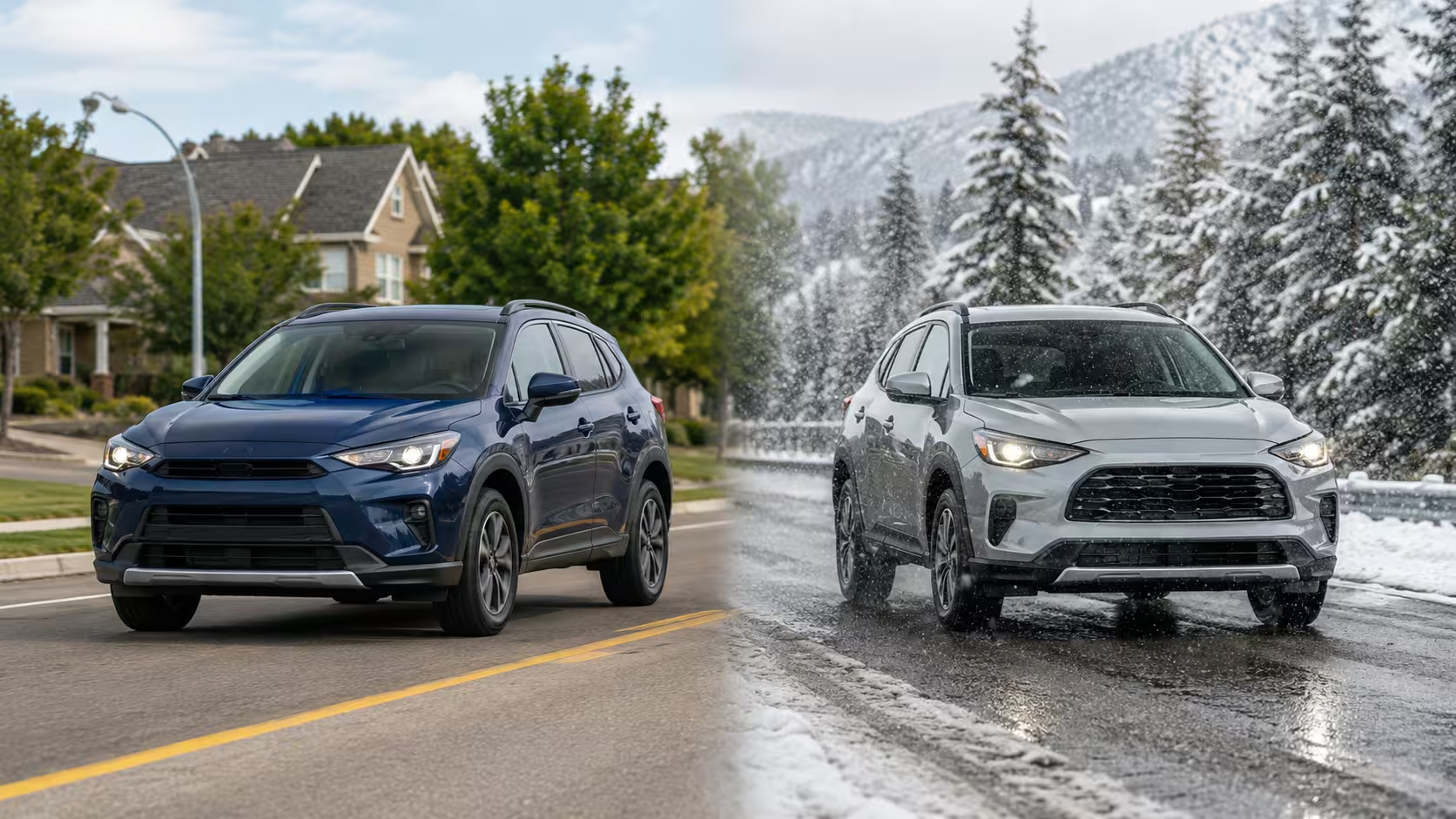
AWD vs FWD SUV is one of the most important decisions shoppers face when buying a crossover or family SUV.
The simple answer is this: choose AWD if you regularly deal with snow, steep roads, unpaved driveways, mountain trips, rural roads, or poor-weather family travel. Choose FWD if you mostly drive in cities, suburbs, and highways where saving money matters more than extra traction.
All-wheel drive can be useful, but it is not free capability. It can raise the purchase price, add weight, reduce fuel economy in some vehicles, increase tire sensitivity, and make maintenance more expensive over time.
Front-wheel drive is not as confident in serious winter conditions, but for many SUV shoppers it is the better financial decision. A FWD SUV can cost less to buy, use less fuel, have simpler maintenance, and leave more room in the budget for better tires, safety features, insurance, or a shorter loan.
If you are still deciding which SUV type fits your life, take the What Car Suits Me? quiz first. Then use this AWD vs FWD SUV guide to decide whether the drivetrain upgrade is actually worth paying for.
AWD or FWD SUV?
Choose AWD if
- You live where snow, ice, steep hills, or mountain roads are normal
- You regularly drive in heavy rain on poor roads
- You take family road trips through changing weather
- You use gravel roads, unpaved driveways, or rural routes
- You want stronger resale appeal in snow states
- The AWD version is reasonably priced and does not stretch your budget
Choose FWD if
- You mostly drive in cities, suburbs, and highways
- Snow is rare or roads are usually plowed quickly
- You want the lowest purchase price and monthly payment
- You care about fuel economy and tire cost
- You want simpler long-term maintenance
- You would rather spend money on better tires, safety tech, or a higher trim
AWD vs FWD SUV Comparison Table
| Factor | FWD SUV | AWD SUV |
|---|---|---|
| Purchase price | Usually lower | Usually higher, depending on trim and model |
| Fuel economy | Often better | Can be lower because of added weight and drivetrain drag |
| Snow traction | Adequate with good tires in mild conditions | Better acceleration traction in snow and slippery starts |
| Rain traction | Usually fine for normal rain | Can add confidence on wet hills and poor roads |
| Maintenance | Simpler drivetrain | More components to service or repair |
| Tire cost risk | More forgiving if tire wear is managed | More sensitive to matched tire wear on many systems |
| Insurance | Often slightly cheaper, depending on vehicle and location | Can be higher if vehicle value or repair cost is higher |
| Resale value | Fine in warm and mild climates | Often stronger in snow and mountain states |
| Family use | Good for most suburban families | Helpful for road trips, winter school runs, and mixed weather |
| City driving | Lower cost and efficient | Useful only if weather or steep roads justify it |
| Highway driving | Efficient and simple | Useful in storms, but not needed on dry pavement |
| Best buyer type | Budget-focused commuters and mild-climate families | Snow-belt, mountain, rural, and all-weather drivers |
What Is FWD in an SUV?
FWD means front-wheel drive. In a FWD SUV, the engine sends power mainly to the front wheels. Those wheels pull the vehicle forward and handle most normal driving needs.
For everyday city and highway use, FWD is usually enough. It is simple, efficient, and common in compact and midsize crossovers. Many family SUVs sold in warmer states spend their entire lives on paved roads, where FWD works well with quality tires and sensible driving.
FWD does not mean unsafe. It means the SUV is optimized for cost, efficiency, and simplicity rather than maximum poor-weather traction.
FWD makes the most sense when your driving life is predictable: school runs, grocery trips, commuting, highways, errands, and normal paved roads.
What Is AWD in an SUV?
AWD means all-wheel drive. In an AWD SUV, the vehicle can send power to both front and rear wheels when the system decides extra traction is needed.
Some AWD systems are mostly front-biased until traction is needed. Some feel more rear-biased. Some hybrid SUVs use an electric motor to assist the rear wheels. The exact design depends on the model.
AWD helps most when the vehicle is trying to get moving on slippery pavement, climb snowy roads, pull away from a wet intersection, or maintain traction on uneven surfaces.
But AWD is not the same as serious off-road hardware, and it does not make an SUV stop faster on ice by itself.
That last point matters: AWD helps you go. Tires help you stop, turn, and grip.
FWD SUV Advantages
Lower Purchase Price
FWD SUVs usually cost less than AWD versions of the same vehicle. That lower price can reduce the down payment, loan amount, sales tax, and monthly payment.
If AWD adds thousands of dollars to the transaction price, the real cost becomes even higher after interest, taxes, and insurance are included.
Use the Car Loan Calculator to compare the payment difference between FWD and AWD using the same down payment, APR, and loan term.
Better Fuel Economy
Because FWD systems are usually lighter and simpler, they often return better fuel economy than AWD versions. The difference may be small on some newer hybrids, but it still matters for high-mileage drivers.
If you drive 12,000 to 18,000 miles per year, a small MPG difference can become meaningful over several years.
Run both versions through the Fuel Cost Calculator with your expected yearly mileage before deciding.
Simpler Maintenance
FWD SUVs have fewer drivetrain components than AWD versions. That can mean fewer service items and fewer expensive parts to worry about as the vehicle ages.
This matters more if you plan to keep the SUV beyond the warranty period.
Lower Tire Cost Risk
All vehicles need good tires, but many AWD systems are more sensitive to tire diameter differences. If one tire is damaged, you may need to replace multiple tires to keep tread depth matched.
That is not always required, but it is common enough to consider before buying.
Good Enough for Many Buyers
If your roads are flat, snow is rare, and your SUV is mainly a commuter or family hauler, FWD can be the financially smarter choice.
For mild-climate shoppers, the money saved by choosing FWD may be better spent on better tires, safety features, a shorter loan, or an emergency fund.
FWD SUV Disadvantages
FWD has less traction when starting from a stop on snow, ice, gravel, steep wet roads, or muddy driveways.
It can also feel less confident in poor weather, especially if the vehicle is loaded with family, luggage, or cargo.
In snow-heavy markets, FWD may have lower resale appeal because many local buyers expect AWD. That does not make FWD wrong, but it should be part of the ownership-cost calculation.
FWD is best when your roads are predictable. AWD becomes more useful when your roads are not.
AWD SUV Advantages
Better Traction in Snow and Rain
AWD is most useful when traction is limited.
If you live in a snowy state, drive up steep roads, park on unplowed streets, or travel through winter weather, AWD can make daily life easier.
It helps most when pulling away from a stop, climbing hills, or driving on uneven slippery surfaces.
Stronger Appeal in Mountain and Snow Climates
In places where winter weather shapes buying decisions, AWD can make an SUV easier to sell later. That resale value can offset part of the upfront cost, though it rarely erases every extra expense.
If you live in a snow state, mountain region, or rural area, AWD may be expected by many used-SUV shoppers.
Confidence for Family Road Trips
Families who travel through mixed weather may value the extra traction.
AWD can be reassuring when a road trip includes rain, snow, gravel driveways, ski areas, rural roads, or steep routes.
For parents, that peace of mind may be worth the extra cost if the SUV regularly carries kids or family members in poor weather.
Common on Hybrid SUVs and Compact Crossovers
Many hybrid SUVs and compact crossovers offer AWD, and some include it as standard or pair it with specific trims.
AWD SUV Disadvantages
AWD usually costs more to buy. Even when the monthly payment difference looks small, the total cost can grow after taxes, interest, insurance, fuel, tires, and maintenance are included.
AWD can also use more gas in some vehicles. The extra hardware adds weight, and the drivetrain can create additional friction. The size of the fuel penalty depends on the model, powertrain, tire package, and driving conditions.
Maintenance is another factor. AWD systems may involve extra fluids, extra components, and more expensive repairs as the vehicle ages.
Tires matter too. Keeping four tires matched in size and wear can be more important on AWD vehicles.
Most importantly, AWD is not a substitute for winter tires. A FWD SUV with excellent winter tires can be more controlled in braking and cornering than an AWD SUV on worn all-season tires.
AWD Does Not Replace Good Tires
AWD can help an SUV get moving on slippery roads, but tires have more influence on braking, turning, and overall grip.
This is one of the most misunderstood parts of AWD shopping.
An AWD SUV with worn or cheap all-season tires can still slide, struggle to stop, and feel unstable in winter. A FWD SUV with proper winter tires can feel more predictable in some snowy conditions because the tires are doing the real grip work.
Think of it this way:
| Driving Task | What Helps Most |
|---|---|
| Getting moving in snow | AWD can help |
| Climbing slippery hills | AWD can help |
| Braking on snow or ice | Tires matter more |
| Turning on slippery roads | Tires matter more |
| Emergency control | Tires, speed, visibility, and driver judgment matter |
| Wet-road confidence | Tires and traction systems both matter |
If you live where snow is rare, FWD plus high-quality all-season tires may be the better value.
How Much AWD Can Cost Over Time
AWD can be worth it, but buyers should understand the full cost.
Imagine a FWD SUV costs $32,000 and the AWD version costs $34,000. If the AWD model also uses slightly more fuel, the real difference can become larger than the window sticker suggests.
| Cost Item | FWD SUV | AWD SUV |
|---|---|---|
| Purchase price | $32,000 | $34,000 |
| Estimated annual fuel cost | $1,800 | $1,950 |
| Five-year fuel cost | $9,000 | $9,750 |
| Extra upfront cost | N/A | $2,000 |
| Estimated five-year difference | N/A | About $2,750 before tires, insurance, and maintenance |
If AWD helps you safely handle snow, steep roads, rural driving, or winter family trips, the extra cost may be justified.
If you mostly drive on dry pavement in a mild climate, FWD may be the better financial decision.
Cost Comparison
When deciding between AWD and FWD, compare total ownership cost rather than one line item.
| Cost Area | Why It Matters |
|---|---|
| MSRP and transaction price | AWD often raises the starting price or requires a higher trim |
| Monthly payment | A small price gap can become larger with interest over a long loan |
| Fuel economy | Even a modest MPG difference matters for long commutes |
| Tires | AWD vehicles may require more careful tire matching |
| Maintenance | Extra drivetrain parts can add service complexity |
| Insurance | Rates depend on vehicle value, repairs, location, driver history, and usage |
| Resale value | AWD can help in snow states, while FWD is fine in mild climates |
If AWD pushes you into a longer loan, a smaller emergency fund, or cheaper tires, the upgrade may not be worth it.
AWD vs FWD in Snow, Rain, and Winter Driving
AWD is most valuable in snow when you need traction to get moving.
It helps on snowy hills, slick intersections, unplowed roads, and loose surfaces. It can also help in heavy rain when traction is inconsistent.
But AWD does not cancel physics. It does not shorten stopping distance on ice by itself, and it does not guarantee control in corners.
Tires, speed, visibility, braking distance, and driver judgment still matter.
If you live in a serious winter climate, the best setup is usually AWD plus proper winter tires. If you live where snow is rare, FWD plus high-quality all-season tires may be the better value.
FWD vs AWD in Rain
For normal rain on paved roads, FWD is usually enough.
A FWD SUV with good tires can feel stable and predictable in wet weather. Most drivers in mild climates do not need AWD just because it rains.
AWD becomes more useful if your rainy driving includes steep hills, poor roads, rural routes, standing water, gravel, or frequent traction changes.
Even then, tires remain important. AWD can help traction when accelerating, but it does not make worn tires safe.
Do Families Need AWD?
Families often buy AWD for peace of mind, and that can be reasonable.
School drop-offs, road trips, medical appointments, and winter errands do not always wait for perfect weather.
Still, many families can save money with FWD. If you live in a mild climate, have well-maintained roads, and do not travel through snow, FWD can free up budget for safety tech, better tires, a higher trim with useful driver assistance, or a shorter loan.
For family shoppers comparing body styles and space needs, our Sedan vs SUV guide can help decide whether an SUV is necessary in the first place.
Hybrid SUVs: AWD vs FWD
Hybrid SUVs make the AWD decision more interesting.
Some hybrid systems reduce the usual fuel penalty of AWD, and some use an electric rear motor instead of a traditional mechanical connection. That can make AWD feel less costly than it used to be, depending on the model.
Still, do not assume every hybrid AWD SUV is automatically the best value.
Compare:
- Trim price
- Fuel economy
- Tire size
- Cargo space
- Warranty coverage
- Insurance quote
- Expected fuel cost
- Resale value
- Whether you actually need AWD
Which One Wins by Category?
| Category | Winner | Why |
|---|---|---|
| Lowest purchase price | FWD | Usually cheaper than AWD |
| Fuel economy | FWD | Often lighter and more efficient |
| Snow traction | AWD | Better for getting moving in slippery conditions |
| Braking in snow | Tires matter more | AWD does not shorten stopping distance by itself |
| Rain driving | Depends | FWD is enough for normal rain; AWD helps on steep or poor roads |
| Maintenance simplicity | FWD | Fewer drivetrain components |
| Tire-cost simplicity | FWD | AWD may require more careful tire matching |
| Resale in snow states | AWD | Local buyers may expect AWD |
| Mild-climate family use | FWD | Saves money while still meeting normal needs |
| Mountain or rural driving | AWD | More useful on steep, slippery, or uneven roads |
| Best budget choice | FWD | Lower total cost for many shoppers |
| Best all-weather choice | AWD | Better if weather is a real part of your driving life |
Should You Choose AWD or FWD?
| Buyer Scenario | Better Choice | Why |
|---|---|---|
| City commuter in a mild climate | FWD | Lower cost, simpler maintenance, and enough traction for normal pavement |
| Snowy climate driver | AWD | Better traction when starting and climbing in winter conditions |
| Rainy climate driver | FWD or AWD | FWD is fine for normal rain, AWD helps on steep or poorly maintained roads |
| Budget-focused buyer | FWD | Keeps purchase price, monthly payment, fuel, and maintenance lower |
| Family buyer | Depends | AWD helps for winter road trips; FWD saves money in mild areas |
| High-mileage driver | Usually FWD | Fuel and tire savings can matter over many miles |
| Resale-focused buyer in snow state | AWD | More local shoppers may expect AWD |
| Small SUV shopper | Depends | FWD for value, AWD if weather or gravel roads are routine |
| Mountain-area driver | AWD | More useful for steep roads and changing weather |
| Warm-climate suburban driver | FWD | AWD may not solve a daily problem |
Practical Dealer Checklist
Before you pay extra for AWD, compare both versions honestly.
- Compare the same trim as closely as possible
- Ask whether AWD requires a higher trim or package
- Price insurance for both versions
- Compare tire sizes and replacement costs
- Check whether the AWD model has lower fuel economy
- Ask about drivetrain service intervals
- Consider winter tires if you live in a snow state
- Do not stretch the loan just to get AWD
- Think about resale in your local market, not nationally
- Test whether the FWD version already feels stable and confident for your use
- Ask for the out-the-door price, not just the monthly payment
- Compare the total cost over five years if you plan to keep the SUV
AWD or FWD SUV?
There is no universal winner in AWD vs FWD SUV shopping.
AWD is worth it if your weather, roads, family travel, or resale market make traction a real need. It is especially sensible in snowy, mountainous, rural, gravel, or steep areas.
FWD is the better buy for many shoppers in mild climates. It costs less, often uses less fuel, has simpler maintenance, and leaves more room in the budget for better tires, safety tech, insurance, or a shorter loan.
If you are unsure, price both versions honestly. Compare payment, fuel, tires, insurance, maintenance, and resale. Then choose the drivetrain that solves your real driving problem, not the one that sounds better in a sales pitch.
Sources & Citations
Primary public references used for U.S. vehicle research on AutoTechSpot: