Sedan vs SUV: Which Is Better for Your Budget and Lifestyle?
Sedans can save money, while SUVs offer more space and flexibility. Here’s how to choose the better option for your lifestyle, budget, and daily driving.
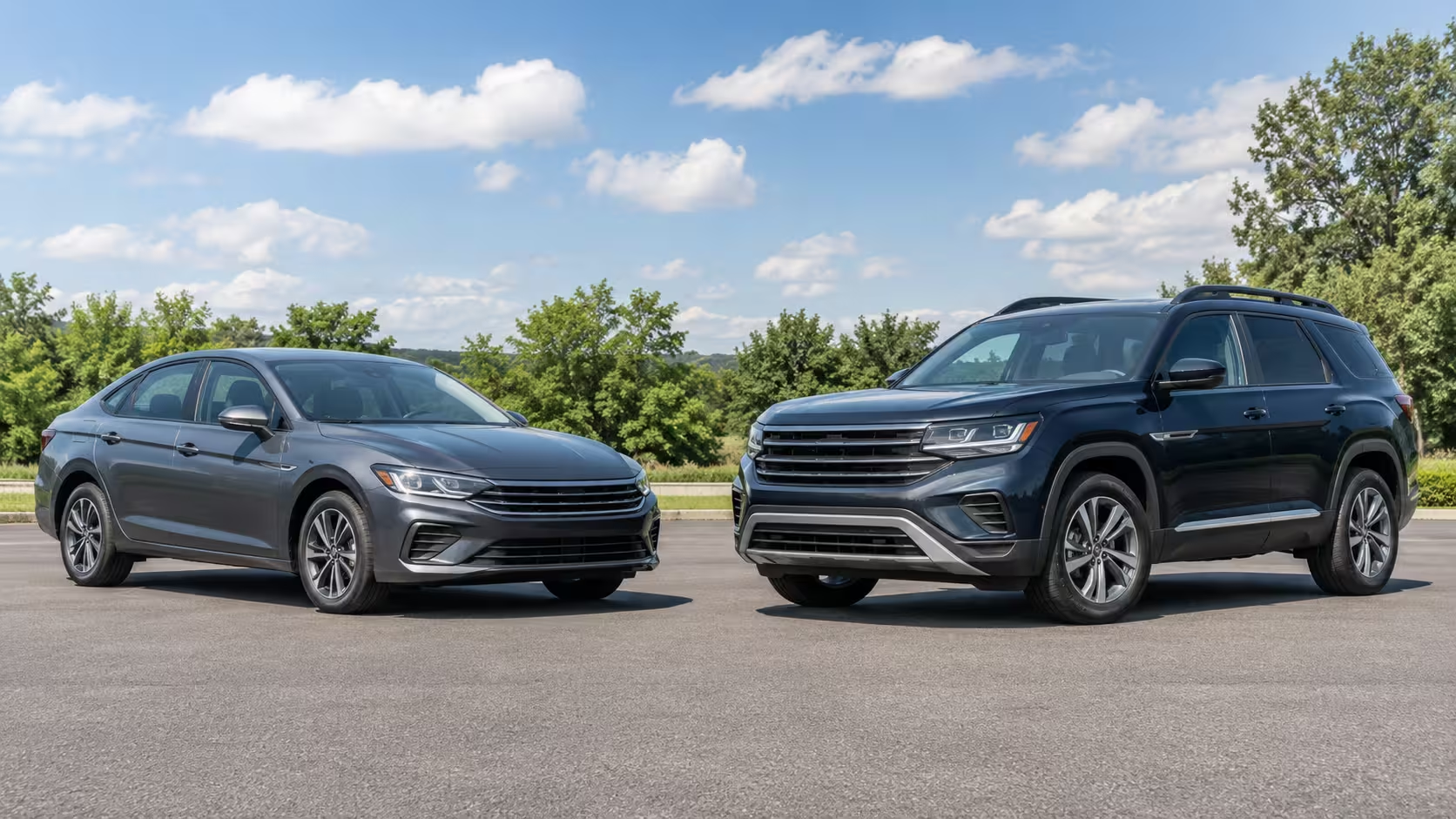
Choosing between a sedan and an SUV affects almost every ownership cost that follows.
A sedan usually wins on purchase price, fuel economy, parking ease, commuting comfort, and lower running costs. An SUV usually wins on cargo room, higher seating, family flexibility, road-trip practicality, and available all-wheel drive.
The right answer depends less on what is popular and more on how you actually drive. Your commute, parking space, family size, cargo needs, weather, budget, and long-term ownership costs all matter.
For most commuters and budget-focused buyers, a sedan is usually the smarter financial choice. For families, pet owners, outdoor drivers, and buyers who regularly carry cargo, an SUV is often easier to live with.
If you are still deciding what body style fits your life, start with the What Car Suits Me? quiz. Then use this guide to compare the result against your budget, commute, family needs, and parking situation.
Quick Answer: Sedan or SUV?
Choose a sedan if you mostly commute, park in tight spaces, want better fuel economy, care about lower ownership costs, and do not regularly carry bulky cargo.
Choose an SUV if you need easier cargo loading, a higher seating position, available AWD, family flexibility, road-trip comfort, or extra passenger and luggage space.
| Buyer Type | Better Starting Point | Why |
|---|---|---|
| Solo commuter | Sedan | Lower cost, better MPG, easier parking |
| Student or first-time buyer | Sedan or hatchback | Easier to afford and insure |
| Small family | Compact SUV or midsize sedan | Depends on cargo and child-seat needs |
| Large family | SUV, minivan, or three-row vehicle | More passenger and luggage flexibility |
| City driver | Sedan or small hatchback | Easier to park and maneuver |
| Outdoor driver | SUV | More ground clearance and cargo flexibility |
| Snowy climate | SUV or crossover with AWD | Better traction support when paired with good tires |
| Budget-focused buyer | Sedan | Lower total ownership cost in many cases |
Sedan vs SUV Comparison Table
| Factor | Sedan | SUV |
|---|---|---|
| Purchase price | Usually lower at the same brand and trim level | Usually higher, especially with AWD or larger size |
| Fuel economy | Usually better because of lower weight and shape | Often lower, though hybrids can close the gap |
| Insurance cost | Often lower, but model and driver profile matter | Can be higher due to price, size, and repair costs |
| Cargo space | Secure trunk but less flexible | Larger opening and easier loading for bulky items |
| Passenger space | Good in compact and midsize sedans | More headroom and easier entry in many models |
| Visibility | Lower seating position | Higher seating position and better forward view |
| Parking | Easier in tight garages and city spaces | Harder as size increases |
| Ride comfort | Often smooth and quiet for commuting | Strong road-trip comfort in midsize SUVs |
| Family use | Works for small families with light cargo needs | Better for strollers, pets, luggage, and gear |
| Long trips | Efficient and stable | More flexible for people and cargo |
| Resale value | Strong for popular sedans like Civic and Camry | Strong for popular crossovers and hybrid SUVs |
Sedan Advantages
Lower Purchase Price
Sedans usually cost less than similarly equipped SUVs. That can reduce the down payment, loan amount, sales tax, and monthly payment.
For budget-focused buyers, the 2026 Honda Civic shows why sedans still matter. It delivers daily practicality without the cost jump of a larger crossover.
A midsize hybrid sedan such as the 2026 Toyota Camry Hybrid can make sense when comfort and fuel economy matter more than SUV cargo height.
Better Fuel Economy
Sedan vs SUV fuel economy usually favors the sedan because sedans are lower, lighter, and more aerodynamic.
That matters most for commuters who drive many miles each week. A small MPG difference may not feel important during one test drive, but it can add up over several years of ownership.
Before choosing a body style, compare your expected annual fuel cost with the Fuel Cost Calculator.
Easier Parking
A sedan is usually easier to park in apartment garages, school lots, downtown streets, and older neighborhoods.
This is a real quality-of-life issue. A vehicle that is annoying to park every day can feel wrong even if it looked perfect during the test drive.
If your daily parking spaces are narrow, a sedan or small hatchback may make more sense than a midsize SUV.
Lower Ownership Costs
Sedans often use smaller tires, weigh less, and cost less to buy. That can help with insurance, replacement tires, brakes, and long-term maintenance.
The exact difference depends on the model, but first-time buyers, students, and commuters should count it before buying.
A sedan is not always cheaper in every case, but it often gives buyers a lower-cost starting point.
Sedan Disadvantages
Less Cargo Flexibility
A sedan trunk is secure and useful, but the opening is smaller than an SUV hatch.
Strollers, bicycles, large boxes, pets, sports gear, and home-improvement items can be harder to load. If you regularly carry bulky cargo, a sedan may become frustrating.
Lower Seating Position
Some buyers prefer sitting higher because it feels more confident in traffic.
A sedan can feel low next to trucks and SUVs, especially for shorter drivers. That does not automatically make SUVs safer, but it changes comfort, visibility, and confidence behind the wheel.
Less Ground Clearance
Sedans are not ideal for deep snow, rough driveways, gravel roads, or steep entrances.
If those conditions are normal for you, an SUV or crossover with available AWD may be worth the extra cost. Just remember that tires matter as much as drivetrain choice in bad weather.
SUV Advantages
More Cargo Room
Cargo flexibility is the biggest SUV advantage.
A hatch opening, fold-flat seats, and taller cargo area make an SUV easier to live with if you carry strollers, luggage, pets, outdoor gear, tools, sports equipment, or school bags.
Compact hybrids such as the 2026 Toyota Corolla Cross Hybrid, 2026 Hyundai Tucson Hybrid, and 2026 Mazda CX-50 Hybrid show why crossovers became popular. They give buyers useful space without forcing everyone into a huge vehicle.
Higher Seating Position
Many SUV buyers like the higher seating position. It can make entry and exit easier, improve forward visibility, and feel more relaxed in traffic.
That said, bigger vehicles can also have larger blind zones. Mirror adjustment, camera quality, parking sensors, and driver-assistance tech still matter.
Better Family Flexibility
SUVs are often easier for family life.
Child seats, backpacks, groceries, strollers, sports bags, pets, and weekend luggage are simpler to manage through a rear hatch than through a sedan trunk.
Small families may be fine in a compact SUV. Larger families may need a three-row option such as the 2026 Kia Sorento Hybrid, though that adds cost, size, and parking difficulty.
Available AWD
Many SUVs offer all-wheel drive, and some hybrid SUVs include it as part of the powertrain layout.
AWD can help in snow, rain, and steep driveways, but it does not shorten stopping distance on worn tires. If you live somewhere with regular snow, good tires should be part of the budget.
SUV Disadvantages
Higher Purchase Price
SUV popularity keeps prices strong.
Compared with sedans, SUVs often cost more at the same brand, age, mileage, and equipment level. That higher price can raise the monthly payment, taxes, registration, and insurance bill.
Before moving from sedan to SUV, compare the real payment difference with the Car Loan Calculator.
Higher Fuel Costs
SUVs are usually heavier and less aerodynamic than sedans.
Hybrid SUVs help reduce the fuel penalty, but they may still cost more to buy. The fuel math depends on your mileage, fuel prices, and how long you keep the vehicle.
Higher Tire, Insurance, and Maintenance Costs
SUV tires can be larger and more expensive. Brake and suspension wear can also cost more on heavier vehicles. Insurance may be higher because the vehicle costs more to repair or replace.
This does not mean every SUV is expensive to own, but buyers should check the full cost before assuming a small SUV is only slightly more expensive than a sedan.
Harder Parking
A compact crossover is manageable, but a midsize or three-row SUV can feel large in tight parking lots.
If you live in a dense city, park on the street, or use narrow garages, size should be part of the decision. A car that is stressful to park every day can quickly become annoying.
Example: Sedan vs SUV Annual Fuel Cost Difference
A simple fuel-cost example can show why sedans often make sense for commuters.
Imagine a sedan gets 34 mpg and a compact SUV gets 28 mpg. If gas costs $3.75 per gallon and you drive 15,000 miles per year, the annual fuel cost could look like this:
| Vehicle Type | MPG | Gallons Per Year | Estimated Fuel Cost |
|---|---|---|---|
| Sedan | 34 mpg | 441 gallons | $1,654 |
| Compact SUV | 28 mpg | 536 gallons | $2,010 |
That may not sound huge in one year, but over five years it becomes about $1,780 in fuel savings. If the sedan also costs less to buy and insure, the total savings can become much larger.
Use the Fuel Cost Calculator with your own mileage and fuel price before deciding.
Cost Comparison: Payment, Fuel, Insurance, Tires, and Maintenance
| Cost Area | Sedan Tends To Win When... | SUV Tends To Win When... |
|---|---|---|
| Monthly payment | You choose a compact or midsize model with fewer options | You need the space enough to justify the higher price |
| Fuel | You commute long distances and want the best MPG | You choose a very efficient hybrid SUV |
| Insurance | The sedan has lower repair and replacement cost | The SUV has strong safety ratings and reasonable premiums |
| Tires | Smaller wheel sizes keep replacement costs down | You avoid oversized wheel packages |
| Maintenance | Lower weight and simpler packaging reduce wear | Warranty coverage and reliability are strong |
| Resale value | Popular sedans hold value well | Popular crossovers and hybrid SUVs remain in demand |
1. Use the How Much Car Can I Afford? calculator to set your upper price range.
2. Use the Car Loan Calculator to compare payments at the same APR and loan term.
3. Use the Fuel Cost Calculator to estimate annual fuel cost for each model.
4. Get insurance quotes for the exact trim or VIN if possible.
5. Check tire size and replacement cost before choosing large wheels.
The goal is not to prove that sedans or SUVs are always cheaper. The goal is to find the body style that fits your life without creating unnecessary monthly cost.
Buyer Scenarios
Student
Choose a sedan or small hatchback unless you truly need cargo room.
Lower payments, easier parking, better fuel economy, and potentially lower insurance matter more than SUV image. A compact car is usually easier to own while studying or starting a first job.
Single Commuter
Choose a sedan if the commute is mostly normal roads and tight parking.
Choose a small hybrid SUV only if you need AWD, cargo flexibility, or a higher seating position. If most of your driving is solo, a sedan often makes more financial sense.
Small Family
Either can work.
A Camry Hybrid may be enough for one child and light cargo. A compact SUV is better if you regularly carry a stroller, pets, sports gear, or luggage.
The best choice depends on how often you need the cargo flexibility, not just whether you like the SUV shape.
Large Family
Choose an SUV, minivan, or three-row vehicle.
A sedan will feel limiting if you regularly carry more than four people or need luggage space with every seat in use. If family space is the main need, an SUV may be worth the extra cost.
Road Trips
Choose a sedan for maximum fuel economy with two to four people and light bags.
Choose an SUV if comfort, cargo flexibility, pets, or family gear matter more. A long trip can quickly reveal whether trunk space is enough.
Snowy Climate
Choose an SUV or crossover with AWD if snow is regular, but prioritize tires.
AWD with worn all-season tires is not a magic safety feature. A sedan with good winter tires can feel more secure than an SUV with poor tires.
Tight City Parking
Choose a sedan, hatchback, or very small crossover.
A larger SUV can become a daily frustration if your parking spaces are narrow. City buyers should test parking before buying, not after.
Examples From AutoTechSpot Reviews
Start with the 2026 Honda Civic review if you want a practical commuter that is easy to live with.
The 2026 Toyota Camry Hybrid review shows why sedans still matter for buyers who want comfort and fuel economy.
On the SUV side, compare the 2026 Toyota Corolla Cross Hybrid, 2026 Kia Niro Hybrid, 2026 Hyundai Tucson Hybrid, 2026 Mazda CX-50 Hybrid, and 2026 Kia Sorento Hybrid.
If you are choosing between a gas SUV and a hybrid SUV, read our Hybrid vs Gas SUV comparison before making a final decision.
Before You Visit the Dealer
Before you test drive, price one sedan and one SUV with similar equipment.
Use the same:
- Down payment
- APR
- Loan term
- Yearly mileage
- Insurance coverage
- Fuel price estimate
- Ownership period
Ask for the out-the-door price, not only MSRP or the monthly payment. Check whether the SUV requires larger tires or a higher trim to get the safety features you want.
A short back-to-back test drive can also settle the comfort question quickly. Park both vehicles, load your normal bags or child seat if relevant, and make sure the vehicle that wins on paper also fits your daily routine.
Final Verdict: Sedan or SUV?
Choose a sedan if your life is mostly commuting, errands, tight parking, and budget control.
A sedan is often the smarter financial decision because it can reduce purchase price, fuel cost, insurance, tires, and daily hassle. For students, first-time buyers, solo commuters, and budget-focused drivers, a sedan is usually the better starting point.
Choose an SUV if your life includes kids, pets, bulky cargo, frequent road trips, bad weather, rough roads, or a strong need for easier entry and higher seating.
The extra cost can be worth it when the space and flexibility solve daily problems.
The best answer is not simply sedan or SUV. The best answer is the vehicle type that fits your real routine without stretching your budget.
If you mostly drive alone and want lower costs, start with a sedan. If you regularly carry people, pets, luggage, or gear, an SUV may be easier to live with.
Sources & Citations
Primary public references used for U.S. vehicle research on AutoTechSpot: