Honda Civic Hybrid vs Toyota Camry Hybrid: The Winner Isn
Buying the wrong hybrid sedan could cost you more than you expect. Compare space, fuel economy, comfort, and real ownership costs before you buy.
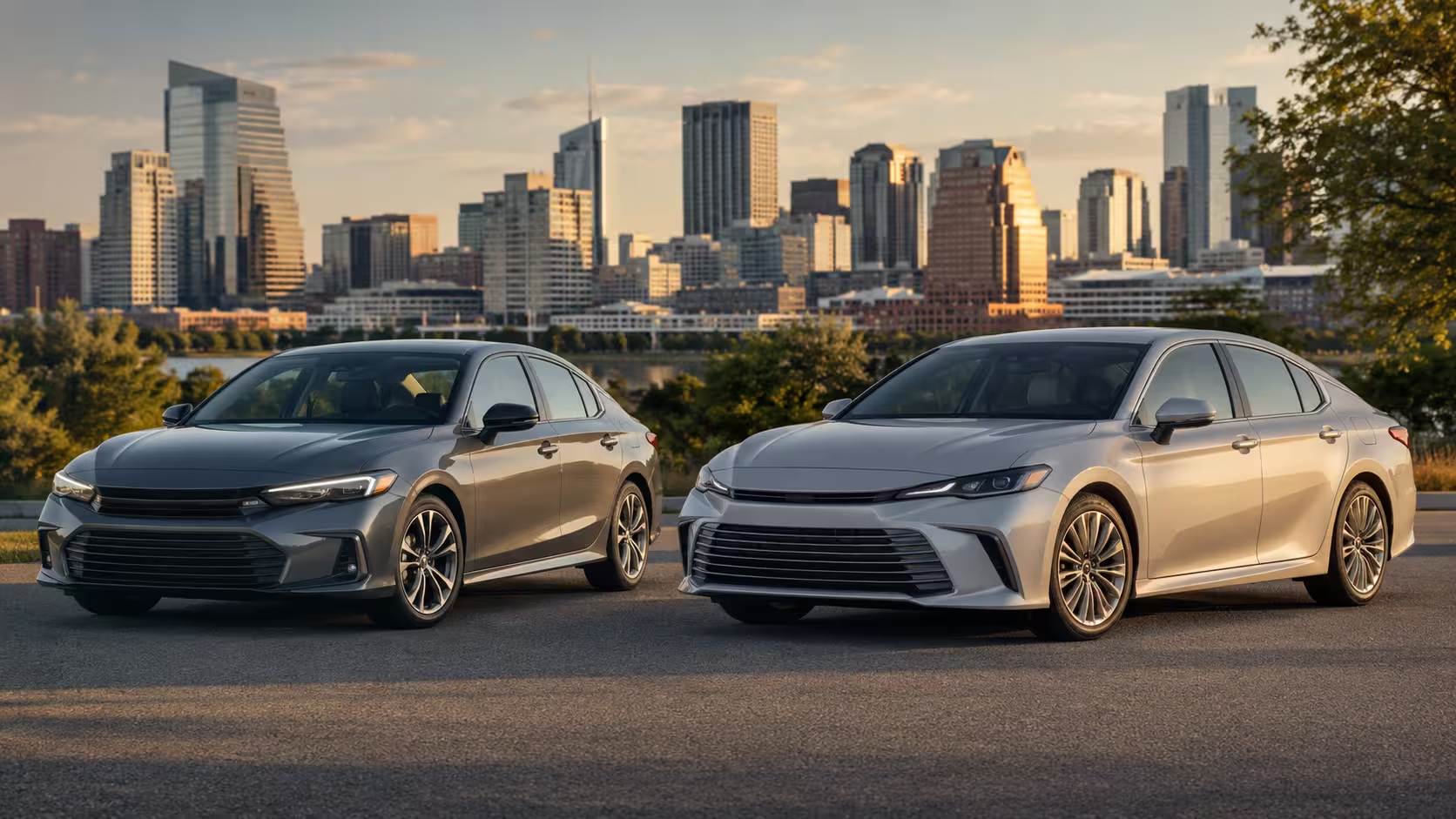
The Honda Civic Hybrid vs Toyota Camry Hybrid decision is not simply a Honda vs Toyota debate. It is a choice between a compact hybrid sedan that favors lower ownership stress and a midsize hybrid sedan that gives buyers more space, comfort, and family flexibility.
Choose the Civic Hybrid if you want the easier-to-park, budget-friendlier commuter. Choose the Camry Hybrid if you want the roomier, calmer, more family-ready sedan. Both can be smart buys, but the right answer depends on your commute, passengers, parking, insurance quote, monthly payment, and how long you plan to keep the car.
Before you visit a dealer, use the What Car Suits Me? quiz if you are still deciding whether a compact car, midsize sedan, or small SUV fits your life.
Quick Verdict
Choose the Honda Civic Hybrid if:
- You mostly drive alone or with one passenger
- You want the lower-cost compact-sedan starting point
- You park in tight city, campus, or apartment spaces
- You care more about easy daily use than maximum rear-seat room
- You want a student, first-time-buyer, or commuter-friendly hybrid
- You regularly carry adults, kids, or family gear
- You want a more relaxed highway car
- You need a better long-trip sedan
- You can justify the higher payment for comfort and space
- You want one hybrid sedan to cover commuting and family use
Main Comparison Table
| Category | Honda Civic Hybrid | Toyota Camry Hybrid | Buyer Takeaway |
|---|---|---|---|
| Buyer type | Student, first-time buyer, solo commuter, city driver | Long commuter, small family, parent buyer, highway driver | Civic is the leaner choice; Camry is the more complete household sedan |
| Size/class | Compact hybrid sedan or hatchback depending on body style | Midsize hybrid sedan | Camry gives more space; Civic is easier to place and park |
| Price/value | Usually the budget-focused starting point | Often costs more but brings more car | Compare out-the-door prices, not just MSRP |
| Fuel economy | Strong hybrid efficiency angle | Strong hybrid efficiency for a larger sedan | Both can be excellent; your route and trim matter |
| Comfort | Good for daily commuting | Better fit for longer highway stretches | Camry has the comfort advantage |
| Rear-seat space | Useful, but compact-car sized | More adult-friendly | Camry is better for regular passengers |
| Trunk/cargo practicality | Practical for normal student and commuter use | Better for family luggage and shared use | Camry carries more family burden |
| City driving | Easier to park and maneuver | Manageable, but larger | Civic wins dense parking |
| Highway driving | Efficient and stable | More relaxed for long distances | Camry is the better road-trip sedan |
| Family use | Works for small households | Better family sedan | Camry is safer if child seats or adults ride often |
| Insurance/ownership cost | May be easier to keep low, depending on quote | Higher purchase price can raise total cost | Always quote both exact trims |
| Best use case | Low-stress hybrid commuting | Efficient family and long-commute sedan | Choose by job, not brand loyalty |
Honda Civic Hybrid Overview
The 2026 Honda Civic review shows why the Civic remains one of the most sensible compact-car starting points. The hybrid version adds a strong fuel-economy angle without turning the car into something complicated for daily use.
The Civic Hybrid makes the most sense when the buyer wants a car that is easy to park, easy to budget for, and useful in almost every normal week. It is a strong candidate for students, first-time buyers, commuters, apartment dwellers, and anyone who wants efficiency without moving into a larger sedan or SUV.
The Civic's compact size is part of the value. It can be easier to park at work, on campus, in city garages, and in older apartment lots. It should also be easier to live with for drivers who do not need a large rear seat every day.
Civic Hybrid strengths
- Easier parking than a midsize sedan
- Lower ownership-cost potential, depending on trim and insurance
- Great fit for students and commuters
- Strong fuel-efficiency appeal
- Practical compact size
- Familiar compact-car ownership profile
Who should skip the Civic Hybrid?
Skip the Civic Hybrid if you regularly carry adults in the back seat, install child seats often, take long highway trips with passengers, or want a calmer midsize ride. If the car has to serve as the main household sedan, the Camry Hybrid may be easier to justify.
Toyota Camry Hybrid Overview
The 2026 Toyota Camry Hybrid review explains the Camry's core appeal: it gives buyers hybrid efficiency in a roomier midsize sedan package.
The Camry Hybrid is the better fit when comfort and space matter as much as fuel economy. It is more relaxed for long commutes, more useful for family duty, and more comfortable if adults ride in the rear seat often.
That extra space is not free. The Camry Hybrid can cost more to buy than a compact hybrid sedan, and the monthly payment, insurance, tires, and registration can all move with the higher vehicle price. But if you will use the room every week, the extra cost may be rational.
Camry Hybrid strengths
- More rear-seat space
- Better long-trip comfort
- Stronger family-sedan fit
- Refined daily-driving personality
- Strong commuter value for high-mileage buyers
- Better one-car solution for many households
Who should skip the Camry Hybrid?
Skip the Camry Hybrid if you mostly drive alone, park in tight city spaces, need the lowest possible payment, or would not use the extra rear-seat and trunk space. In that case, the Civic Hybrid may deliver the same core efficiency idea with less financial weight.
Price and Monthly Payment
Price is where the Civic Hybrid has its clearest opening. A compact hybrid sedan usually appeals to buyers who want a lower purchase price, lower monthly payment, and fewer ownership surprises. The Civic is also easier to recommend to budget-focused students and first-time buyers because it does not ask them to pay for space they may not need.
The Camry Hybrid can still be the better value if the buyer uses the extra room. A family, rideshare-like household, long-distance commuter, or parent buyer may reasonably pay more for comfort, rear-seat space, and a quieter-feeling daily routine.
| Cost Question | Civic Hybrid Advantage | Camry Hybrid Advantage |
|---|---|---|
| Lowest likely payment | Better starting point | Depends on deal and trim |
| Best value for one person | Stronger | More car than needed for some buyers |
| Best value for family use | Can work for light duty | Stronger if passengers ride often |
| Best long-term fit | Good if needs stay simple | Better if life adds passengers, kids, or longer trips |
| Dealer decision | Compare compact hybrid quotes | Compare midsize hybrid quotes |
Fuel Cost and Commute Math
Both cars make strong sense for commuters. The Civic Hybrid has the advantage of being smaller and usually more budget-focused. The Camry Hybrid has the advantage of making long drives feel more comfortable.
Do not choose only by the highest advertised MPG figure. Your route matters. City traffic, highway speed, hills, weather, tire condition, cargo load, and driving style can all change real fuel use.
| Commute Pattern | Better Starting Point | Why |
|---|---|---|
| Short city commute | Civic Hybrid | Easier parking and lower-cost mindset |
| Campus or apartment parking | Civic Hybrid | Smaller footprint helps daily |
| Long highway commute | Camry Hybrid | Comfort matters as miles rise |
| Mixed commute with passengers | Camry Hybrid | More space and relaxed ride |
| High-mileage solo driving | Civic Hybrid or Camry Hybrid | Civic for budget, Camry for comfort |
Comfort and Space
The Civic Hybrid is comfortable enough for normal commuting and daily errands, but it is still a compact car. That means the back seat, trunk, and highway calm may not feel as generous as a midsize sedan.
The Camry Hybrid is the better choice for buyers who regularly carry adults, older kids, luggage, work gear, or family items. It gives you more breathing room and a stronger sense that the car can handle multiple jobs.
| Space Need | Better Pick | Reason |
|---|---|---|
| Front-seat commuting | Either | Both can work well for daily use |
| Regular adult rear passengers | Camry Hybrid | More midsize-sedan room |
| Child seats | Camry Hybrid | Easier family fit |
| Solo city errands | Civic Hybrid | Smaller and simpler |
| Highway trips | Camry Hybrid | More relaxed over distance |
| Small apartment parking | Civic Hybrid | Easier to maneuver |
Student, Commuter, and Family Scenarios
| Buyer Scenario | Better Starting Point | Why |
|---|---|---|
| College student | Civic Hybrid | Easier parking and lower ownership stress |
| First-time buyer | Civic Hybrid | Simpler, smaller, and usually more budget-friendly |
| Single commuter | Civic Hybrid | Efficient and practical without extra size |
| Long commute | Camry Hybrid | Comfort and quietness matter more with miles |
| Small family | Camry Hybrid | Better rear-seat and trunk practicality |
| Parent buyer | Camry Hybrid if shared; Civic if student-only | Match the car to the real household job |
| Resale-focused buyer | Either | Compare local demand, trim, mileage, and condition |
| Budget-focused buyer | Civic Hybrid | Less car to finance and maintain in many cases |
Ownership Cost and Reliability
Ownership cost is more than fuel economy. It includes payment, insurance, maintenance, tires, warranty coverage, resale value, registration, and depreciation. Both Honda and Toyota have strong brand reputations, but that does not mean every individual deal is automatically good.
Before choosing, compare:
- Out-the-door price, not just MSRP
- Insurance quotes for the exact VIN or trim
- Tire replacement cost for the wheel size you want
- Maintenance schedule and dealer service pricing
- Warranty coverage and what it actually includes
- Expected annual fuel cost
- Resale value in your local market
- Loan term, APR, and total interest
Civic Hybrid vs Camry Hybrid: Which Should You Buy?
Buy the Honda Civic Hybrid if your priority is a compact hybrid sedan with easy parking, lower ownership-cost potential, and commuter-friendly efficiency. It is the better fit for students, first-time buyers, city drivers, and solo commuters who want to keep the budget under control.
Buy the Toyota Camry Hybrid if your priority is a midsize hybrid sedan with more comfort, more rear-seat space, and stronger family usefulness. It is the better fit for long commutes, small families, parent buyers, and anyone who wants one efficient sedan to cover more jobs.
There is no honest universal winner. The Civic Hybrid wins when smaller, cheaper, and simpler is the point. The Camry Hybrid wins when comfort, space, and family usefulness are worth the higher cost.
Final Verdict
For most budget-focused buyers, the Honda Civic Hybrid is the smarter first stop. It keeps the hybrid-sedan idea affordable, easy to park, and practical for daily commuting.
For buyers who spend more time on the highway or regularly carry family, the Toyota Camry Hybrid is the stronger all-around sedan. It asks for more money, but it gives back space and comfort that a compact car cannot fully match.
The best dealership decision is to price both cars at the trim level you would actually buy, get insurance quotes before committing, and compare monthly payment plus yearly fuel cost. If the Camry's extra space solves a real problem, buy the Camry Hybrid. If it does not, the Civic Hybrid is likely the cleaner financial decision.
Related editorial reading
Shoppers considering a hybrid sedan for gig or rideshare work should also read our best cars for delivery drivers guide, and commuters can pair this comparison with our best cars for long commutes roundup. Younger buyers should read our best cars for college students shortlist and our best cars for first-time buyers list. If you're leaning toward a hybrid crossover instead of a sedan, jump to our Kia Niro Hybrid vs Toyota Corolla Cross Hybrid breakdown or the larger Kia Sportage Hybrid vs Hyundai Tucson Hybrid comparison.
Sources & Citations
Primary public references used for U.S. vehicle research on AutoTechSpot: