Best Cars for Long Commutes in 2026: Comfortable Picks That Save Fuel
Find the best cars for long commutes in 2026 by fuel cost, comfort, safety tech, reliability, insurance, and monthly payment.
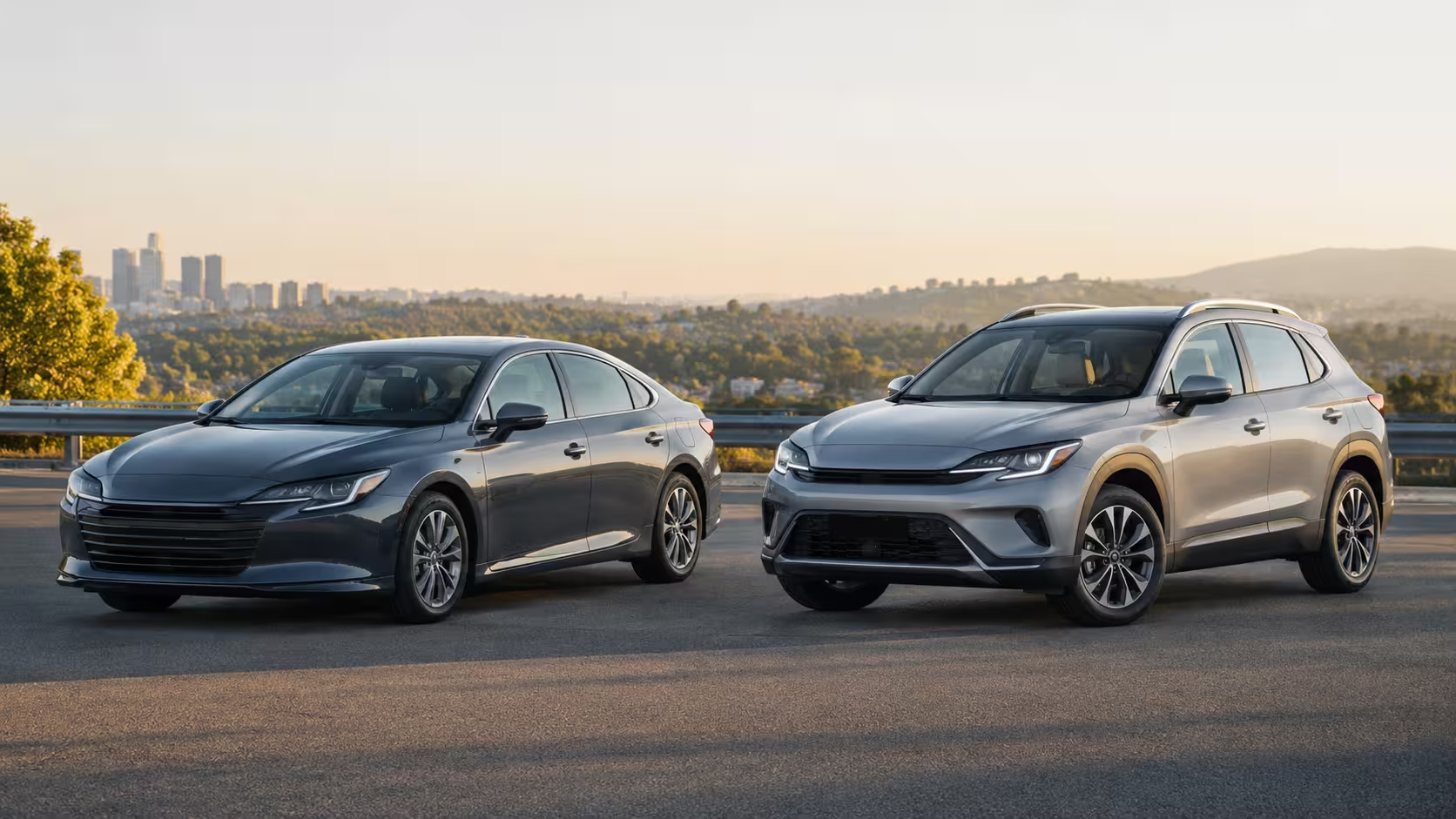
The best cars for long commutes in 2026 are not simply the cheapest cars on the lot. A good commuter car has to protect your budget every month, keep you comfortable after an hour in traffic, and stay easy to own after the warranty-new feeling wears off.
For most high-mileage drivers, the right answer is a fuel-efficient sedan or small hybrid crossover with comfortable seats, predictable controls, strong driver-assistance features, and ownership costs that still make sense after insurance, tires, maintenance, and financing are included.
If you are shopping before visiting a dealer, start with the full cost of the commute, not just MSRP. A lower payment can be wiped out by poor fuel economy, expensive tires, high insurance quotes, or a cabin that feels tiring after a few weeks.
Quick Answer: Best Cars for Long Commutes in 2026
| Commuter Need | Best Starting Point | Why It Makes Sense |
|---|---|---|
| Best overall long-commute car | 2026 Toyota Camry Hybrid | Midsize comfort, hybrid efficiency, and a calm highway personality |
| Best hybrid commuter car | 2026 Kia Niro Hybrid | Strong fuel-savings potential with hatchback practicality |
| Best budget commuter car | 2026 Honda Civic or a clean recent used compact | Easy to park, efficient, familiar, and sensible to insure |
| Best sedan for long commutes | 2026 Toyota Camry Hybrid | More relaxed for highway miles than most small cars |
| Best small SUV for long commutes | 2026 Toyota Corolla Cross Hybrid | Small-SUV visibility with hybrid efficiency and useful cargo access |
| Best for high-mileage drivers | Camry Hybrid, Niro Hybrid, or Civic | Low fuel cost and low ownership stress matter more as miles rise |
How We Chose These Long-Commute Cars
We focused on vehicles that make sense for high-mileage buyers based on fuel economy, seat comfort, cabin noise, driver-assistance features, reliability confidence, insurance risk, tire cost, cargo flexibility, and total ownership cost.
What Makes a Good Long-Commute Car?
A long-commute car has a different job than a weekend car. It needs to make the same drive feel less expensive and less draining every day.
The best commuter cars for 2026 usually have:
- Strong fuel economy for city traffic, highway driving, and mixed commuting
- Comfortable front seats with enough support for longer drives
- Low cabin noise at highway speeds
- A smooth ride over expansion joints and broken pavement
- Adaptive cruise control for stop-and-go or steady highway use
- Lane keeping assist that feels helpful rather than intrusive
- A reliable powertrain with a good ownership record or strong warranty confidence
- Reasonable maintenance, tire, and brake costs
- Insurance quotes that do not wreck the monthly budget
- Simple infotainment with dependable Apple CarPlay or Android Auto
- Good visibility, easy parking, and predictable controls
Recommended Cars for Long Commutes
2026 Toyota Camry Hybrid: Best Overall Long-Commute Car
The 2026 Toyota Camry Hybrid is the strongest starting point for many U.S. commuters because it solves the two biggest problems at once: fuel cost and daily comfort.
It is larger and more relaxed than most compact cars, which matters when your commute includes long highway stretches, rough pavement, or regular stop-and-go traffic. It also keeps the ownership conversation grounded because it uses a conventional hybrid setup instead of asking the buyer to plan around charging.
The Camry Hybrid is not the most exciting choice on paper, but that is exactly why it works. A long-commute car should feel calm, predictable, and affordable after months of repeated driving.
Who it fits best: high-mileage drivers, highway commuters, small families, and buyers who want one efficient sedan they can keep for years. Who should skip it: shoppers who need SUV cargo height, all-wheel-drive crossover packaging, or the lowest possible purchase price. Fuel and ownership consideration: the Camry Hybrid can cost more up front than a smaller compact, so compare the payment against expected fuel savings and insurance before deciding.2026 Kia Niro Hybrid: Best Hybrid Commuter for Low Fuel Cost
The 2026 Kia Niro Hybrid makes sense for commuters who want a small, efficient daily driver with more cargo flexibility than a sedan trunk. It is especially appealing for city and suburban drivers who sit in traffic, park in tight spaces, and want low fuel use without committing to an EV.
The Niro is not a rugged SUV, and buyers who need all-wheel drive should look elsewhere. Its advantage is efficiency and packaging. For a solo commuter, couple, student, or small household, that can be exactly the right tradeoff.
Who it fits best: city commuters, long-distance drivers focused on fuel cost, apartment dwellers without charging, and buyers who want a practical hatchback shape. Who should skip it: drivers who need AWD, larger rear-seat space, or a more traditional SUV feel. Fuel and ownership consideration: watch trim pricing. A loaded small hybrid can get close to larger vehicles, which changes the value math.2026 Honda Civic: Best Budget-Friendly Commuter Car
The 2026 Honda Civic remains one of the safest commuter-car starting points because it is efficient, easy to drive, simple to park, and widely understood by insurers, mechanics, and used-car shoppers.
For buyers trying to control the monthly payment, a Civic or a similar compact sedan may be smarter than stretching for a small SUV. You give up some cargo height and seating position, but you usually gain easier parking and a more straightforward ownership profile.
Who it fits best: budget-conscious commuters, students, young professionals, and drivers who want one sensible car for work, errands, and weekend use. Who should skip it: buyers who regularly carry bulky cargo, need all-wheel drive, or want a higher seating position. Fuel and ownership consideration: strong resale appeal can keep prices firm, so compare new, used, and certified pre-owned examples instead of assuming used is automatically cheaper.2026 Toyota Corolla Cross Hybrid: Best Small SUV for Long Commutes
The 2026 Toyota Corolla Cross Hybrid is a practical answer for commuters who want SUV visibility and cargo access without moving into a large vehicle.
It is not as sedan-like as a Camry Hybrid and not as small-city focused as a Niro, but it lands in a useful middle ground. The small-SUV shape helps with errands, pets, bad-weather confidence, and loading gear after work.
Who it fits best: commuters who need cargo flexibility, buyers in rainy or snowy areas, small families, and shoppers who prefer a higher seating position. Who should skip it: drivers focused on the lowest payment, quietest highway ride, or easiest dense-city parking. Fuel and ownership consideration: SUV tires, insurance, and trim pricing can offset some fuel savings, so price the whole package.2026 Hyundai Tucson Hybrid: Best for Commuters Who Need More Space
The 2026 Hyundai Tucson Hybrid is worth considering when the commuter car also has to be a household vehicle. It brings more passenger and cargo room than the smaller commuter picks, while still keeping fuel economy in the conversation.
That extra space can be useful for child seats, regular passengers, sports gear, and weekend travel. The tradeoff is cost. A larger hybrid SUV can bring a higher payment, larger tires, and potentially higher insurance than a compact sedan or hatchback.
Who it fits best: small families, shared household vehicles, commuters who carry passengers often, and buyers who need more road-trip room. Who should skip it: solo commuters who mostly want the lowest operating cost. Fuel and ownership consideration: compare insurance and tire prices before assuming the hybrid fuel savings will carry the whole decision.2026 Mazda CX-50 Hybrid: Best for Drivers Who Want More Character
The 2026 Mazda CX-50 Hybrid fits commuters who want hybrid efficiency but do not want a completely anonymous-feeling crossover. It can make sense if your daily drive includes open roads, weekend trips, or a preference for a more engaging cabin and driving feel.
For pure commuting value, it may not be the cheapest answer. For a buyer who wants one vehicle for workdays and active weekends, it deserves a look.
This is more of a lifestyle commuter pick than the cheapest commuter pick, so it makes the most sense when weekend use matters as much as weekday driving.
Who it fits best: commuters who also take weekend trips, buyers who want SUV utility, and drivers who care about cabin feel. Who should skip it: shoppers focused only on minimum payment, maximum cargo space, or the simplest city car. Fuel and ownership consideration: compare trims carefully because comfort features can push the price into a different budget tier.2026 Kia Sorento Hybrid: Best Only If the Commute Includes Family Duty
The 2026 Kia Sorento Hybrid is not the default commuter pick, but it can make sense if your commute car also needs to handle children, carpooling, or occasional three-row use.
It is bigger than most commuters need. That means higher purchase cost, larger tires, more parking effort, and potentially higher insurance. But if one vehicle has to cover both a long work drive and family logistics, a hybrid family SUV may be more rational than running two vehicles.
The Sorento Hybrid should not be treated as a normal commuter recommendation. It only makes sense when one vehicle has to handle both long work miles and real family-duty needs.
Who it fits best: families with one main vehicle, commuters who need occasional third-row flexibility, and buyers replacing a larger gas SUV. Who should skip it: solo commuters, tight-budget buyers, and drivers who rarely use the extra seats. Fuel and ownership consideration: buy the Sorento Hybrid for space you will actually use, not because it looks like a smarter commuter on paper.How Commute Distance Changes the Real Cost
The longer your commute, the less useful MSRP becomes as the main comparison point. A buyer driving a few miles a day can tolerate a less efficient car more easily than someone driving hundreds of miles each week.
| Cost Area | Why It Matters More for Commuters | What to Check Before Buying |
|---|---|---|
| Fuel | More miles magnify every MPG difference | Estimate yearly fuel cost with your actual commute |
| Maintenance | Oil, filters, brakes, and inspections come sooner | Ask about service intervals and common wear items |
| Tires | High mileage wears tires faster, especially on larger wheels | Price replacement tires before choosing a trim |
| Insurance | Some models cost much more to insure than expected | Get quotes for the exact vehicle and ZIP code |
| Monthly payment | A low payment can hide a long loan or weak deal | Compare APR, term, down payment, and total interest |
| Depreciation | High mileage can reduce resale value faster | Buy something you can afford to keep long enough |
Example: How Much Fuel Cost Matters on a Long Commute
Imagine one commuter car gets 32 mpg and another hybrid gets 48 mpg. If gas costs $3.75 per gallon and you drive 18,000 miles per year:
| Vehicle Type | MPG | Gallons Per Year | Estimated Fuel Cost |
|---|---|---|---|
| Regular gas car | 32 mpg | 563 gallons | $2,111 |
| Hybrid commuter car | 48 mpg | 375 gallons | $1,406 |
Hybrid vs Gas for Long Commutes
A hybrid makes the most sense when you drive enough miles for fuel savings to matter and you want efficiency without charging. It is especially useful if your commute mixes traffic, suburban roads, and highway driving.
A gas car may still be enough if the purchase price is lower, your commute is short, or the hybrid version costs much more in your local market. The right question is not "hybrid or gas?" It is "does the hybrid save enough over my ownership period to justify the price difference?"
For high-mileage drivers, hybrids often become more compelling because fuel savings show up every week. For lower-mileage buyers, seat comfort, insurance, and purchase price may matter more than a small MPG advantage.
Should Long-Distance Commuters Consider an EV?
An EV can be excellent for long commutes if you have reliable home charging, enough range for your daily route, and local electricity costs that make the math work.
But if you rely on public charging, drive unpredictable routes, or cannot charge at home, a hybrid may be easier to live with. For many commuters, a hybrid sedan or hybrid hatchback gives fuel savings without changing daily habits.
Sedan vs Small SUV for Commuters
Sedans usually make the strongest commuting case when the buyer values fuel economy, lower cost, easier parking, and a quieter highway feel. Small SUVs make more sense when the buyer needs cargo height, a higher seating position, easier loading, or bad-weather confidence.
| Priority | Sedan Advantage | Small SUV Advantage |
|---|---|---|
| Highway comfort | Often quieter and more settled | Better visibility for some drivers |
| Fuel economy | Usually strong, especially as a hybrid | Good if choosing a small hybrid SUV |
| Parking | Lower and easier to place in tight spaces | Short small SUVs can still be manageable |
| Cargo | Better for luggage-style storage | Better for bulky items, pets, and gear |
| Family use | Good for older kids and commuting | Easier loading for child seats and strollers |
| Cost | Often lower tires and insurance | Higher utility if you use the space |
Long-Commute Buyer Checklist
Before visiting a dealer, check the car against your actual week, not an idealized weekend.
- Sit in the driver's seat for at least 20 minutes if possible
- Check thigh support, lumbar comfort, steering-wheel reach, and pedal position
- Drive at highway speed and listen for wind, tire, and engine noise
- Try adaptive cruise control and lane keeping assist if available
- Pair your phone and test maps, calls, and audio controls
- Get insurance quotes before negotiating
- Price replacement tires for the exact wheel size
- Estimate yearly fuel cost using your commute distance
- Compare payment terms and total interest, not just monthly payment
- Check trunk or cargo space with the items you actually carry
- Avoid large wheels if ride comfort and tire cost matter
- Make sure the trim you want has the safety tech you expect
Common Mistakes Long-Distance Commuters Make
The most common mistake is focusing only on MSRP. A cheap car that is loud, uncomfortable, inefficient, or expensive to insure can become the wrong car very quickly.
Other commuter-car mistakes include:
- Ignoring yearly fuel cost because the payment looks acceptable
- Buying too much SUV for a one-person commute
- Choosing a trim with large wheels that hurt ride comfort and tire cost
- Skipping insurance quotes until after falling in love with the car
- Assuming every driver-assistance system feels the same
- Taking a short city test drive and never checking highway noise
- Forgetting that high mileage accelerates maintenance and depreciation
- Choosing a sporty seat without testing long-distance comfort
Which Commuter Car Should You Choose?
| Your Situation | Start With | Why |
|---|---|---|
| Long highway commute | Toyota Camry Hybrid | Comfort and fuel economy matter over distance |
| Dense city commute | Kia Niro Hybrid or Honda Civic | Easy parking and low fuel use help every day |
| Tight budget | Honda Civic or recent used compact | Lower ownership stress than many SUVs |
| Snow, rain, or cargo needs | Toyota Corolla Cross Hybrid | Small-SUV practicality without going huge |
| Family plus commute | Hyundai Tucson Hybrid or Kia Sorento Hybrid | More space when the car has multiple jobs |
| Weekend trips matter | Mazda CX-50 Hybrid | More character and utility than a basic commuter |
| Not sure what body style fits | What Car Suits Me? quiz | A quick shortlist can prevent scattered shopping |
Final Recommendation
For most long-commute buyers in 2026, the Toyota Camry Hybrid is the best overall starting point because it balances comfort, fuel economy, reliability confidence, and day-after-day ease better than most alternatives.
Choose the Kia Niro Hybrid if lowest fuel cost and easy city use matter most. Choose the Honda Civic if you want the simplest budget-friendly commuter. Choose the Toyota Corolla Cross Hybrid if you need small-SUV practicality, and move up to the Tucson Hybrid, CX-50 Hybrid, or Sorento Hybrid only when the extra space clearly solves a real problem.
The right commuter car should feel affordable, quiet, supportive, and easy to operate on the tenth month of ownership, not just on the test drive.
Related editorial reading
If your long commute doubles as gig-work miles, our best cars for delivery drivers guide is a natural companion. Growing households should cross-reference our best cars for families with 3 kids guide, and shoppers new to car ownership should read our best cars for first-time buyers roundup and the best cars for college students shortlist. For direct rival breakdowns among high-mileage hybrids, see our Honda Civic Hybrid vs Toyota Camry Hybrid comparison and our Kia Niro Hybrid vs Toyota Corolla Cross Hybrid matchup.
Sources & Citations
Primary public references used for U.S. vehicle research on AutoTechSpot: