Honda Recalls 635,808 Pilot, MDX and TLX Vehicles Over Power Steering Failure
A software error can make the steering suddenly go heavy on a straight road. Honda
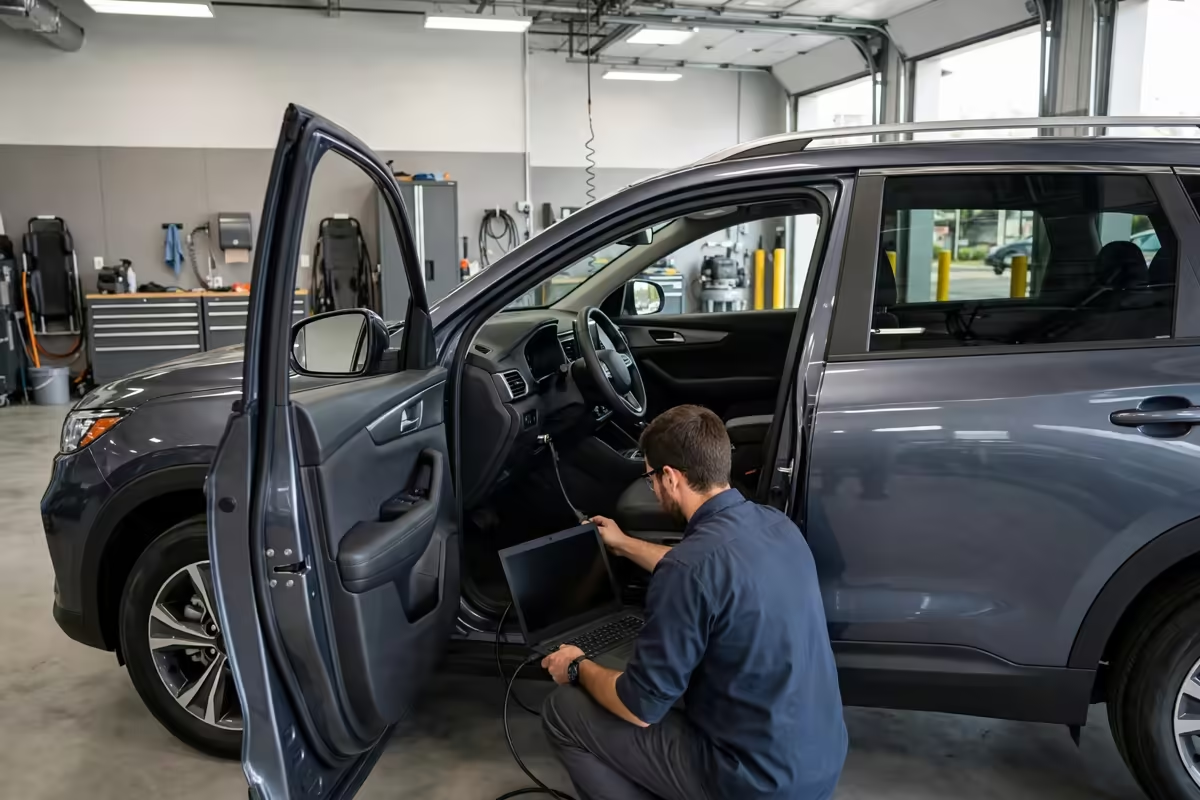
Honda is recalling 635,808 vehicles in the United States because a software error can switch off the power steering assist while driving. The recall covers the 2023-2025 Honda Pilot, the 2022-2024 Acura MDX and the 2021-2025 Acura TLX. If the system trips, the steering goes heavy without warning, and the driver has to muscle the vehicle through the next turn.
The campaign is NHTSA 26V721, filed by Honda on Oct 29, 2026. Honda's own recall numbers are KQB and TQA. Unlike the BMW park outside recall published on this site two days ago, where the fix does not exist yet, Honda's remedy is already at dealers: a free software reprogram. Owner letters do not arrive until Dec 14, 2026, but VINs have been searchable since Nov 11, and there is no reason to wait for the letter.
Quick Facts: Honda Power Steering Recall
| Detail | Information |
|---|---|
| NHTSA campaign | 26V721 |
| Honda recall numbers | KQB and TQA |
| Affected vehicles | 635,808 vehicles in the US |
| Models | 2023-2025 Honda Pilot (383,110), 2022-2024 Acura MDX (177,100), 2021-2025 Acura TLX (75,598) |
| Defect | Steering software error can trigger failsafe mode and disable power steering assist |
| The fix | Free dealer reprogram of the EPS control unit, already available |
| Owner letters | Expected Dec 14, 2026 |
| VIN check | Searchable on NHTSA.gov since Nov 11, 2026 |
Which vehicles are included
Honda built the population from manufacturing records, and the filing estimates that 100 percent of the recalled vehicles carry the defective software, so every vehicle in these ranges is presumed affected:
- Honda Pilot, 2023-2025: 383,110 vehicles, built Sep 13, 2022 to Dec 23, 2025
- Acura MDX, 2022-2024: 177,100 vehicles, built Dec 10, 2020 to Jul 10, 2024
- Acura TLX, 2021-2025: 75,598 vehicles, built Aug 11, 2020 to Aug 18, 2025
What is wrong
The electric power steering (EPS) software was written by the steering supplier, Robert Bosch Automotive Steering LLC of Florence, Kentucky, and it contains two mistakes stacked together. The first is an error in a road-condition compensation calculation used by the Driver Attention Monitor: under specific operating conditions, the software can perform a floating-point division with a zero denominator, which triggers an internal error. The second mistake is the response: the software was configured to answer that internal error by disabling power steering assist and dropping into failsafe mode.
When that happens, the EPS warning indicators light up in the instrument cluster and steering effort increases sharply. The steering does not lock, and the vehicle can still be steered, but it takes far more effort, which can reduce controllability and increase the risk of a crash or injury. Honda confirmed in its investigation that the fault only occurs under certain operating conditions while the vehicle is driving straight, which is why owners describe the wheel suddenly going heavy on an ordinary straight road.
As of Oct 22, 2026, Honda counted 146 warranty claims and one report of an injury related to the issue, from May 22, 2022 to Oct 22, 2026, and no reports of a death.
Why it took almost five years
Honda received the first report of this issue on Nov 29, 2021. Reports kept arriving from August 2023 to August 2025, but the investigation kept stalling for a frustrating reason: when parts came back from the field, the error codes that would have explained the failure had already been deleted by the dealer or the supplier, so returned parts showed no problem.
The break came on Aug 22, 2025, when the supplier identified the failure through market-return analysis. In December 2025, Honda recreated the issue by analyzing dashcam footage alongside the analysis results, and in February 2026 it confirmed the straight-line condition. Honda determined that a safety defect existed on Oct 22, 2026, and filed the recall a week later, on Oct 29, 2026, the last day allowed under the federal five-working-day rule.
The free fix is already available
Dealers will reprogram the EPS control unit with improved software containing the correct calculation and the correct response to an internal error. The repair is free of charge, and because dealers were notified on Oct 30, 2026 and the corrected software is a reprogram rather than a part, owners do not need to wait for the Dec 14 letter or for parts to arrive. A VIN check today plus a dealer appointment is the whole process.
Owners who already paid out of pocket for a repair of this condition may be eligible for reimbursement under Honda's general reimbursement plan, so keep any receipts and raise it with the dealer when you book.
There is no do-not-drive order with this recall. The instruction is simpler: if your vehicle is in the campaign, get the reprogram done, and if the EPS warning lights come on and the steering goes heavy before you do, slow down, keep a firm grip, and get to a safe stop and a dealer.
When owners will hear from Honda
Owner notification letters are scheduled for Dec 14, 2026. VINs have been searchable on NHTSA.gov since Nov 11, 2026, about five weeks ahead of the letters, which is the same early-check pattern as the GM brake software recall and the Hyundai airbag recall on this site. Our step-by-step guide explains the check itself: How to Check a Car for Open Recalls by VIN.
Not the same as the 2023 Pilot steering rack recall
This is a different campaign from Honda's earlier Pilot steering recall, NHTSA 23V735, which covered certain 2023-2024 Pilots for a loose ball bearing inside the steering gearbox that could cause a loss of steering control or steering lock-up, fixed by replacing the steering rack. That was a hardware defect. This recall is a software defect, it covers three models instead of one, and the fix is a reprogram, not a rack replacement. A 2023 or 2024 Pilot can appear in both campaigns, so a completed rack repair does not clear the car from 26V721, and the VIN check has to be run for this campaign separately.
What owners should do
1. Check the exact VIN at NHTSA.gov/recalls today. The lookup has been live since Nov 11, 2026, and a model-year guess is not a substitute.
2. If the VIN is in the campaign, call a Honda or Acura dealer and book the free EPS reprogram. Quote Honda recall KQB or TQA and NHTSA campaign 26V721.
3. Do not wait for the Dec 14 letter. The fix is software and it is already available, so the letter adds nothing but delay.
4. If the EPS warning lights come on and the steering goes heavy, slow down, keep both hands firm on the wheel, and drive gently to a safe place. The car still steers, it just takes much more effort.
5. Used buyers: Pilots, MDXs and TLXs in these years are everywhere on the used market. Run the VIN from the listing before signing, and ask in writing whether the 26V721 reprogram has been completed on that exact vehicle.
Sources & Citations
Primary public references used for U.S. vehicle research on AutoTechSpot: