GM Brake Recall: Lyriq, Blazer EV, Vistiq and Celestiq Lose Braking at Low Speed
The brakes can go soft for a moment at low speed, in a sharp turn, over a bump. Pressing the pedal again brings normal braking back. The fix is a free software update.
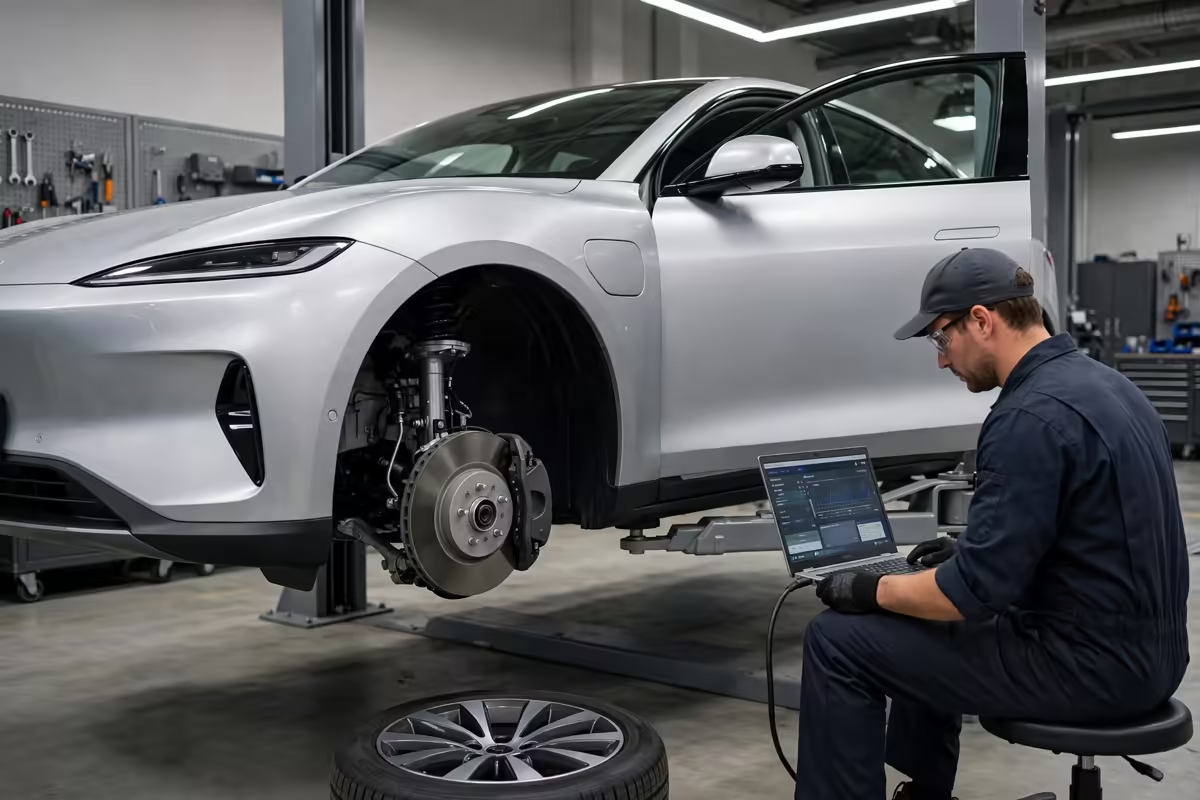
GM is recalling 67,380 electric SUVs in the United States because a software defect in the brake system control module can cause a temporary loss of braking at low speed. The recall covers Performance all-wheel drive versions only, across four models: the 2023-2027 Cadillac Lyriq, the 2024-2027 Chevrolet Blazer EV, the 2025-2026 Cadillac Celestiq, and the 2026-2027 Cadillac Vistiq. If your vehicle is one of these, check the VIN today rather than waiting for a letter.
The campaign is NHTSA 26V717, filed by GM on Oct 29, 2026. GM's own recall number is N262570900. The Lyriq is most of the recall, with 44,585 vehicles, followed by the Vistiq with 18,802, the Blazer EV with 3,911, and the Celestiq with 82.
Quick Facts: GM Brake Software Recall
| Detail | Information |
|---|---|
| GM recall number | N262570900 |
| NHTSA campaign | 26V717 |
| Affected vehicles | 67,380 SUVs in the US |
| Models | 2023-2027 Cadillac Lyriq, 2024-2027 Chevrolet Blazer EV, 2025-2026 Cadillac Celestiq, 2026-2027 Cadillac Vistiq |
| Scope limit | Performance all-wheel drive (pAWD) models only |
| Defect | Brake system control module software can cause a temporary loss of braking at low speed |
| The fix | Free brake system control module software update, over the air where enabled or installed by a dealer |
| Owner letters | Expected to begin Dec 14, 2026 |
What is wrong
The problem is in software, not in the brake hardware. In a specific low-speed sequence, driving slowly in a sharp turn, lightly applying the brakes, then hitting a bump or depression in the road, with the driver's foot slipping on the pedal, the anti-lock brake system can misread the wheel movement and reduce braking force, as if the wheels were skidding on ice when they are not.
The key safety detail is that the loss of braking is temporary. Taking your foot off the brake pedal and applying the brakes again restores normal braking. GM has not issued a do-not-drive order for these vehicles.
GM told regulators it was aware of 24 field complaints potentially related to this issue, including 20 minor accidents, with two of those carrying allegations of minor injuries. The complaints were received from Feb 28, 2024 to Jun 11, 2026. GM first learned of the issue in April 2026, after a technical expert reported a Lyriq striking a garage at low speed, and GM replicated the problem in testing. The recall decision was made on Oct 22, 2026.
The free fix
The remedy is a software update to the brake system control module, sent over the air where the vehicle supports it or installed by a dealer, free of charge.
One timing detail owners should hear plainly: GM told dealers the software fix was not ready yet for the 2023-2024 Lyriq models under this recall. That point comes from a secondary dealer notice, not from the NHTSA filing, so treat it as a caution to confirm with a dealer rather than as a filing fact. For other models the software should be ready now, and it has been rolled out for new production vehicles. When you call, ask the dealer whether the update is available for your exact model year and VIN, and ask them to book the fitting, rather than assuming the letter date means the update is already waiting.
When owners will hear from GM
Owner notification letters are expected to begin Dec 14, 2026. Dealers were notified on Oct 29, 2026, and VINs have been searchable on NHTSA.gov since Oct 29, 2026. That is the same early-check pattern as the Toyota RAV4 Plug-In Hybrid recall and the Toyota Land Cruiser Hybrid recall, where the letters also lagged the filing by several weeks.
Do not wait for the letter. Run the VIN now at NHTSA.gov/recalls. Our step-by-step guide explains how: How to Check a Car for Open Recalls by VIN.
Not the same as the earlier Lyriq ABS recall
This brake recall is a different campaign from the earlier Lyriq anti-lock brake recall, NHTSA 24V589, which covered the 2023-2024 Lyriq all-wheel drive models. The fix made then did not address this Performance all-wheel drive condition. Vehicles covered by 24V589 with Performance all-wheel drive are included in this new recall. Do not let a completed repair under the older campaign, or a clean result on that older campaign, stand in for a VIN check on 26V717. They are different defects, different remedies, and different recall numbers.
What owners should do
1. Check the exact VIN at NHTSA.gov/recalls. A model-year search is not enough, because only Performance all-wheel drive versions are covered.
2. If the VIN is in the campaign, call a Cadillac or Chevrolet dealer's service department, give them the VIN, and ask about the software update and its availability for your model year.
3. Keep the repair paperwork with the vehicle. A completed-recall record is part of the vehicle's value at resale.
4. Used buyers: run the VIN from the listing before signing, and ask in writing whether the 26V717 remedy has been completed on that exact VIN. Recall remedies do not expire with a change of owner, but finding an open recall before signing turns it into a condition of the deal instead of an errand afterwards.
Sources & Citations
Primary public references used for U.S. vehicle research on AutoTechSpot: