How to Check a Car for Open Recalls by VIN (Before You Buy or Before You Drive)
Recall letters arrive late, go to old addresses, or never reach a second owner. The VIN check does not care about any of that: it takes two minutes, it is free, and it checks your exact vehicle, not just the model. Here is how to run one properly, and what to do with the answer.
Every recall article on this site ends with the same sentence: run the VIN. That is because the letter is the weakest link in the whole recall system. Letters are mailed weeks or months after a recall is filed, they go to the address the manufacturer has on file, and a second or third owner may never receive one at all. The VIN check skips the mail entirely. It asks the federal database one question, does this exact vehicle have an unrepaired safety recall?, and it answers in about two minutes, free.
This hub is the permanent home for that check. It walks through finding the VIN, running it, and reading the result, then shows the three live recalls currently on this site as worked examples of why the check matters, and closes with the one rule used-car buyers should never skip.
Step 1: Find Your VIN
The VIN (vehicle identification number) is a 17-character code unique to your vehicle. You do not need to open the hood or crawl underneath anything:
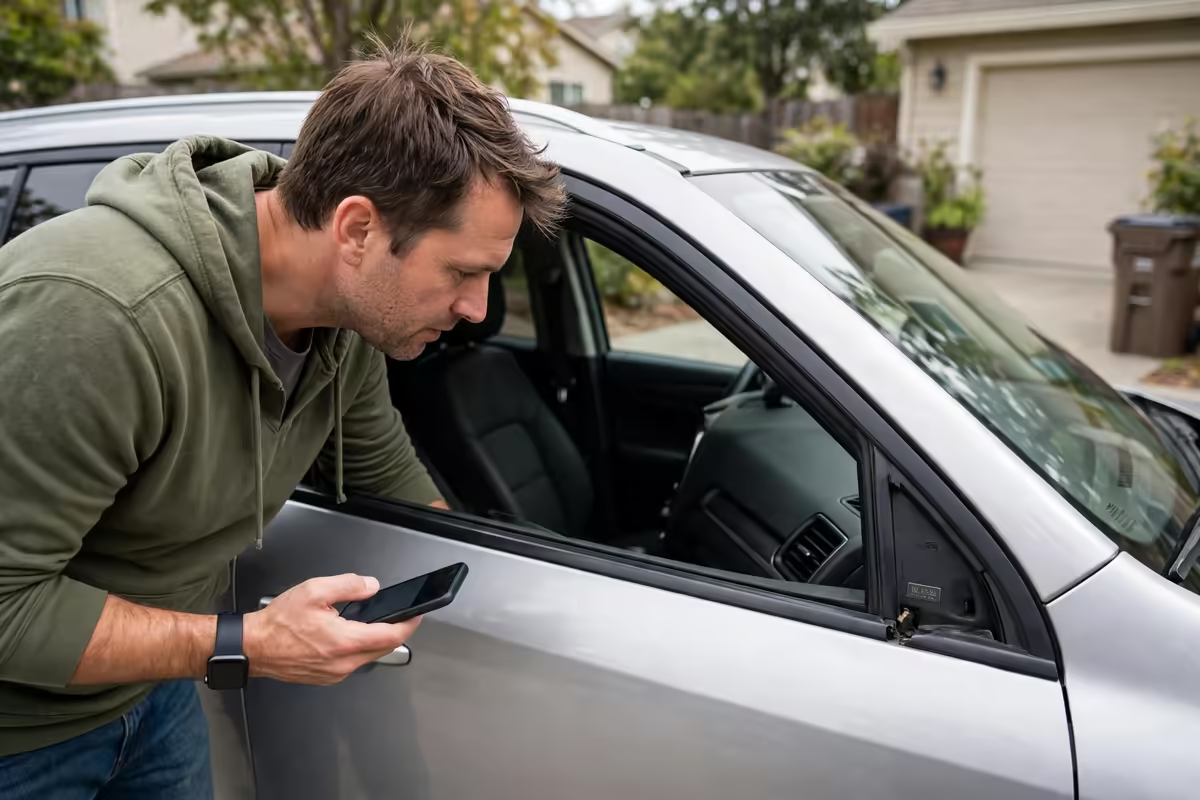
- Dashboard: stand outside the car and look through the windshield at the driver-side corner of the dashboard. The VIN plate sits there on almost every modern vehicle.
- Driver's door jamb: a sticker on the door frame also carries it on most models.
- Paperwork: your registration, insurance card, and title all print it.
Step 2: Run It at NHTSA.gov/recalls
Go to NHTSA.gov/recalls, the National Highway Traffic Safety Administration's official lookup, and enter the VIN. If you do not have the VIN handy, the site also accepts a license plate number plus state. The result lists every safety recall on record for that vehicle that has not been marked as repaired.
Two habits make the check worth more:
1. Check the exact vehicle, not the model. A recall can cover one production batch and skip the car built a month later. Only the VIN knows which side of the line your car is on.
2. Re-check twice a year. A clean result today says nothing about a recall filed next spring. Owners who bought used should re-check after purchase too, because the manufacturer's letter list may still point at the previous owner.
Step 3: Cross-Check and Book the Free Fix
If the NHTSA result shows an open recall, cross-check the same VIN on the manufacturer's own recall page, then call a dealer's service department and book the remedy. Safety recall repairs are performed free of charge (parts and labor), and the dealer can confirm your VIN's status from their own system before you arrive. Keep the repair paperwork with the car; a completed-recall record is part of the vehicle's value at resale.
What a Clean Result Does and Does Not Mean
A clean VIN result means one specific thing: no unrepaired safety recall is on record for that vehicle in the federal database. It does not mean:
- the car has never been in an accident,
- the title is clean,
- the car was maintained properly, or
- nothing will ever be recalled on it in the future.
Why This Matters Right Now: Three Live Recalls
The current recall cluster on this site shows the pattern: three different defects, three different fixes, and in each case the VIN, not the headline, decides whether your car is involved. All figures below were re-verified against NHTSA filings on November 3, 2026.
Ford Bronco wiring harness fire risk: 565,691 vehicles
Ford is recalling 565,691 model-year 2021–2026 Bronco and Bronco Raptor SUVs (NHTSA 26V468, Ford 26S55) because the engine compartment wiring harness can lack sufficient abrasion protection; exposed circuits can short, arc, and ignite nearby material. Ford estimates only about 1% of the population carries the defect and reported 15 fire incidents with no injuries, which is exactly why a model-year search is useless here: the VIN separates the roughly 1% from everyone else. Dealers add protective sheathing and abrasion tape free of charge. Full story: Ford Bronco recall: engine fire risk.
Ford EcoBoost piston defect: 10,001 vehicles
Ford is recalling 10,001 model-year 2026 vehicles: Explorer, Bronco, Bronco Sport, Mustang and Ranger (NHTSA 26V548, Ford 26S61), because incorrectly manufactured piston domes can fail and cause a loss of drive power. It is a specific production batch, not every EcoBoost. The remedy is a free dealer inspection, with a long-block engine replacement if the engine fails it; remedy letters are anticipated in December 2026, so owners who wait for the mail are waiting on the slowest channel. Full story: Ford EcoBoost engine failure recall.
Toyota RAV4 Plug-In Hybrid power loss: 30,978 vehicles
Toyota is recalling 30,978 model-year 2026 RAV4 Plug-In Hybrids (NHTSA 26V659, Toyota 26TA22) because a motor generator ECU error can reduce power or shut the hybrid system down at higher speeds. The fix is a free dealer software update (no parts), but owner letters are not expected to start until November 22, 2026. A VIN check today answers the question weeks before the letter does. Full story: Toyota RAV4 Plug-In Hybrid recall: power loss.
The Used-Buyer Rule
If you take one thing from this page, take this: run the VIN from the listing before you sign, and ask in writing whether any open recall remedy has been completed on that exact VIN.
Federal law stops a dealer from delivering a new car with an unremedied safety recall. No equivalent federal rule protects a used-car buyer the same way, which means an open recall can quietly transfer to you with the keys. It is still fixable free afterwards, since recall remedies do not expire with a change of owner, but finding it before you sign gives you a completed repair as a condition of the deal instead of an errand afterwards.
Sources: NHTSA Part 573 Safety Recall Reports and acknowledgment letters for campaigns 26V468 (Ford 26S55), 26V548 (Ford 26S61) and 26V659 (Toyota 26TA22); NHTSA.gov/recalls lookup. All recall figures re-verified November 3, 2026. Ford customer service 1-866-436-7332; Toyota 1-800-331-4331; NHTSA Vehicle Safety Hotline 1-888-327-4236.Sources & Citations
Primary public references used for U.S. vehicle research on AutoTechSpot: