Winter Car Buying Checklist: What to Check Before the First Snow
The cheapest winter car is not the one with the lowest sticker price. It is the one that does not hand you a dead battery, bald tires, or an open recall in January. This checklist takes about ten minutes on the lot and covers the checks buyers most often skip.
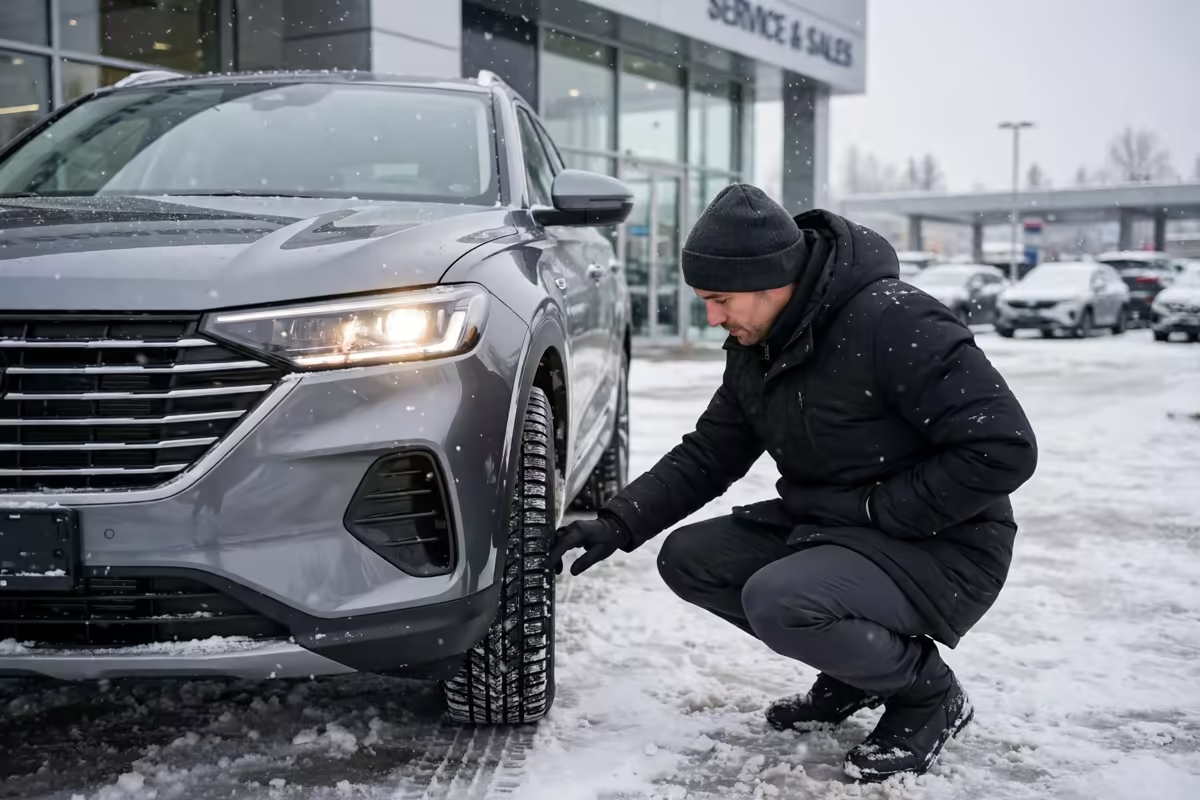
Snow does not care how good a car looked in the showroom photos. The first cold snap exposes exactly the things a hurried purchase hides: a battery that was already weak in October, tires that were already past their best, a heater that only blows lukewarm, and, worst of all, an open safety recall nobody checked for. This checklist is written for buyers shopping in October through December, new or used, in snow-belt states. Work through it before you sign anything. It takes about ten minutes, it costs nothing, and it saves the kind of January repair bill that turns a good deal into a regret.
The 10-Minute Winter Check Before You Sign Anything
Start with the car cold, if you can. A warm engine hides a weak battery and a slow heater, and a dealer who insists on warming the car up before you look at it is telling you something.
1. Tires: Check all four, including whether they match. Four matching tires with healthy tread beat a mixed set every time, and a spare (or its absence) is worth noting before you need it on a snowy shoulder.
2. Battery: Ask the age of the battery and have it load-tested. Cold weather is hardest on batteries, and a battery that starts fine at 60°F (15°C) can fail on the first genuinely cold morning.
3. AWD/4WD function: If the car has it, confirm it actually engages. A dashboard light is not the same as a working system. If you are weighing AWD against winter tires, read that comparison before deciding which one your money should go to first (linked below).
4. Heater and defroster: Run both on full. A heater that never gets properly hot and a defroster that clears only half the windshield are winter problems you will live with every single morning.
5. Wipers and lights: Wiper blades, washer fluid, headlights, and taillights. Small items, but winter driving is mostly a visibility problem, and these are the cheapest fixes on the whole list, which is exactly why they should already be done.
6. Underbody and rust: On a used car, look underneath. Surface rust on suspension parts is normal; flaking, holed, or freshly undercoated patches hiding damage are not. Winter road salt makes a rust problem worse every single year.
If any one of these fails, it is not necessarily a reason to walk away. It is a reason to price the fix into the deal, in writing, before you sign.
Tires First, Drivetrain Second
This is the single most common winter-buying mistake, and it is worth one plain paragraph: winter tires on a front-wheel-drive car will out-brake and out-corner all-season tires on an all-wheel-drive car in snow. Drivetrain helps you get going; tires help you stop and turn, which is where winter accidents actually happen. Our full comparison, AWD vs Winter Tires, works through the trade-off in detail, so this checklist does not re-litigate it here. Budget for the tires first, then judge the drivetrain on what is left.
Check the Car, Not Just the Model: Run the VIN for Open Recalls
A model can have a clean reputation while the exact car in front of you carries an open safety recall. Before buying used, and before taking delivery of a new car, too, run the 17-character VIN at NHTSA.gov/recalls. It is free, it takes a minute, and it is the final word for that specific vehicle.
This is not hypothetical. The recall cluster on this site exists because buyers keep finding out too late: the Ford EcoBoost engine-failure recall covers 10,001 vehicles whose engines can fail without warning, and the Toyota RAV4 Plug-In Hybrid power-loss recall covers 30,978 model-year 2026 SUVs (NHTSA 26V659) whose hybrid system can shut down at higher speeds. Neither recall is a reason to avoid those models outright (both have free fixes), but both are reasons to check the VIN and get the fix documented before money changes hands.
Winter Running Costs Buyers Forget
Two costs quietly rise in winter, and neither shows up on the window sticker.
First, fuel. Cold starts, longer warm-ups, and winter-blend fuel all push consumption up, so a car that looked affordable on summer mileage will cost more from December to February. Run your real numbers through our fuel calculator with a winter-adjusted figure rather than the brochure number.
Second, the monthly payment does not take winter off. A car that stretches the budget in October is the same payment in January, plus tires, plus a battery, plus whatever the first snow reveals. Run the car loan calculator with the winter extras included, not added later. If the payment only works when nothing goes wrong, it does not work.
Used-Car Winter Red Flags
Walk away, or demand a proper inspection and a price cut, if you see these:
- Mismatched tires across axles, or a brand-new set on only one axle hiding a worn set elsewhere.
- A battery that struggles on a cold start during your test drive, or a seller who will only show the car warm.
- Rust or fresh undercoating hiding underbody damage, especially around suspension mounts and brake lines.
- Flood or salvage title hints: inconsistent paperwork, a title brand that does not match the story, water lines or silt in places water should never reach, or an electrical system with several unrelated gremlins at once.
- An open recall with no fix paperwork. A free fix is only free if it has actually been done, so ask for the dealer record on that exact VIN, not a general assurance.
The Bottom Line
Buy the car that passes the winter check, not the car that photographs well. Tires, battery, heater, and a clean VIN check cost you ten minutes on the lot and save you a winter of surprises. If you want model ideas once the checklist is done, our Best Cars for Snow picks list is the next step, and if you are cross-shopping hybrids, the Toyota RAV4 vs Honda CR-V comparison covers the current hybrid-only RAV4 in detail.
Sources & Citations
Primary public references used for U.S. vehicle research on AutoTechSpot: