Best Cars for Snow and Winter Driving in 2026
Seven winter vehicles worth buying in 2026, chosen on traction hardware, ground clearance, visibility, and cold-weather usability, with straight answers on whether you actually need all-wheel drive.
Most winter car advice stops at two words: buy AWD. That advice sells vehicles, and it also leaves a lot of drivers overconfident on an icy off-ramp in February.
All-wheel drive changes how a car gets moving. It does very little for how a car stops or how it holds a line through a corner on glazed pavement. Those depend on tires, weight transfer, stability control calibration, and the person behind the wheel. A front-wheel-drive sedan on proper winter tires will out-brake an all-wheel-drive SUV on worn all-seasons, every time, on ice.
So this guide does two things. It explains what actually makes a vehicle good in snow, and then it recommends seven vehicles for the 2026 U.S. market based on that reasoning rather than on a drivetrain badge. Whether you deal with three plowed inches a few times a winter or an unplowed gravel road in the Rockies changes the answer completely, and both readers are covered below.
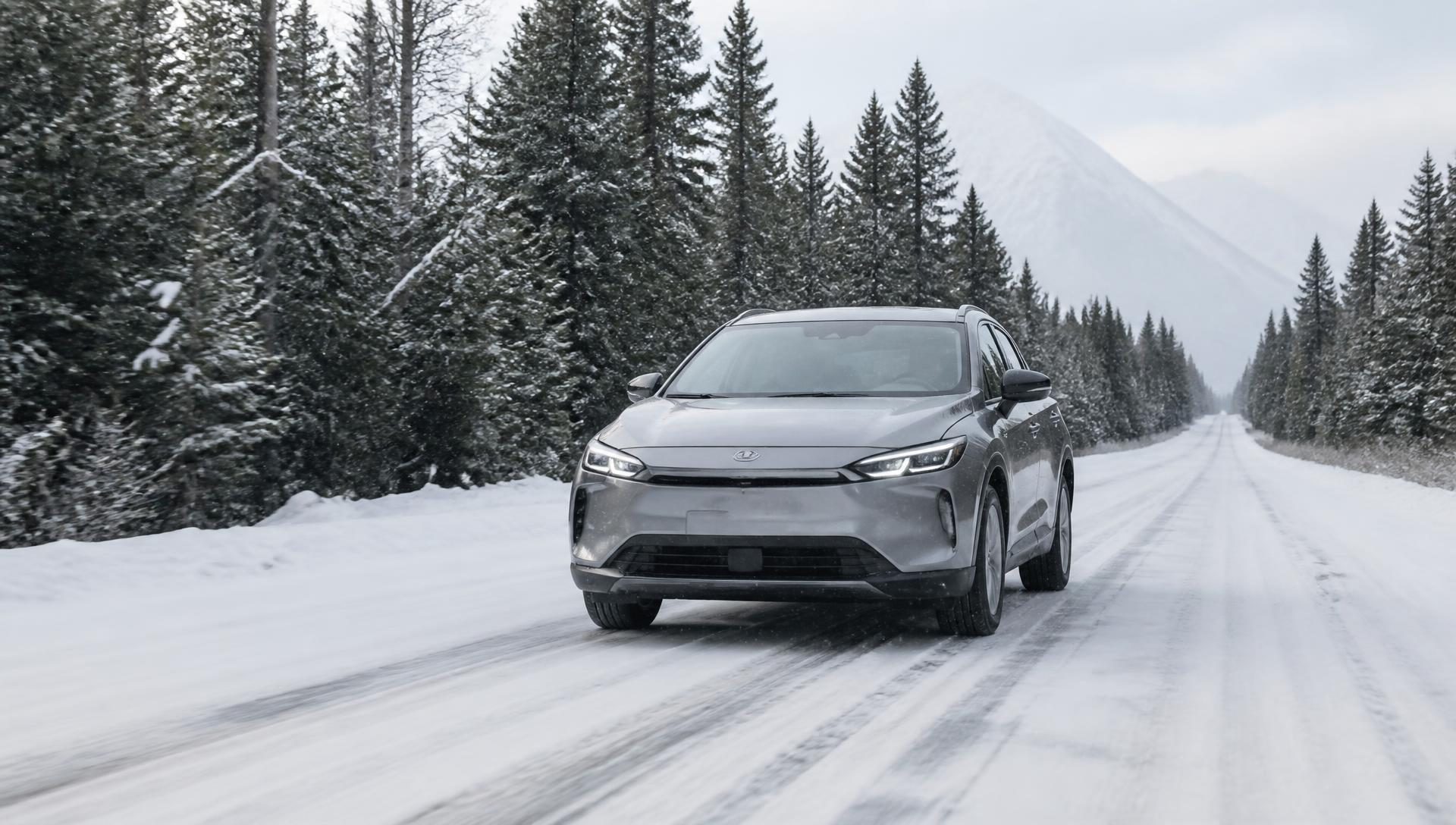
!Silver hybrid SUV driving on a snow-covered forest road in light snowfall
Quick answer: best cars for snow in 2026
| Vehicle | Best for | Drivetrain | Winter strength | Main drawback |
|---|---|---|---|---|
| Subaru Forester Hybrid | Best all-around snow vehicle | Standard AWD | Symmetrical AWD, tall glass, strong visibility | Not the quickest or quietest in class |
| Subaru Crosstrek Hybrid | Affordable AWD with real clearance | Standard AWD | High ground clearance for its size and price | Small cargo hold, modest power |
| Toyota RAV4 | High-mileage winter commuters | FWD or AWD | Hybrid-only lineup, electric rear-axle AWD | No gas-only trim, so entry price is higher |
| Honda CR-V Hybrid | Comfort-first daily driving | FWD or AWD | Composed chassis, huge cargo hold, quiet cabin | AWD system is less capable off pavement |
| Hyundai Santa Fe Hybrid | Families needing space and AWD | FWD or AWD | Boxy body, big glass area, generous cargo room | Heavier, so winter tires matter more |
| Kia Telluride | Three-row families in snow country | FWD or AWD | Size, stability, available AWD with locking mode | Wide body is a handful on narrow snowy streets |
| Toyota 4Runner | Deep snow and unplowed roads | Rear-drive or 4WD | Real four-wheel drive, high clearance, low-range | Thirsty, tall, and overkill for plowed suburbs |
How we chose these vehicles
AutoTechSpot does not run private winter testing programs, and no article should pretend otherwise. These picks come from a documented process instead:
- Published manufacturer specifications for drivetrain availability, ground clearance, and cold-weather equipment such as heated seats, heated steering wheels, and heated mirrors.
- EPA fuel economy ratings from fueleconomy.gov, since winter driving lowers real-world efficiency and the starting number matters.
- IIHS and NHTSA safety results, with attention to headlight ratings, because winter driving happens in the dark far more often than summer driving does.
- Practical winter usability: outward visibility, wiper and defroster coverage, seat height for getting in with boots, and cargo access with gloves on.
- Ownership realities: tire sizes that are affordable to duplicate for a winter set, parts availability, and known service networks.
What actually makes a car good in snow
Tires do most of the work
Tires are the only part of a car touching the road, and in winter they are the single largest variable. Winter tires use a rubber compound that stays pliable in cold temperatures, along with tread patterns full of small slits called sipes that bite into snow and ice. All-season rubber hardens as temperatures fall, which reduces grip long before there is any snow on the ground.
AWD helps you go, not stop
All-wheel drive splits engine torque across more contact patches. That improves acceleration from a stop, hill climbing, and traction on loose or deep snow. Braking uses all four wheels regardless of drivetrain, so all-wheel drive contributes nothing to stopping distance. Cornering grip is likewise a tire and weight question. Our full AWD vs FWD SUV comparison walks through the mechanical differences in detail.
Ground clearance sets your limit
Clearance decides whether you drive over snow or push it with the front bumper. Roughly 6 inches is fine for plowed roads. Something in the 8 inch range starts to matter once you deal with unplowed driveways, drifts, or the packed ridge a plow leaves at the end of your street.
Traction and stability control
Traction control limits wheelspin. Stability control detects a slide and brakes individual wheels to correct it. Both are mandatory on new U.S. vehicles, but calibration varies. Systems tuned for winter intervene early and smoothly. Some vehicles also add snow or mud drive modes that soften throttle response and change how quickly the system cuts power.
Weight and weight distribution
A heavier vehicle has more grip available in theory, but it also carries more momentum to stop. What matters more is where the weight sits. Vehicles with meaningful weight over the driven wheels get moving more easily, which is part of why front-wheel-drive cars handle snow far better than the rear-drive sedans of decades past.
Visibility and winter comfort features
This is the underrated category. Snow driving means low sun, spray, road salt film, and early darkness. Look for large glass area, wipers that cover the full sweep of the windshield, a rear wiper, heated mirrors, a heated windshield or de-icer strip at the wiper park position, and good headlight ratings. Heated seats and a heated steering wheel are comfort features, but they also let you run cabin heat lower and defog faster.
AWD vs FWD: which is better for snow?
!Infographic comparing AWD and FWD power delivery in snow
Here is the honest version.
All-wheel drive is genuinely better at: pulling away from a stoplight on packed snow, climbing an unplowed hill, getting out of a snowed-in parking spot, and maintaining momentum in several inches of fresh snow. All-wheel drive does nothing for: braking distance, cornering grip on ice, or recovering from a slide you have already started. Front-wheel drive is genuinely fine when: your roads are plowed and salted, you can wait out the worst storms, and you fit winter tires. A front-drive car with the engine's mass sitting directly over the driven wheels handles typical suburban winter without drama.The most common expensive mistake is buying an all-wheel-drive SUV on all-season tires and believing the drivetrain covers the difference. The cheaper and more effective purchase in most of the country is a front-drive vehicle plus a set of winter tires.
All-wheel drive earns its cost when snow depth, hills, gravel, or a long unplowed driveway are part of daily life. If you are weighing the running-cost side of that decision, the Fuel Cost Calculator shows what the small efficiency penalty of an AWD system means in dollars across a year.
Are winter tires more important than AWD?
!Diagram comparing winter tire tread to all-season tire tread
For most drivers in most conditions, yes, and it is not particularly close.
Winter tire compounds are formulated to stay flexible in cold weather, roughly below the mid-40s Fahrenheit. All-season compounds stiffen in that range, and stiff rubber cannot conform to the road surface, which costs grip on dry cold pavement as well as on snow. Tread design adds the second layer: deeper blocks pack snow into the tread, and snow grips snow better than rubber grips snow. Thousands of sipes give the tire biting edges on ice.
The practical result is shorter stopping distances, more steering response, and more warning before grip disappears. That last point matters more than the numbers, because a tire that lets go gradually is a tire you can drive around.
The honest counterpoint: winter tires cost money, need seasonal swaps and somewhere to store them, and wear faster if you leave them on into warm weather. In a region that sees snow twice a year and plows immediately, a quality all-weather tire carrying the three-peak mountain snowflake symbol is a reasonable middle ground. In a region with months of cold and repeated freeze-thaw cycles, dedicated winter tires are the highest-value winter purchase available at any price.
Neither replaces the other. All-wheel drive plus winter tires is the strongest combination. Winter tires alone beat all-wheel drive alone. All-wheel drive alone is the weakest of the three, despite being the one most often sold as the solution.
How much ground clearance do you need for snow?
| Your typical conditions | Clearance that works | Notes |
|---|---|---|
| Plowed city and suburban roads | About 5 to 6 inches | Any normal sedan or hatchback is fine on winter tires |
| Occasional 4 to 6 inch accumulation | About 6.5 to 7.5 inches | Most crossovers clear this comfortably |
| Regular unplowed streets or long driveway | About 8 inches or more | Clearance now matters as much as drivetrain |
| Deep snow, drifts, mountain access roads | 8.5 inches or more with 4WD | This is the narrow case where a truck-based SUV is justified |
Snow conditions and what actually matters
| Driving condition | What matters most |
|---|---|
| Light snow on plowed roads | Winter tires and stability control |
| Packed snow | Tire compound and traction control tuning |
| Ice | Winter tires and reduced speed, drivetrain barely matters |
| Deep unpacked snow | Ground clearance, then AWD, then tires |
| Unplowed rural roads | Clearance plus drivetrain plus aggressive tires |
| Highway snow and slush | Stability at speed, wiper coverage, driver assistance |
| Freezing rain | Nothing helps enough, stay parked |
Hybrids in winter: what changes
Hybrids are excellent winter vehicles with two caveats worth understanding before you buy.
Efficiency drops in the cold. Every vehicle loses fuel economy in winter because of cold oil, denser air, and warm-up cycles. Hybrids feel it slightly more in short trips, since the engine runs to produce cabin heat rather than staying off. On longer drives the penalty largely disappears. This is real but frequently exaggerated, and a cold-weather hybrid still uses less fuel than a comparable gas vehicle in the same conditions. Regenerative braking behaves differently. On slick surfaces, regenerative braking is applied to the driven axle, and modern systems reduce or hand off to friction brakes when they detect low grip. Drivers occasionally notice a small change in pedal feel in cold weather. It is a calibration characteristic, not a safety problem.The upside is meaningful. Electric-motor torque is delivered smoothly and precisely, which suits slippery surfaces well. Hybrid AWD systems that use a separate rear electric motor, like Toyota's, respond faster than a mechanical system waiting for slip. Many hybrids can also run cabin heat and defrost briefly without the engine, and plug-in hybrids can be preconditioned while plugged in so you start with a warm cabin and a clear windshield.
If you are still deciding between powertrains, our hybrid vs gas SUV comparison covers the cost math beyond winter alone.
The seven best cars for snow and winter driving in 2026
1. Subaru Forester Hybrid: the best all-around winter vehicle
Why it is good in snow. All-wheel drive is standard on every Forester, and Subaru's symmetrical layout sends power to all four wheels full time rather than reacting after the front wheels slip. Clearance is generous for a compact crossover, and X-Mode adjusts throttle and braking behavior for slippery surfaces. Winter strengths. The greenhouse is the real differentiator. Tall side glass, thin pillars, and a high seating position make it far easier to judge lane position when the lines are buried under snow. Wiper coverage is good, and heated seats plus a heated windshield wiper de-icer are available. Potential weaknesses. It is not fast, the cabin is more functional than plush, and the hybrid system prioritizes efficiency over responsiveness. Highway noise is higher than in a CR-V. Best for. Drivers in a genuine snow belt who want one vehicle that handles the whole winter without thinking about it. Who should skip it. Anyone whose winter consists of two plowed snow days a year and who would rather have a quieter, quicker crossover. Read the 2026 Subaru Forester Hybrid review for the full picture.2. Subaru Crosstrek Hybrid: the affordable clearance play
Why it is good in snow. The Crosstrek pairs standard all-wheel drive with unusually high ground clearance for a small, affordable vehicle. That combination is rare below the compact SUV price bracket, and it is exactly what gets you over the plow ridge at the end of the driveway. Winter strengths. Small footprint makes it easy to place on narrow snowy streets and easy to park in a half-cleared spot. Smaller wheels on lower trims mean taller tire sidewalls, which absorb frozen ruts and potholes better and make winter tires cheaper to buy. Potential weaknesses. Cargo space is limited, and the powertrain works hard when the vehicle is loaded. Passing on a snowy two-lane requires planning. Best for. Solo drivers, couples, and students who need real winter capability without a crossover payment. Budget buyers should also look at our best cars for first-time buyers guide. Who should skip it. Families hauling gear, and anyone who regularly carries four adults. Details are in the 2026 Subaru Crosstrek Hybrid first look.3. Toyota RAV4: the high-mileage winter commuter
Why it is good in snow. The RAV4 is hybrid-only for 2026, and its available all-wheel drive uses a dedicated electric motor on the rear axle rather than a driveshaft. That system can add rear torque almost instantly when the fronts start to spin, which suits stop-and-go winter traffic well. Winter strengths. Efficiency is the story. Winter driving means more idling, more warm-up, and slower average speeds, all of which punish fuel economy. Starting from a hybrid baseline keeps the winter penalty tolerable. The squared-off body also makes it easy to judge corners in a snowbank-lined parking lot. Potential weaknesses. No gas-only trim means a higher entry price than rivals that still offer one. The ride is firmer than the CR-V's over frozen ruts. Best for. Anyone driving 15,000 miles a year or more through a real winter. Who should skip it. Buyers shopping strictly on the lowest sticker price. See the 2026 Toyota RAV4 redesign, or compare it directly in our RAV4 vs CR-V matchup.4. Honda CR-V Hybrid: the comfort-first choice
Why it is good in snow. The CR-V's strength is composure. The chassis is stable and predictable, the steering communicates what the front tires are doing, and the stability control intervenes without feeling abrupt. Predictability is a genuine safety asset in winter, because it gives you warning. Winter strengths. The largest cargo hold in the class swallows winter gear, and the low, flat load floor means less lifting over a salted bumper. Rear-seat space and cabin quiet make cold long drives less tiring. Potential weaknesses. The available all-wheel-drive system is tuned for on-road traction rather than deep snow or unmaintained roads. Ground clearance is ordinary. Best for. Suburban drivers on plowed roads who want comfort and cargo room, paired with winter tires. Who should skip it. Anyone with a long unplowed driveway or gravel access road. Full details in the 2026 Honda CR-V Hybrid review.5. Hyundai Santa Fe Hybrid: space plus AWD without going three-row
Why it is good in snow. The upright body shape is a winter advantage that spec sheets never capture. Squared-off corners, a nearly vertical rear window, and a large glass area make it far easier to see out of when everything is white and the sun is low. Winter strengths. Available all-wheel drive, a big cargo area with a wide opening, and available heated rear seats and heated steering wheel. The tall roofline and wide door openings make loading kids in bulky coats easier than in a lower crossover. Potential weaknesses. It is heavier than a compact crossover, so the tire choice matters more, not less. The boxy shape catches crosswinds on open highway. Best for. Families who need space for gear and passengers but do not want a full three-row footprint on narrow winter streets. Who should skip it. Drivers who prioritize efficiency above all, or who park in tight urban garages. See the 2026 Hyundai Santa Fe Hybrid review.6. Kia Telluride: three rows that handle winter
Why it is good in snow. Size and available all-wheel drive with a center-locking function that holds a fixed torque split at low speed, which is exactly what you want when pulling out of an unplowed spot. Snow mode adjusts throttle and shift behavior. Winter strengths. Third-row seating means the family does not need a second vehicle in bad weather. Ride quality over frozen, rutted pavement is among the best in the segment, and the long wheelbase resists getting unsettled on slushy highway. Potential weaknesses. It is wide. On a snow-narrowed residential street with cars parked on both sides, that becomes a daily annoyance. Fuel economy is the weakest on this list, and winter driving makes that worse. Best for. Snow-country families with three or more kids. Our best cars for families with 3 kids guide covers car seat fit in more depth. Who should skip it. Anyone who does not need the third row. Read the Kia Telluride review before committing to the size.7. Toyota 4Runner: the deep snow specialist
Why it is good in snow. This is the only vehicle here with a genuine part-time four-wheel-drive system, a low-range transfer case, and body-on-frame construction. In deep unplowed snow, on steep unmaintained access roads, or with a plow-adjacent workload, none of the crossovers above are equivalent. Winter strengths. Ground clearance, approach and departure angles, and the ability to run aggressive tires. It also tows meaningfully more than a crossover, which matters if a snowmobile trailer is part of your winter. Potential weaknesses. Fuel economy, a tall step-in, more body movement on pavement, and a high center of gravity. In two-wheel drive on plowed roads, a rear-drive body-on-frame SUV is actually less sure-footed than a front-drive crossover until you engage four-wheel drive. Best for. Rural drivers, mountain access, and anyone whose winter includes roads a plow does not reach. Who should skip it. Almost everyone in a plowed suburb. It is the wrong tool and an expensive one to run. See the Toyota 4Runner review.Which winter vehicle is right for you?
Your roads are plowed and salted within hours. Buy the vehicle you actually want for the other ten months of the year, then spend the savings on winter tires. A front-drive CR-V Hybrid or RAV4 covers this easily. Even a sedan works; our sedan vs SUV comparison explains where the crossover advantage is real and where it is marketing. You get regular accumulation and hills. Standard all-wheel drive earns its money here. Forester Hybrid or Crosstrek Hybrid, with winter tires. You deal with deep snow or unplowed roads. Clearance and a proper four-wheel-drive system. The 4Runner is the one on this list built for it. Fuel economy is your top concern. Hybrid, front-drive if your roads allow, all-wheel drive if they do not. RAV4 or CR-V Hybrid. You need to move a family. Santa Fe Hybrid for two rows, Telluride for three. Budget is the deciding factor. Crosstrek Hybrid for standard all-wheel drive, or a front-drive compact plus a winter tire set, which is usually the cheapest genuinely safe option. Work out what payment fits first using the how much car can I afford calculator.Not sure which group you are in? The What Car Suits Me quiz narrows it in about a minute.
What winter driving actually costs
Winter adds line items that shoppers routinely forget when comparing monthly payments.
Winter tires and wheels. A set of four winter tires is a real expense, and mounting them on dedicated steel or alloy wheels costs more upfront while saving mounting fees twice a year. Larger wheel sizes cost substantially more to duplicate, which is a reason to consider a lower trim with smaller wheels in snow country. Fuel. Expect lower efficiency across the board in winter from cold engines, winter fuel blends, denser air, and time spent idling to defrost. All-wheel drive adds weight and driveline drag, so it carries a small ongoing efficiency penalty on top of that. Maintenance. Road salt accelerates corrosion on brake components, exhaust hardware, and body seams. Undercarriage washes and attention to brake service matter more in salted regions. Insurance. Rates vary by vehicle, region, and driver. All-wheel drive does not automatically raise or lower a premium, so get quotes on your actual shortlist before assuming. Depreciation. In snow states, all-wheel drive tends to hold value better than a comparable front-drive trim, which offsets part of its upfront cost at resale.Run the payment side through the Car Loan Calculator and the fuel side through the Fuel Cost Calculator before you sign anything. If your winter also involves a long daily drive, our best cars for long commutes guide covers seat comfort and driver assistance in more detail.
What to avoid when buying a winter car
- Treating all-wheel drive as a substitute for tires. It is the most expensive way to buy the least winter benefit.
- Buying the biggest wheels available. Low-profile tires ride harshly on frozen roads, are more vulnerable to pothole damage, and make a winter tire set noticeably more expensive.
- Ignoring headlight ratings. Winter means driving in the dark. IIHS rates headlights by trim, and the difference between trims of the same vehicle can be large.
- Assuming clearance from the model name. Clearance figures change with trim and wheel package. Check the configuration in front of you.
- Skipping the winter feature check. Heated mirrors, a rear wiper, and a wiper de-icer are small line items that you use every single cold morning.
- Shopping only on sticker price. Tires, fuel, and salt-related maintenance move the real number.
Sources & Citations
Primary public references used for U.S. vehicle research on AutoTechSpot: