Best Cars for College Students in 2026
A practical 2026 college-car guide for students and parents comparing safety, fuel cost, insurance, parking, reliability, and monthly payments.
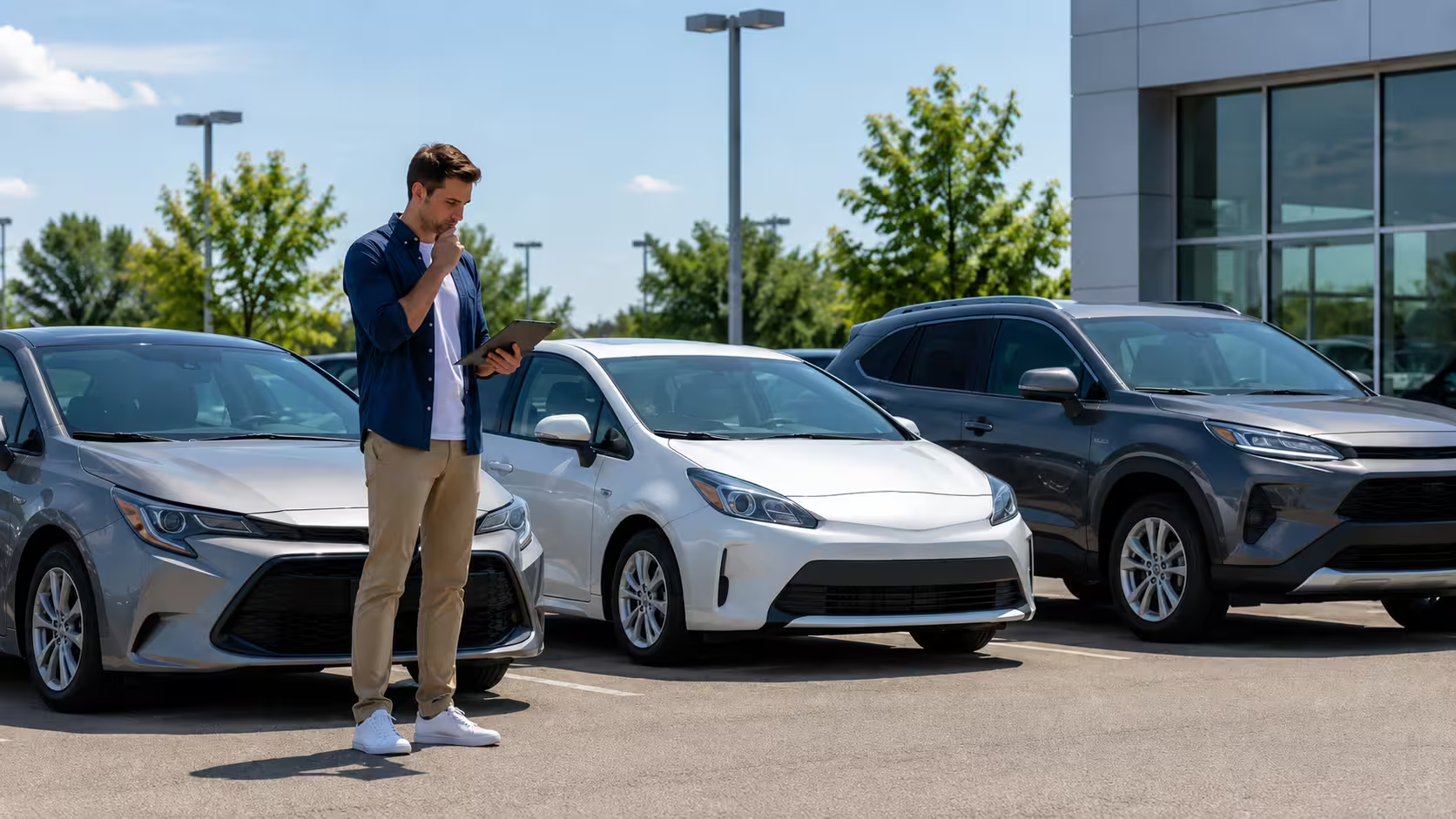
The best cars for college students in 2026 are not always the cheapest cars on the lot. A student car has to be affordable to buy, but it also has to be affordable to insure, fuel, park, maintain, and keep through changing schedules, internships, campus moves, and first jobs.
For most students and parents, the smartest shortlist starts with compact sedans, efficient hatchbacks, and small SUVs. These vehicles are easier to park on campus, easier to budget for, and less likely to turn every repair or tire replacement into a financial emergency.
If you are still deciding what kind of vehicle fits your routine, start with the What Car Suits Me? quiz. Then use this guide to compare real ownership costs before visiting a dealer.
Quick Answer: Best Cars for College Students in 2026
| Student Need | Best Starting Point | Why It Works |
|---|---|---|
| Best overall college car | 2026 Honda Civic | Easy to park, efficient, practical, and sensible for daily use |
| Best budget pick | Clean recent used compact sedan or hatchback | Lower purchase price can leave room for insurance, tires, and repairs |
| Best hybrid for college students | 2026 Kia Niro Hybrid | Strong fuel-saving angle with hatchback practicality |
| Best small SUV for students | 2026 Nissan Kicks | Small footprint, useful cargo access, and budget-friendly positioning |
| Best for commuting to campus | 2026 Toyota Camry Hybrid | Better fit for high-mileage students who need comfort and efficiency |
| Best for parents buying for a student | 2026 Toyota Corolla Cross Hybrid | Small-SUV visibility, cargo flexibility, and hybrid efficiency |
What Makes a Good College Car?
A good college car is a budget tool before it is a style choice. The right vehicle can help a student get to class, work, clinical rotations, internships, sports practice, and home on weekends without creating constant money stress.
The most important college-car priorities are:
- Affordable purchase price
- Low fuel cost for campus, work, and weekend driving
- Reasonable insurance quotes for a young driver
- Easy parking in campus garages and crowded apartment lots
- Safety features that help in traffic and tight spaces
- Reliability confidence and a simple maintenance schedule
- Replacement tires that are not unusually expensive
- Practical cargo space for dorm moves, laundry, groceries, and gear
- A monthly payment that still leaves money for school, rent, food, and emergencies
For a broader first-car framework, read Best Cars for First-Time Buyers in 2026. If the student has a long drive to campus or work, compare this list with Best Cars for Long Commutes in 2026.
Recommended Cars for College Students
2026 Honda Civic: Best Overall College Car
The 2026 Honda Civic is the safest starting point for many college students because it keeps the decision simple. It is compact enough for campus parking, practical enough for daily errands, and efficient enough that fuel cost should not dominate the budget.
The Civic also works for a wide range of student lives. A commuter student can use it every day. A student living on campus can still park it without feeling like every garage ramp is a test. A new graduate can keep it through a first job without immediately needing something larger.
Who it fits best: students who want one sensible car for school, work, errands, and the first few years after graduation. Who should skip it: students who need all-wheel drive, a higher seating position, or easier loading for bulky cargo. Ownership consideration: Civic resale appeal can keep used prices firm, so compare new, used, and certified pre-owned options instead of assuming used is automatically the best deal.2026 Kia Niro Hybrid: Best Hybrid for Students
The 2026 Kia Niro Hybrid makes sense for students who drive often, sit in traffic, or commute between campus, work, and home. It gives buyers a strong fuel-efficiency reason to choose it, but it also has the hatchback practicality students actually use.
The Niro is not a rugged SUV, and it is not the right pick for a student who needs all-wheel drive. Its advantage is day-to-day efficiency. If a student is paying for gas out of a part-time paycheck, that matters.
Who it fits best: city students, high-mileage commuters, apartment dwellers, and buyers who want hybrid savings without charging. Who should skip it: students who need AWD, a traditional SUV shape, or maximum cargo height. Ownership consideration: do not let the hybrid label justify an expensive trim. The value works best when the out-the-door price, insurance quote, and fuel savings all line up.2026 Nissan Kicks: Best Budget-Friendly Small SUV
The 2026 Nissan Kicks is a useful college-car candidate because it gives students a small-SUV shape without moving into a large, expensive crossover. It is easier to place in traffic than bigger SUVs, and the hatch area is handy for laundry, dorm bins, groceries, and weekend bags.
Students who like the idea of an SUV should look closely at size. A subcompact SUV can be easier to park and easier to finance than a larger crossover, while still giving a higher seating position and flexible cargo access.
Who it fits best: students who want SUV visibility, simple cargo access, and a small footprint. Who should skip it: students focused on the quietest highway ride, maximum rear-seat room, or hybrid fuel savings. Ownership consideration: price tires and insurance for the exact trim. A low advertised price can become less attractive if add-ons, higher trims, or long loan terms push the payment up.2026 Toyota Corolla Cross Hybrid: Best Small SUV for Parents Buying for a Student
The 2026 Toyota Corolla Cross Hybrid is a strong pick when parents want a student car that feels practical, efficient, and more SUV-like without becoming oversized.
It can make sense for students who deal with bad weather, carry sports gear, drive home on weekends, or need easier loading than a sedan trunk provides. It is still compact enough to be reasonable for campus life.
Who it fits best: student athletes, students in snowy or rainy areas, parents who want small-SUV practicality, and buyers who plan to keep the car after graduation. Who should skip it: students who mostly drive alone and need the lowest possible total cost. Ownership consideration: small SUVs can bring higher tire and insurance costs than compact sedans, so compare the whole budget before choosing the body style.2026 Toyota Camry Hybrid: Best for Long Campus Commutes
The 2026 Toyota Camry Hybrid is more car than many students need, but it deserves a place on the list for high-mileage commuters. If a student drives a long distance to campus, work, or clinical placements, comfort and fuel cost start to matter more than the smallest possible footprint.
The Camry Hybrid is not the best choice for tight campus parking or the lowest payment. It is better for students who drive enough miles that a more comfortable, efficient midsize sedan becomes rational.
Who it fits best: commuter students, graduate students, student teachers, nursing or medical students with off-campus rotations, and buyers sharing the car with family. Who should skip it: first-year students living on campus with limited parking or shoppers trying to minimize every monthly cost. Ownership consideration: compare the higher payment against fuel savings and comfort. A long commute can justify more car; a short campus loop usually cannot.2026 Subaru Crosstrek Hybrid: Best for Bad-Weather Campuses
The 2026 Subaru Crosstrek Hybrid is worth a look for students who deal with snow, rural roads, mountain towns, or outdoor gear. It is not the cheapest student car, but its small-crossover size and bad-weather personality may solve real problems for the right buyer.
This is a use-case pick, not a default recommendation. If the student spends most of the year in warm weather and paved parking lots, a Civic, Niro, or Kicks will usually make more financial sense.
Who it fits best: students in snowy climates, outdoor-focused campuses, and buyers who need extra traction confidence. Who should skip it: students in warm cities who do not need the capability. Ownership consideration: capability costs money. Check insurance, tire pricing, and local availability before putting it ahead of cheaper compact options.College Car Budget: Look Beyond MSRP and Payment
Students and parents should not shop by monthly payment alone. A dealer can lower the payment by stretching the loan term, but that can increase total interest and leave the buyer owing money for too long.
Use this budget table before you shop:
| Cost Area | Why It Matters for Students | What to Do Before Buying |
|---|---|---|
| Loan payment | A low payment can hide a long term or weak deal | Compare APR, term, down payment, and total interest |
| Insurance | Young drivers can face expensive quotes | Get quotes before choosing a model |
| Fuel | Campus commutes and trips home add up | Estimate monthly and yearly cost |
| Tires | Large wheels can make replacements painful | Price tires for the exact trim |
| Maintenance | Oil, filters, brakes, and inspections still matter | Build a small monthly maintenance reserve |
| Emergency repairs | Used cars can need surprise work | Keep cash available instead of spending the full budget |
| Parking and fees | Campus permits can be expensive | Add permits, registration, and taxes to the plan |
New vs Used Cars for College Students
A new car can make sense when the buyer wants warranty coverage, modern safety tech, and predictable maintenance. It may also be easier for a parent to finance with a clear ownership plan.
A used car can make sense when the purchase price is meaningfully lower and the student or parent leaves room for maintenance. The risk is assuming a used car is cheap simply because the sticker price is lower. A neglected used car can quickly erase the savings.
| Choice | Pros | Watchouts |
|---|---|---|
| New car | Full warranty, newest safety tech, predictable history | Higher purchase price, faster early depreciation, higher payment |
| Certified pre-owned | Lower price than new, some warranty coverage, dealer inspection | Still depends on price, mileage, and warranty terms |
| Used private-party car | Potentially lower upfront cost | Needs inspection, service history, title check, and repair reserve |
Sedan vs Small SUV for Students
Sedans usually make the most sense for college students who want lower cost, easier parking, and strong fuel economy. A compact sedan can be easier to live with in a campus garage than a wider SUV.
Small SUVs make more sense when the student carries gear, deals with bad weather, wants a higher seating position, or needs easier cargo access. The tradeoff is cost. Small SUVs often cost more to buy, can use more expensive tires, and may bring higher insurance.
| Priority | Sedan Advantage | Small SUV Advantage |
|---|---|---|
| Parking | Easier in tight campus garages | Short crossovers can still be manageable |
| Fuel economy | Often stronger, especially as a hybrid or compact | Good if choosing a small hybrid SUV |
| Cargo | Fine for backpacks and luggage | Better for bulky bins, sports gear, pets, and dorm moves |
| Visibility | Lower seating can feel familiar | Higher seating helps some drivers |
| Cost | Usually lower purchase and tire costs | More utility if the space is used often |
Parent Checklist Before Buying a Student Car
Before signing paperwork, parents and students should check the car against the student's real week, not an ideal weekend.
- Get insurance quotes for the exact vehicle and driver
- Confirm the student can afford fuel, parking, and routine maintenance
- Check tire replacement cost for the exact wheel size
- Confirm the car has the safety tech the family expects
- Make sure the student can comfortably see, park, and reverse the car
- Test phone pairing, maps, backup camera clarity, and basic controls
- Check cargo space with dorm bins, sports gear, or work equipment
- Review loan length, APR, down payment, and total interest
- Leave money for an emergency repair fund
- Verify used-car history, title status, recalls, and service records
Common Mistakes College Students Make
The most common mistake is buying too much car. A stylish SUV, sporty trim, or luxury badge can feel exciting for a week and stressful for years.
Other mistakes include:
- Ignoring insurance quotes until after choosing the car
- Focusing only on style instead of fuel cost, tires, and maintenance
- Choosing a trim with expensive large wheels
- Taking a loan that is too long for the student's plans
- Buying a luxury car with high repair costs because the used price looks tempting
- Assuming every used car is reliable without records or inspection
- Forgetting that parking permits, registration, and taxes are real costs
- Choosing a car that is difficult to park on campus
Which College Car Should You Choose?
| Student Situation | Start With | Why |
|---|---|---|
| Tight monthly budget | Used compact sedan or Honda Civic | Lower ownership stress matters most |
| Long commute to campus | Toyota Camry Hybrid or Honda Civic | Fuel cost and comfort matter over distance |
| City campus parking | Kia Niro Hybrid or Honda Civic | Small size and efficiency help every day |
| Need small-SUV practicality | Nissan Kicks or Corolla Cross Hybrid | Easier cargo loading without going huge |
| Snowy campus or outdoor lifestyle | Subaru Crosstrek Hybrid | Capability can be worth paying for if used |
| Parent wants a balanced student car | Corolla Cross Hybrid or Civic | Practical choices with broad long-term appeal |
| Still unsure | What Car Suits Me? quiz | A quick shortlist can prevent scattered shopping |
Final Recommendation
For most college students in 2026, start with the Honda Civic. It is the best overall college-car starting point because it balances size, efficiency, practicality, and ownership simplicity.
Choose the Kia Niro Hybrid if fuel cost matters most. Choose the Nissan Kicks if the student wants a small-SUV shape on a tighter budget. Choose the Corolla Cross Hybrid if parents want a practical small SUV with hybrid efficiency. Choose the Camry Hybrid only when the student has a long commute or needs a more comfortable shared household sedan.
The right college car should make school easier, not compete with tuition, rent, books, food, and savings. Buy the car that still feels affordable after insurance, fuel, tires, and maintenance are included.